
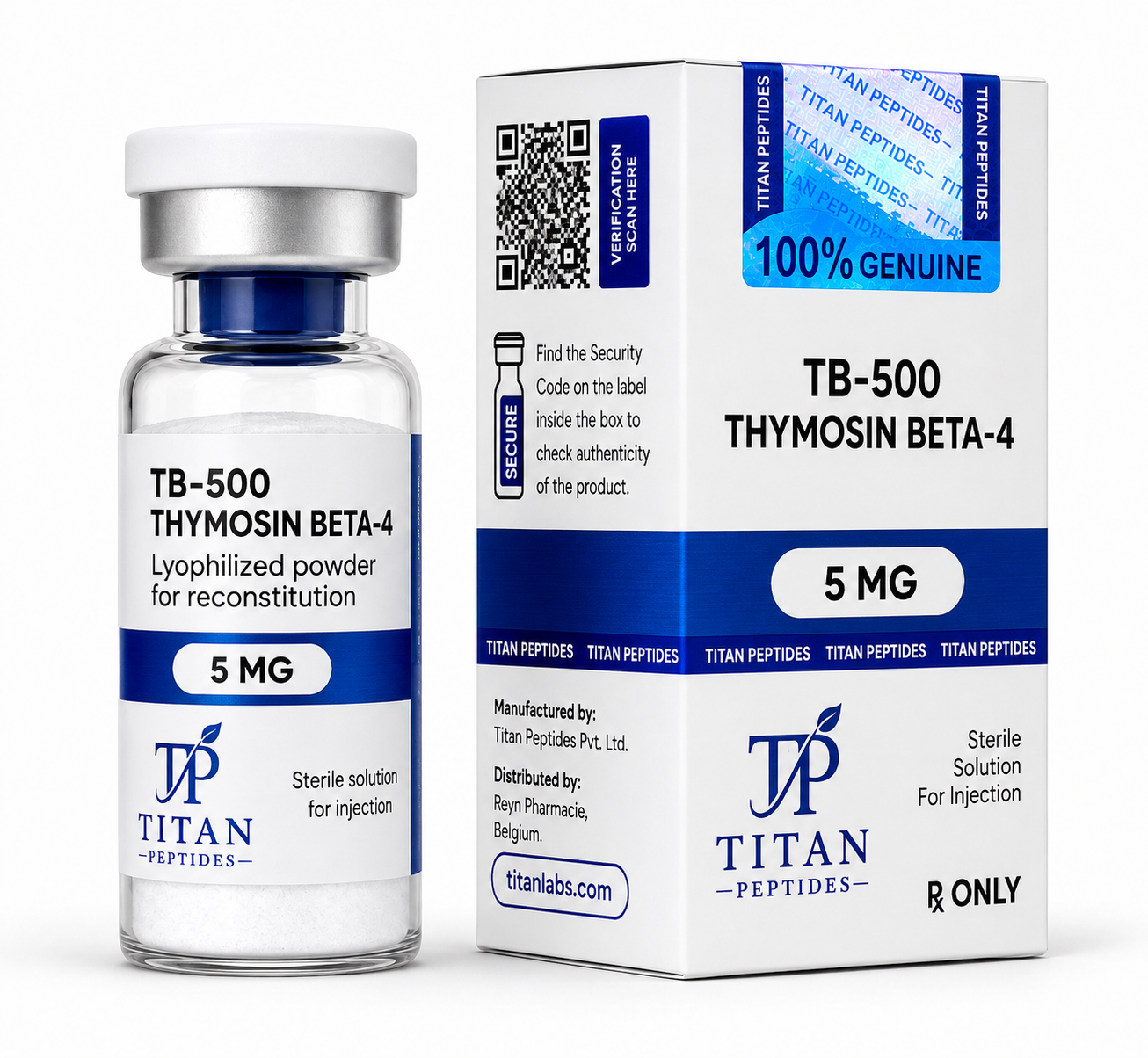
Comprehensive Structural Profile of TB-500 Reagents
In contemporary biochemical experimentation and metabolic cell signaling design, TB-500 represents one of the most widely evaluated synthetic peptides for structural cellular migration. Derived as a highly targeted, synthetic fragment of the naturally occurring 43-amino acid protein Thymosin Beta-4 (Tβ4), this specialized heptapeptide isolates the precise sequence responsible for actin binding and tissue modulation. In vivo, native Thymosin Beta-4 is secreted extensively by blood platelets, white blood cells, and various structural tissues following a disruption in cellular baselines, initiating an immediate signaling cascade to protect surrounding cellular fields.
When synthesized for analytical laboratory environments, tb 500 is engineered with an N-terminal acetylation profile (chemically identified as Ac-LKKTETQ). This modification significantly improves the overall stability of the peptide chain in fluid environments, preventing premature enzymatic cleavage during handling. Because the molecule lacks complex hydrophobic amino structural branches, it behaves as an entirely water-soluble ligand. This specific chemical nature enables researchers to quickly reconstitute the lyophilized powder into perfectly uniform aqueous environments, ensuring uniform concentration distribution across all active testing micro-environments.
Exploring the Synergy of BPC 157 and TB-500 Cellular Pathways
A primary focal point within contemporary regenerative research centers on the overlapping mechanisms observed when deploying bpc 157 and tb 500 concurrently within identical trial profiles. While each analytical agent operates via separate biochemical pathways, their distinct molecular structures frequently present a highly collaborative research outcome when tracking the rate of structural cell migration and extracellular matrix repair.
To understand why laboratories frequently stack bpc 157 and tb 500, it is essential to isolate their primary mechanical properties:
BPC-157 Mechanisms: This gastric pentadecapeptide functions predominantly as a localized signaling agent. It strongly interacts with the vascular endothelial growth factor (VEGF) pathways, driving the physical formation of new capillary networks (angiogenesis) directly around a localized site of structural disruption. It also stabilizes the internal nitrous oxide (NO) system and upregulates the production of structural growth hormone receptors in tendon fibroblasts.
TB-500 Mechanisms: Conversely, TB-500 functions via a broader, highly systemic operational framework. Instead of remaining anchored localized to one interface, its lower molecular weight (889.02 g/mol) allows it to traverse cellular membranes rapidly, promoting long-distance cell migration. It signals the immediate recruitment of progenitor stem cells, allowing them to travel directly to damaged matrices where local repair mechanisms are active
When evaluating bpc 157 and tb 500 inside a singular model, investigators are effectively combining localized vascular initialization with systemic cellular recruitment. While the localized pentadecapeptide prepares the ground matrix and initializes blood vessel loops, the systemic heptapeptide mobilizes the vital structural building blocks required to fill that framework. Investigating this dual-action pathway allows analytical teams to document deeper insights regarding cellular acceleration, structural density development, and the overall mitigation of scar tissue formation (fibrosis) within soft-tissue models.
The Underlying Biochemical Mechanism: Actin Regulation and Cell Motility
The core physiological action of tb 500 relies entirely on its ability to bind directly with globular actin (G-actin), a major structural protein found within the eukaryotic cytoskeleton. Under baseline conditions, cellular movement requires a continuous, dynamic shifting of the internal skeletal architecture. Cells must rapidly assemble monomeric G-actin units into structural filaments (F-actin) and just as quickly break them back down to move through extracellular matrices.
The precise LKKTET amino acid motif contained within TB-500 serves as a natural actin-sequestering agent. By reversibly binding to individual actin monomers, the peptide prevents them from polymerizing into fixed filaments prematurely. This action maintains a highly dynamic pool of available structural materials within the cell cytoplasm. When a cellular signal requires immediate cell migration to a site of experimental damage, the cell releases these sequestered monomers, triggering rapid actin polymerization in the exact direction of the target zone.
Beyond structural actin modulation, active research indicates that tb 500 downregulates the transcription of specific pro-inflammatory cytokines, including tumor necrosis factor-alpha (TNF-α) and various interleukins. By minimizing oxidative stress and dampening unchecked cellular inflammation, the compound helps maintain a stable, predictable, and clean environment for micro-cellular development. This specific characteristic makes it an indispensable asset when running longevity profiles, cellular survival assays, and complex gene transcription studies.
Laboratory Guidelines for Reconstitution and Analytical Storage
1. Reconstitution Protocol
The lyophilized cake must be reconstituted exclusively with sterile Bacteriostatic Water (0.9% benzyl alcohol). The presence of benzyl alcohol acts as an essential preservative, preventing any microscopic bacterial contamination from compromising the vial interior during repeated syringe entries. When injecting the diluent, always angle the syringe needle directly against the glass wall of the vial. Allow the fluid to cascade slowly down the glass rather than spraying it directly onto the delicate powder block. Gently swirl the vial in a smooth circular motion until the solution is perfectly translucent. Never shake or violently agitate the vial, as mechanical shearing forces can snap the amino bonds.
2. Temperature and Storage Standards
Prior to fluid introduction, raw freeze-dried vials should be stored inside a dedicated laboratory freezer at −20∘C to −80∘C for long-term preservation up to 24 months. Once reconstituted into liquid form, the compound becomes significantly more sensitive to thermal degradation. The active liquid solution must be stored constantly between 2∘C and 8∘C inside a stable laboratory refrigerator. For maximum dataset integrity, reconstituted solutions should be completely utilized within 30 days. Avoid exposing the active compound to direct ultraviolet (UV) light or sudden temperature spikes to guarantee absolute chemical stability throughout your entire testing cycle.
- Primary Core : TB-500 (Thymosin Beta-4 Active Fragment)
- Secondary Blend Evaluation: Compatible with BPC-157 and TB-500 joint assays
- Molecular Formula: C₃₈H₆₈N₁₀O₁₄
- Exact Mass / Molar Weight: 889.018 g/mol
- Sequence Alignment: Ac-Leu-Lys-Lys-Thr-Glu-Thr-Gln (Ac-LKKTETQ)
- Chemical Purity Level: ≥99.0% (verified by HPLC / Mass Spectrometry)
- Physical Appearance: Sterile, white lyophilized freeze-dried powder
- Primary Solvent Solubility: High solubility in sterile water and aqueous buffers
Strict Regulatory Disclaimer: All chemical products distributed by Titan Research Peptides are supplied exclusively for in vitro laboratory analysis, independent scientific evaluation, and controlled cell culture research. These products are strictly not approved for human therapeutic application, personal administration, or veterinary deployment. Any misuse of these research materials outside of verified laboratory protocols violates strict chemical regulatory safety standards.
Be the first to review “TB-500 (Thymosin Beta-4) (5 mg/Vial – 1 Vial)”
Related products
Reviews
There are no reviews yet.