
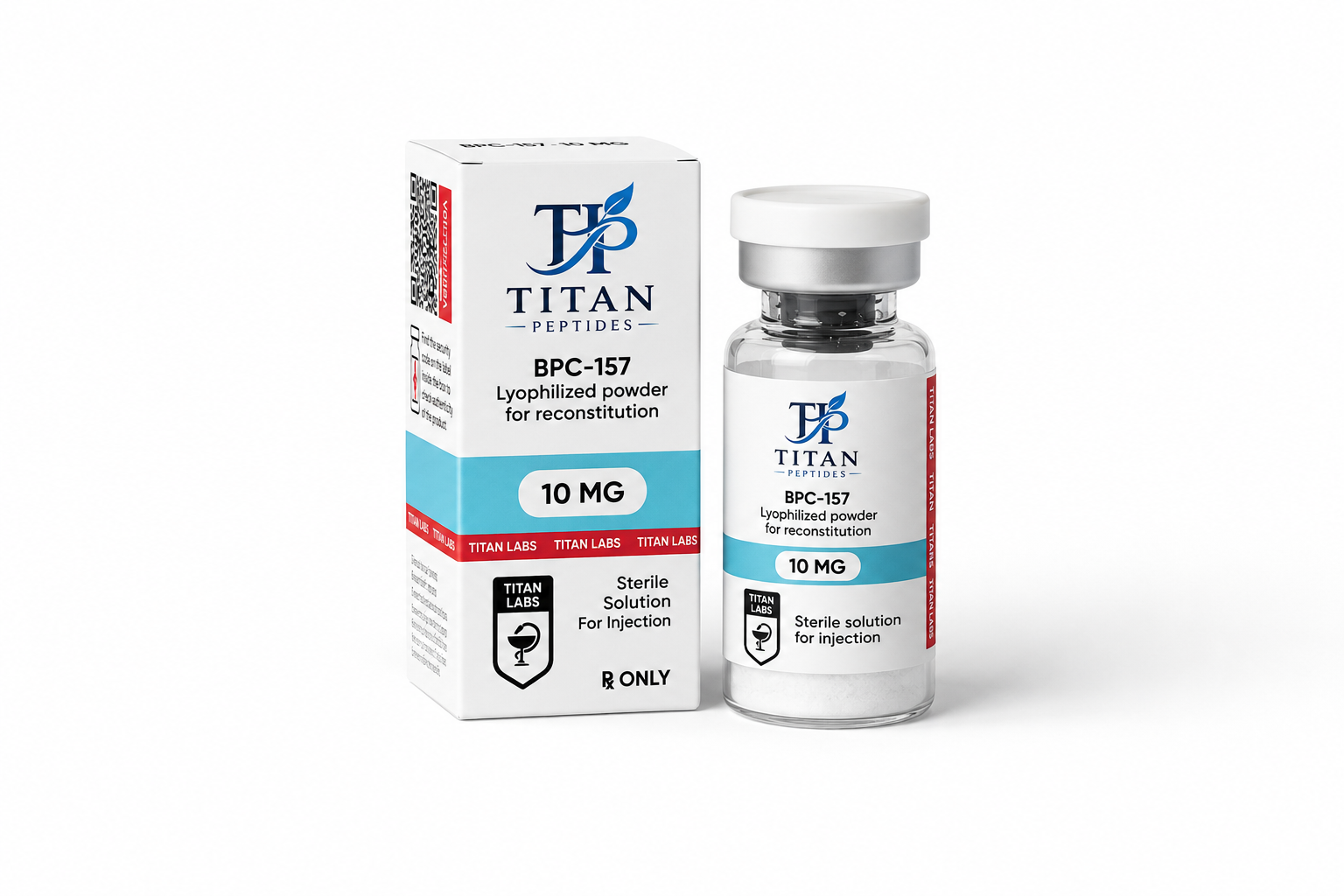
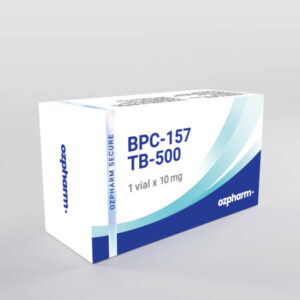
BPC- 157 (10 MG/VIAL – 1 VIAL)
$45.00
BPC-157 is a synthetic peptide derived from a protein fragment naturally found in gastric juice, known as Body Protection Compound. It is widely used in bodybuilding for its association with accelerated recovery, improved healing, and support for muscles, tendons, ligaments, and the digestive system.
Bpc 157 10mg in Modern Laboratories
In contemporary biochemical research and structural cell assays, bpc 157 10mg stands out as one of the most thoroughly analyzed synthetic pentadecapeptides. Short for Body Protection Compound, this specialized sequence consists of 15 distinct amino acids derived from a naturally occurring protective protein discovered in human gastric juice. Structurally mapped as a partial sequence of the human gastric juice protein, its molecular chain lacks complex hydrophobic branches, behaving as a highly stable, completely water-soluble ligand. When engineered for precision laboratory evaluation, the molecule is vacuum-sealed into sterile borosilicate glass vials to prevent external moisture or ambient air from compromising the fragile peptide bonds before fluid introduction.
When analyzing bpc 157 10mg under high-performance liquid chromatography, researchers track its unique ability to remain stable within highly acidic environments and enzymatic mediums that typically break down lesser protein chains. This high baseline stability makes the 10mg vial configuration an indispensable tool for investigators studying cellular signaling, tissue architecture restoration, and growth hormone receptor upregulation in cellular boundaries. Because it lacks synthetic chemical carrier rings, the compound introduces zero toxic baseline variations into cell cultures, ensuring that all documented observations reflect the pure metabolic impact of the pentadecapeptide sequence itself.
How to reconstitute bpc-157 10mg
Restoring a dry, lyophilized peptide cake into a highly uniform liquid reagent matrix requires careful handling to preserve the active molecular weights. When mapping out exactly how to reconstitute bpc-157 10mg, researchers must prevent structural shearing or foaming, which happens when diluents are injected too fast. Synthetic peptides are highly sensitive to thermal spikes and high-energy mechanical force, meaning that aggressive handling can instantly tear down the delicate amino acid bonds.
The mandatory scientific protocol requires using sterile Bacteriostatic Water containing 0.9 percent benzyl alcohol as the main dissolving vehicle. To initialize the liquid introduction, a technician draws the calculated fluid volume into a sterile insulin syringe, places the needle tip against the inner glass wall of the vial, and depresses the plunger slowly. This technique allows the fluid to cascade down the glass side rather than hitting the delicate freeze-dried cake directly. Once the liquid is inside, the vial should be rotated horizontally in a slow, circular motion. The vial must never be shaken, dropped, or placed on high-speed vortex blenders, as excessive mechanical force can break the terminal peptide bonds and render the lot analytical useless.
How much bacteriostatic water to mix with 10mg of bpc-157
To establish predictable, repeatable concentration calculations during micro-pipetting steps, determine your total target fluid volume before beginning the experiment. Deciding how much bacteriostatic water to mix with 10mg of bpc-157 depends on your required milligram-to-milliliter ratio for the cell culture exposures. Standard laboratory practices utilize clean, rounded measurements to keep the mathematical tracking simple and prevent human error during repeated fluid extractions.
The standard reference models for a 10mg freeze-dried cake utilize either 2.0 mL or 3.0 mL of bacteriostatic water:
2.0 mL Reconstitution: Adding exactly 2.0 mL of solvent creates a concentrated fluid baseline mapping out to precisely 5 mg of active peptide per milliliter of solution (5 mg/mL). Under this scale, every 10 units on a standard syringe translates to exactly 500 mcg of the compound.
3.0 mL Reconstitution: Adding exactly 3.0 mL of solvent yields a softer concentration curve mapping out to roughly 3.33 mg of active compound per milliliter of fluid.
Opting for the 2.0 mL baseline is highly recommended by analytical teams because it produces a highly predictable, exact mass-to-volume ratio that drastically reduces the margin of error when measuring precise micro-doses for sequential test arrays.
Mechanisms of Cellular Alignment and Matrix Stabilization
Beyond baseline fluid handling rules, active literature shows that bpc 157 10mg operates via several distinct cellular pathways. A primary mechanism is its strong interaction with the vascular endothelial growth factor (VEGF) pathway. When introduced to tissue assays, the compound signals an immediate acceleration of angiogenesis, which is the physical initialization and development of new capillary networks. This action helps restore fluid circulation and oxygen delivery to the extracellular matrix, facilitating faster structural cellular migration across damaged or disrupted testing interfaces.
Furthermore, investigators utilize bpc 157 10mg to study the downregulation of pro-inflammatory cytokines such as tumor necrosis factor-alpha and interleukin-6. By keeping cellular oxidation markers within a controlled, predictable range, the peptide preserves the structural integrity of neighboring cell clusters during intense cellular stress experiments. It has also been shown to promote the proliferation of fibroblasts, which are the primary cells responsible for collagen synthesis. This makes the compound a premier reference standard for testing tissue density development and cell survival limits under stressful environment simulations.
Technical Specification Matrix
Analytical Variable: Certified Laboratory Baseline
Primary Structural Keyword: BPC-157 (Body Protection Compound Pentadecapeptide)
Main Keyword Configuration: bpc 157 10mg Lyophilized Vial
Molecular Formula Profile: C62 H98 N16 O22
Exact Molar Mass: 1419.53 g/mol
Reconstitution Guideline: Managed via how much bacteriostatic water to mix with 10mg of bpc-157 protocols
Purity Score Validation: Greater than or equal to 99.0% via HPLC and Mass Spectrometry
Physical Solid Matrix: Sterile white freeze-dried lyophilized powder cake
Storage Temperature Profile: Liquid matrix must be stored constantly at 2 to 8 degrees Celsius
Strict Institutional Disclaimer: All chemical compounds distributed by Titan Research Peptides are engineered exclusively for in vitro laboratory analysis, metabolic path tracing, and independent scientific evaluation. These materials are completely banned for human therapeutic use, personal ingestion, or veterinary applications. Any deployment of these substances outside of controlled laboratory settings violates regulatory safety standards.
Be the first to review “BPC- 157 (10 MG/VIAL – 1 VIAL)”
Related products
Reviews
There are no reviews yet.