
Peptide & Growth Hormone
MOTS-C Peptide: Benefits, Research, Dosage, Side Effects & Weight Loss Guide (2026)
Jul
Table of Contents
- What Is MOTS-C Peptide?
- How Does MOTS-C Work?
- Benefits of MOTS-C Peptide
- Scientific Research on MOTS-C
- MOTS-C for Weight Loss
- MOTS-C and Exercise Performance
- Recommended Dosage
- Potential Side Effects
- Who Should Avoid MOTS-C?
- Frequently Asked Questions
- Conclusion
MOTS-C Peptide: Benefits, Research, Dosage, Side Effects & Weight Loss Guide
MOTS-C peptide has become one of the most talked-about mitochondrial peptides in scientific research. Researchers continue to investigate its potential effects on metabolism, insulin sensitivity, energy production, exercise performance, and healthy aging. While much of the current evidence comes from laboratory and animal studies, interest in MOTS-C continues to grow because of its unique role in cellular metabolism.
If you’re looking to understand what MOTS-C peptide is, how it works, and what current research suggests about its potential benefits, this guide covers everything you need to know.
What Is MOTS-C Peptide?
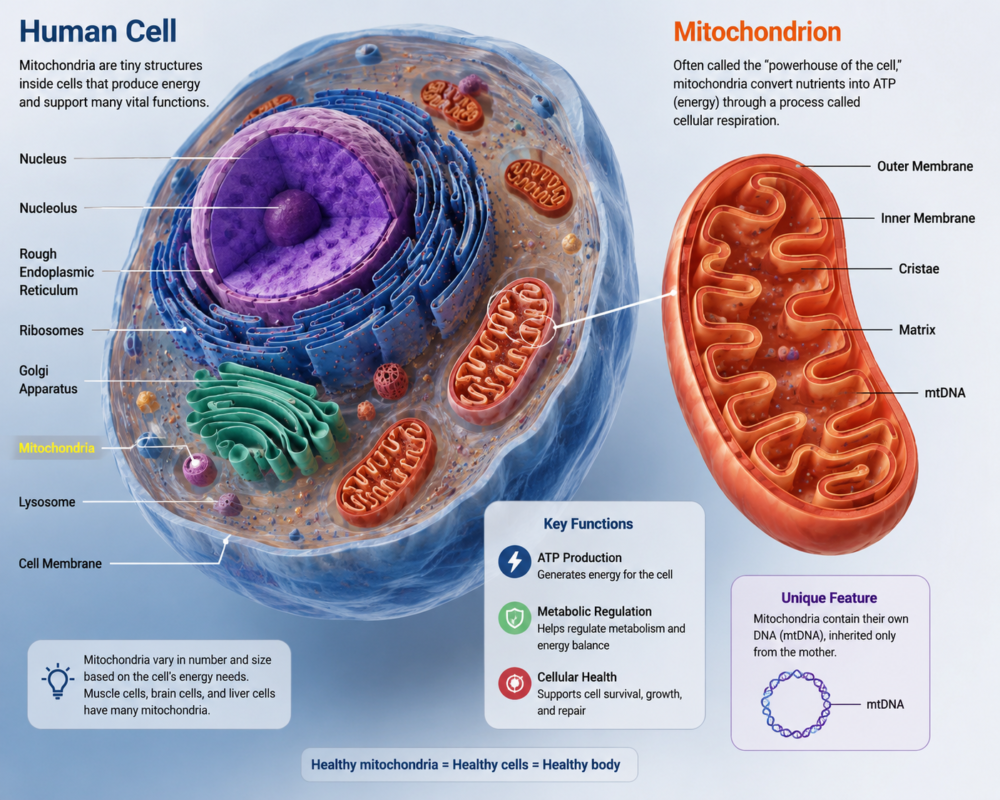
MOTS-C (Mitochondrial Open Reading Frame of the 12S rRNA Type-C) is a naturally occurring peptide produced inside the mitochondria, the structures often referred to as the “powerhouses” of cells. Unlike many other peptides that originate from nuclear DNA, MOTS-C is encoded by mitochondrial DNA, making it a unique area of biomedical research.
Scientists discovered MOTS-C while studying how mitochondria communicate with the rest of the body. Early findings suggest that the peptide may influence how cells use glucose and fat for energy, especially during periods of metabolic stress or exercise.
Researchers are exploring MOTS-C because it appears to help regulate several biological processes, including:
- Cellular energy production
- Glucose metabolism
- Insulin sensitivity
- Fat metabolism
- Stress adaptation
- Exercise response
Although these findings are promising, MOTS-C remains a research peptide and has not been approved for the treatment of medical conditions.
How Does MOTS-C Work?
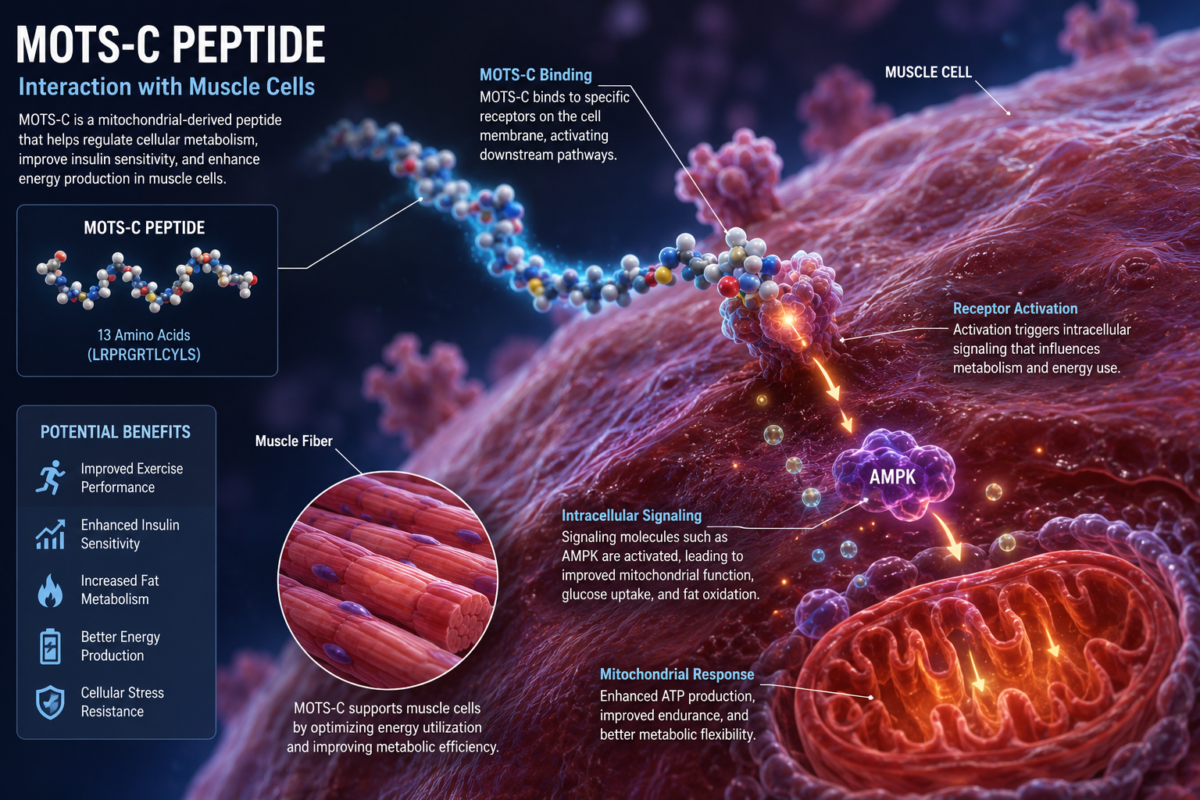
MOTS-C functions as a signaling peptide that helps cells respond to metabolic stress. When energy levels change, the peptide may activate pathways that encourage cells to produce energy more efficiently.
One of the primary mechanisms researchers have identified involves the activation of AMP-activated protein kinase (AMPK), often called the body’s metabolic “master switch.” AMPK helps regulate:
- Glucose uptake
- Fat oxidation
- Energy balance
- Cellular repair
- Mitochondrial function
By supporting these pathways, MOTS-C may help cells adapt to changing energy demands.
Benefits of MOTS-C Peptide
Current research has explored several potential benefits of MOTS-C peptide. While many findings remain experimental, the results have generated significant scientific interest.
1. Supports Healthy Metabolism
One of the most widely studied areas is metabolism. Research suggests MOTS-C may improve the body’s ability to process glucose while encouraging cells to use energy more efficiently.
Potential metabolic benefits include:
- Better glucose regulation
- Improved energy utilization
- Enhanced metabolic flexibility
2. May Improve Insulin Sensitivity
Several preclinical studies indicate MOTS-C may increase insulin sensitivity. Better insulin sensitivity allows cells to absorb glucose more efficiently, potentially supporting healthy blood sugar regulation.
Researchers continue investigating whether these effects could have broader metabolic implications.
3. Supports Fat Metabolism
MOTS-C may encourage cells to burn stored fat more efficiently during periods of increased energy demand.
Researchers believe this occurs because the peptide activates metabolic pathways involved in fat oxidation rather than fat storage.
4. Exercise Performance
One of the most exciting research areas involves physical performance.
Animal studies suggest MOTS-C may improve endurance by helping muscles adapt to exercise stress.
Potential benefits being investigated include:
- Increased stamina
- Faster recovery
- Better mitochondrial efficiency
- Improved muscular endurance

5. Healthy Aging Research
Scientists have also explored MOTS-C for its potential role in healthy aging.
Because mitochondrial function naturally declines with age, researchers are investigating whether supporting mitochondrial signaling may help maintain metabolic health in older individuals.
Although more research is needed, this remains one of the peptide’s most promising areas.
6. Cellular Stress Response
Cells experience stress from exercise, aging, environmental factors, and changes in metabolism.
Research suggests MOTS-C may help cells adapt to these challenges by activating protective metabolic pathways.
Scientific Research on MOTS-C
Most MOTS-C studies remain in laboratory and animal settings.
Current research has investigated:
| Research Area | Findings |
|---|---|
| Glucose metabolism | Improved regulation in animal models |
| Exercise | Increased endurance |
| Obesity | Reduced weight gain in some studies |
| Aging | Improved metabolic markers |
| Insulin sensitivity | Enhanced glucose uptake |
Human research is increasing, but additional large-scale clinical trials are needed before firm conclusions can be made.
Reference peer-reviewed research from PubMed or other reputable scientific sources.
MOTS-C for Weight Loss
One of the most common questions is whether MOTS-C can support weight loss.
Current research suggests it may influence several factors associated with body composition, including:
- Energy expenditure
- Fat oxidation
- Glucose utilization
- Exercise capacity
However, MOTS-C should not be viewed as a standalone weight-loss solution. Maintaining a balanced diet, engaging in regular physical activity, and following healthy lifestyle habits remain the most important factors for long-term weight management.
MOTS-C and Exercise Performance
Researchers continue studying whether MOTS-C enhances physical performance.
Some studies suggest it may:
- Improve endurance
- Delay fatigue
- Increase exercise capacity
- Support muscle energy production
These findings are particularly interesting because mitochondrial efficiency plays a significant role in athletic performance.
Recommended Dosage
There is currently no universally accepted dosage for MOTS-C because it remains a research peptide.
Dosage protocols discussed in research settings vary depending on study design and objectives.
Anyone considering peptide use should consult a qualified healthcare professional and rely on legitimate clinical guidance rather than anecdotal reports.
Potential Side Effects
Because human studies remain limited, the long-term safety profile of MOTS-C is not fully understood.
Possible side effects reported in research contexts may include:
- Injection site irritation
- Mild redness
- Temporary discomfort
- Fatigue
- Headache
These observations are not comprehensive, and further clinical research is required.
Who Should Avoid MOTS-C?
Individuals should avoid self-administering research peptides without medical supervision.
Those who are pregnant, breastfeeding, have serious medical conditions, or take prescription medications should seek professional medical advice before considering any experimental peptide.
Frequently Asked Questions
Is MOTS-C FDA approved?
No. MOTS-C is currently considered a research peptide and is not approved by the U.S. FDA for treating diseases.
Does MOTS-C help with weight loss?
Research suggests it may influence metabolism and fat oxidation, but more human studies are needed.
Can MOTS-C improve exercise performance?
Early studies indicate potential improvements in endurance and metabolic efficiency, though clinical evidence remains limited.
Is MOTS-C safe?
Current research suggests it has been generally well tolerated in experimental settings, but long-term safety has not been established.
How does MOTS-C differ from other peptides?
Unlike many peptides, MOTS-C originates from mitochondrial DNA and primarily influences cellular metabolism and energy regulation.
Key Takeaways
- MOTS-C is a naturally occurring mitochondrial peptide.
- Research focuses on metabolism, insulin sensitivity, exercise, and healthy aging.
- Most evidence comes from laboratory and animal studies.
- Human clinical research is still developing.
- MOTS-C is not approved as a treatment for medical conditions.
Conclusion
MOTS-C peptide represents one of the most intriguing developments in mitochondrial biology. Its ability to influence energy metabolism, glucose regulation, exercise adaptation, and cellular stress response has made it a major focus of ongoing scientific investigation.
Although early research is encouraging, MOTS-C remains an experimental peptide. More high-quality human clinical trials are needed to fully understand its long-term safety, effectiveness, and potential therapeutic applications.
As the science evolves, MOTS-C is likely to remain an important area of peptide research for scientists interested in metabolism, healthy aging, and mitochondrial function.
- MOTS-C Peptide Product → https://titanresearchpeptides.com/product/mots-c-10mg/
- Research Peptides Collection
- Peptide Storage Guide
- What Are Research Peptides?
