
Peptide & Growth Hormone
What Are Peptides? Ultimate Beginner’s Guide
Jul
If you have spent any time navigating the worlds of modern health, anti-aging, or performance optimization, you have likely run into the phrase what are peptides. Often praised as a revolutionary frontier in biotechnology, biotechnology-backed wellness, and clinical medicine, peptides have sparked massive global interest.
But beneath the viral trends, what are they on a molecular level? Are they safe? How do they differ from proteins or steroids? This comprehensive, hyper-detailed master guide covers every single question, biological mechanism, and practical detail an informed reader could possibly ask.
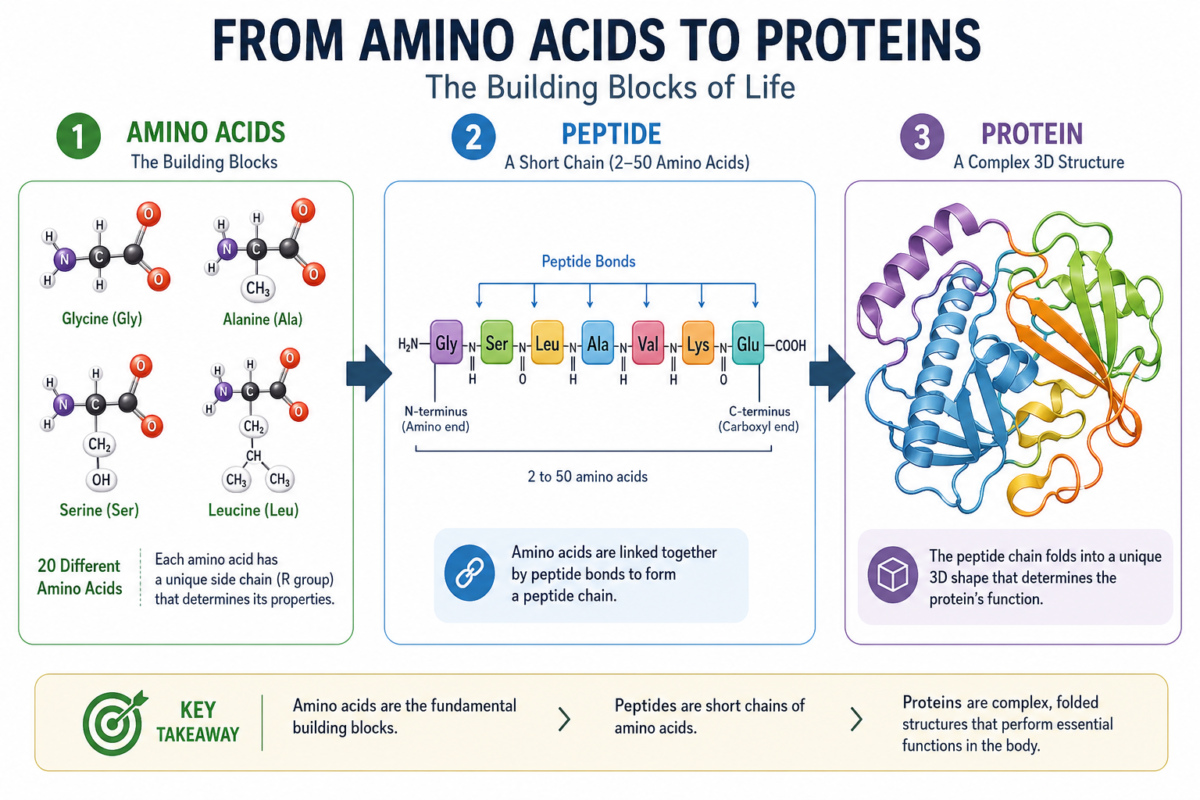
What Are Peptides? The Biological & Chemical BlueprintThe Molecular Definition
The Molecular Definition
At the most fundamental level, a peptide is a short chain of amino acid monomers linked together by covalent bonds known as peptide bonds (or amide bonds). Amino acids are the basic building blocks of life. Each individual amino acid contains an alpha-amino group and a carboxyl functional group. When the carboxyl group of one amino acid reacts with the amino group of another, a molecule of water is released (H2O), creating a highly stable chemical link.
The human body naturally relies on 20 distinct amino acids, which can be organized into virtually infinite sequential patterns. Each unique combination creates a completely separate peptide with a highly specialized biological function
The Strict Scale: Peptides vs. Proteins
The distinction between a peptide and a protein is determined purely by size and structural complexity
Oligopeptides: Very short chains containing fewer than 20 amino acids.
Polypeptides: Linear chains containing anywhere between 2 to 50 amino acids.
Proteins: Large, complex macromolecules consisting of one or more polypeptide chains containing more than 50 amino acids (and frequently hundreds) folded into precise, three-dimensional geometric structures.
Cellular Mechanism: What Are Peptides & How Do Peptides Work?
Peptides serve as the primary cellular messengers of the endocrine, nervous, and immune systems. They do not mechanically build physical structures like proteins do; instead, they function as biological software commands.
The Lock-and-Key Pathway
Every cell in the human body is coated in specialized protein structures called receptors, particularly G-protein-coupled receptors (GPCRs).
Release: A peptide is released naturally into systemic circulation or administered exogenously.
Binding: Because of its precise chemical sequence, the peptide fits perfectly into a specific receptor site on a target cell (behaving like a key entering a lock)
Signal Transduction: The binding action triggers an immediate cascade of intracellular chemical reactions.
Biological Response: The cell receives a clean blueprint instruction—such as up-regulating the transcription of collagen genes, activating lipolysis to burn fatty acids, or initiating localized cellular defense mechanisms.
Because of this extreme receptor specificity, therapeutic peptides can target a single biological pathway with minimal “cross-talk” or unintended downstream consequences.
Comprehensive Breakdown of Major Peptide Classifications
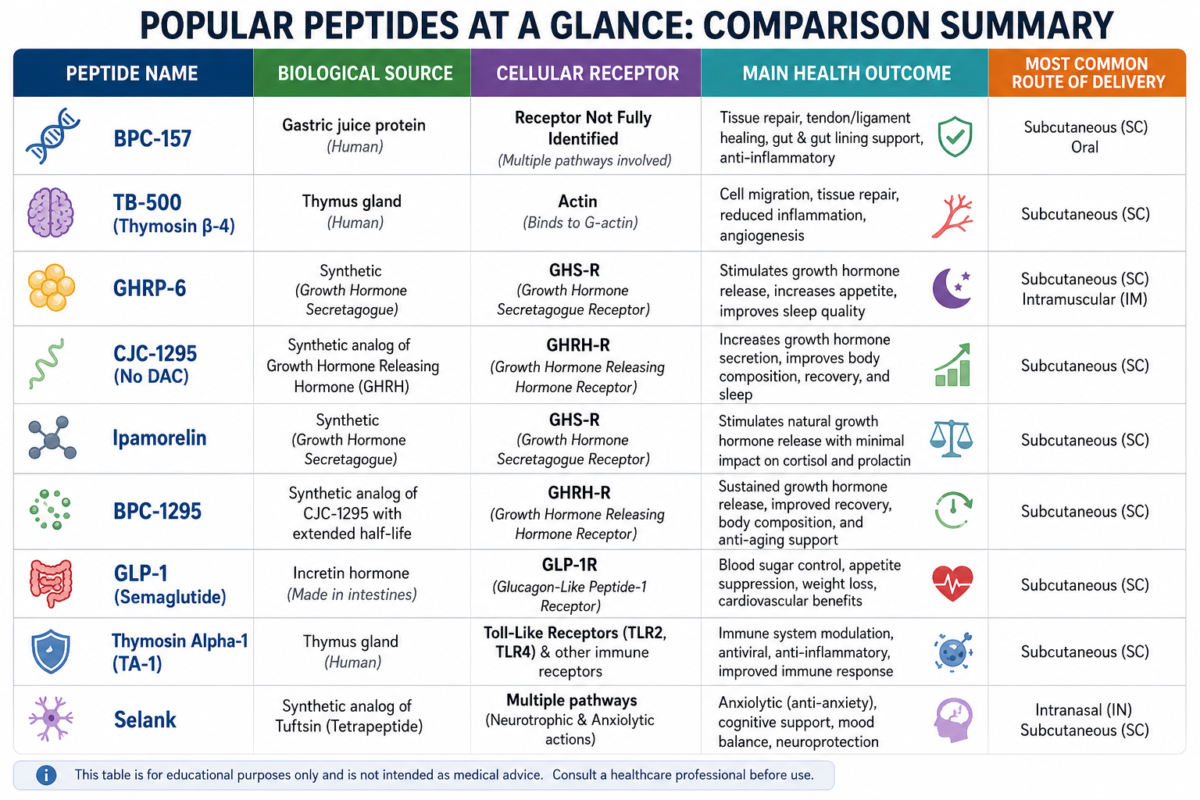
The human body naturally produces over 7,000 distinct types of endogenous peptides to manage its homeostasis. Exogenous or synthetic varieties are broadly categorized into four primary functional groups:
Category A: Metabolic and Satiety Peptides (GLP-1 RAs
These peptides revolutionize modern metabolic health and weight management by mimicking natural gut hormones released during digestion.
Primary Mechanisms: They activate Glucagon-Like Peptide-1 (GLP-1) receptors, which signals central satiety to the brain, slows gastric emptying times, and enhances pancreatic insulin response.
Primary Outcomes: Appetite suppression, tighter glycemic control, and marked reduction in visceral adipose tissue.
Prominent Examples: Semaglutide, Tirzepatide, Liraglutide.
Category B: Cellular Repair and Injury Recovery Peptides
These strings of amino acids target systemic inflammation, speed up cell migration, and stimulate the growth of new blood vessels (angiogenesis) to accelerate healing.
Primary Mechanisms: What Are Peptides They mimic proteins found naturally in gastric juices or the thymus gland, orchestrating rapid tissue remodeling and cellular restructuring.
Primary Outcomes: Accelerated healing of deep tendons, skeletal ligaments, acute muscle tears, and compromised gastrointestinal linings.
Prominent Examples: BPC-157 (Body Protection Compound-157), TB-500 (Thymosin Beta-4).
Category C: Growth Hormone Secretagogues (GHS)
Rather than introducing synthetic, destructive foreign hormones into the body, GHS peptides prompt the body to optimize its own natural endocrine production.
Primary Mechanisms: They bind directly to ghrelin or growth hormone-releasing hormone (GHRH) receptors in the pituitary gland, inducing a natural pulse of endogenous growth hormone.
Primary Outcomes: Enhanced body recomposition, preservation of lean mass during deficits, improved deep-sleep architecture, and faster cellular recovery.
Prominent Examples: Ipamorelin, CJC-1295 (with or without DAC), Sermorelin.
Category D: Cosmetic, Hair, and Anti-Aging Peptides
These are smaller, highly stable chains engineered to penetrate localized tissue barriers to revitalize structural integrity.
Primary Mechanisms: They act as signaling or carrier molecules, convincing cells that structural damage has occurred so the body naturally over-produces collagen and elastin fibers
Primary Outcomes: Reduction of fine structural wrinkles, restoration of the skin barrier, and stimulation of hair follicles in pattern hair loss.
Prominent Examples: GHK-Cu (Copper Peptide), Matrixyl (Palmitoyl Pentapeptide-4).
Routes of Administration and Delivery Science
What are peptides A major question beginners ask is: Why can’t I just take all peptides as a simple pill? The answer lies in gastrointestinal biology. Because peptides are held together by fragile peptide bonds, your digestive system treats them exactly like food. Stomach acids and proteolytic enzymes break them down into basic amino acids before they ever reach your bloodstream.
To bypass this barrier, science utilizes three distinct delivery paths:
Subcutaneous Injection: Administered using a tiny needle into the fatty tissue directly beneath the skin (typically around the abdomen). This offers near 100% bioavailability, allowing the compound to bypass first-pass liver metabolism and enter systemic circulation fully intact.
Topical Application: Formulated into localized transdermal creams, gels, or serums. This method works excellently for cosmetics or hair applications because the peptide molecules are small enough to pass into the dermis layers directly where they are needed.
Nasal Sprays: Absorbed through the delicate nasal mucosa membranes. This route is primarily reserved for specific neurological or cognitive peptides that require a direct, efficient pathway toward the blood-brain barrier.
Safety Profiles, Regulatory Status, and Side Effects
While the scientific foundation of peptide therapy is incredibly legitimate, users must approach the landscape with complete clinical awareness.
The Critical Issue of Lab Purity
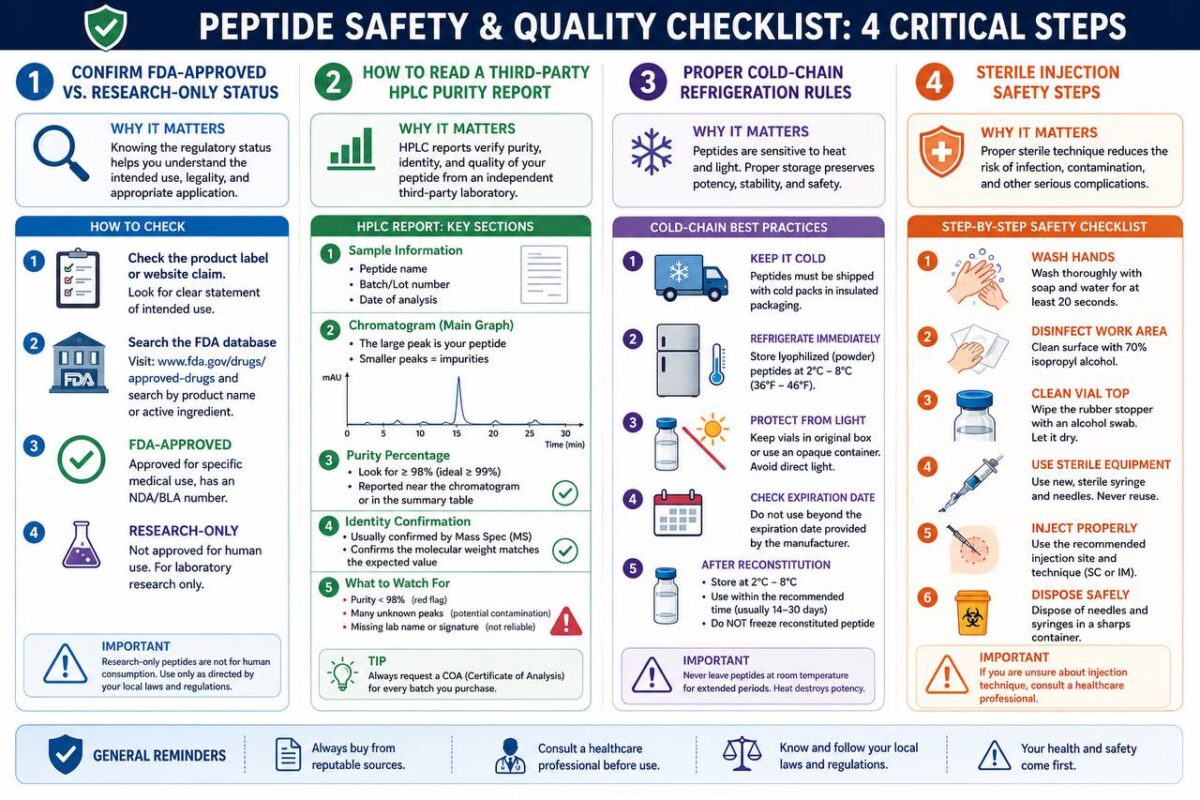
What are peptides Synthetic peptides are created through complex laboratory processes like Solid-Phase Peptide Synthesis (SPPS). Because many peptides sold online bypass standard retail pharmacies, the market is full of unverified, low-grade products. Unregulated research chemicals frequently contain chemical impurities, heavy metal residues, or incorrect structural sequences. Safe usage requires verifying that a laboratory provides an independent, third-party Certificate of Analysis (COA) verifying a purity rating of 99% or higher.
A multi-step visual checklist detailing: 1. Confirming FDA-approved vs. Research-only status. 2. How to read a third-party HPLC Purity Report. 3. Proper cold-chain refrigeration rules. 4. Sterile injection safety steps.
What Are Peptides, Documented Potential Side Effects
Peptides are active biological signaling agents, meaning they can cause noticeable changes in human physiology. Known side effects based on specific classifications include:
Injection Site Reactions: Temporary mild swelling, localized redness, or itching at the insertion site.
Gastrointestinal Distress: Nausea, mild diarrhea, or delayed bowel movements (highly common with GLP-1 weight management options).
Fluid Dynamics: Temporary subcutaneous water retention or mild morning headaches.
Immune Responses: Low-quality or degraded peptides can occasionally trigger abnormal immune reactions, resulting in hives or allergic sensitivities.
What Are Peptides Frequently Asked Questions (The Master FAQ)
Q: Are peptides the same thing as anabolic steroids?
No. Anabolic steroids are synthetic derivatives of the male sex hormone testosterone, which cross cell membranes directly to alter genetic transcription, often shutting down natural hormone production. Peptides are simply short strings of amino acids that bind to surface receptors to mimic natural signaling pathways, keeping your body’s regulatory loops intact.
Q: What are peptides How should peptides be stored to keep them from degrading?
Peptides are highly sensitive to thermal degradation and physical agitation. In their dry, freeze-dried (lyophilized) powder state, they can store for months in a dark space. However, once mixed with bacteriostatic water (reconstituted), the peptide bonds become highly fragile and must be kept refrigerated between 2°C and 8°C to prevent the molecular structure from breaking down.
Q: What are peptides Has the FDA approved peptide medications?
Yes. The U.S. Food and Drug Administration has approved over 100 peptide-based medications for mainstream medical practice. Standard, life-saving insulin is a peptide hormone. Popular metabolic treatments like Semaglutide are FDA-approved peptide drugs. However, many experimental peptides sold online do not hold formal FDA approval and are restricted strictly to laboratory research settings.
Final Perspective: What are peptides A Targeted Era of Health
When answering what are peptides, it is vital to look past the surface-level marketing. Peptides are essentially specific instructions written in the native language of your cells. By utilizing these cellular keycards safely, responsibly, and under precise professional guidance, we gain unprecedented command over biological healing, fat metabolism, and systemic tissue longevity.
Disclaimer: This master guide is intended purely for comprehensive educational and informational purposes and does not substitute for qualified medical advice, diagnosis, or clinical treatment. Always consult a healthcare professional before altering your biological protocols.
