Peptide & Growth Hormone
What Is Semax? Benefits, Research, Uses & How It Works (2026 Guide)
Jul
What is Semax, it is a specialized synthetic peptide originally developed in Eastern Europe that continues to attract global attention for its potential to support focus, protect neural pathways, and encourage mental endurance. The world of cognitive research and cellular performance has shifted rapidly toward targeted peptide science, placing this compound at the forefront of modern neurological studies.
Whether you are conducting laboratory analysis, studying nootropic compounds, or exploring cellular health, this guide breaks down the science behind Semax, how it interacts with neural receptors, and its primary areas of research.
Table of Contents
- What Is Semax?
- How Semax Works in the Brain
- Key Benefits & Research Findings
- Common Research Applications & Delivery Routes
- Related Research Peptides from Titan Research Peptides
- Safety, Side Effects, and Considerations
- Final Summary
What Is Semax?
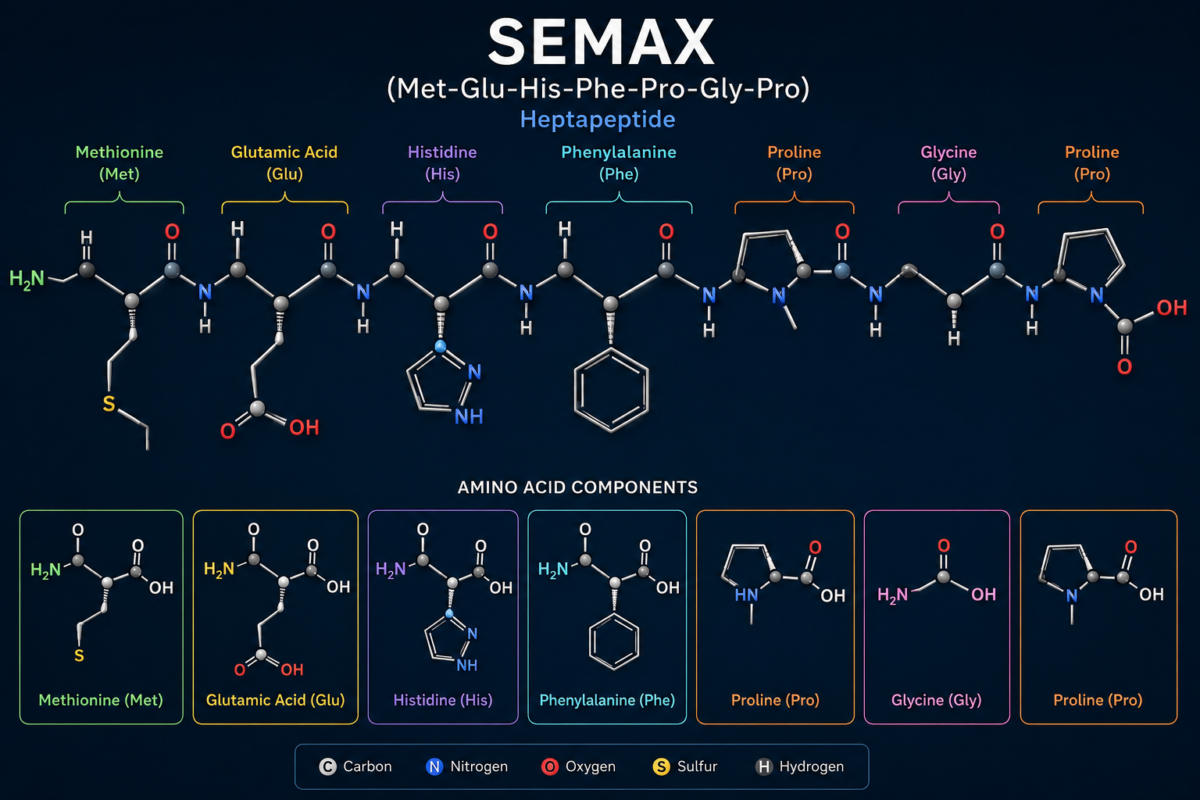
Semax is a synthetic heptapeptide (a chain consisting of 7 amino acids) derived from a specific fragment of the naturally occurring adrenocorticotropic hormone (ACTH 4-10).
To ensure the compound remains structurally stable against rapid enzymatic degradation, researchers engineered Semax by attaching a tripeptide sequence (Proline-Glycine-Proline) to the ACTH fragment. This design creates a stable molecule capable of interacting with neural systems without triggering peripheral adrenal hormone release or systemic stress responses.
Molecular Information
Molecular Sequence: Met-Glu-His-Phe-Pro-Gly-Pro
Primary Classification: Nootropic & Neuroprotective Peptide
Initially synthesized by the Institute of Molecular Genetics at the Russian Academy of Sciences, Semax has undergone extensive clinical and laboratory testing across Eastern Europe for cognitive dysfunction, optic nerve conditions, and ischemic stroke recovery models.
How Semax Works in the Brain
Unlike traditional central nervous system stimulants that rely on forced monoamine spikes, Semax functions through targeted neurological support and receptor modulation.
Upregulates BDNF and TrkB Pathways
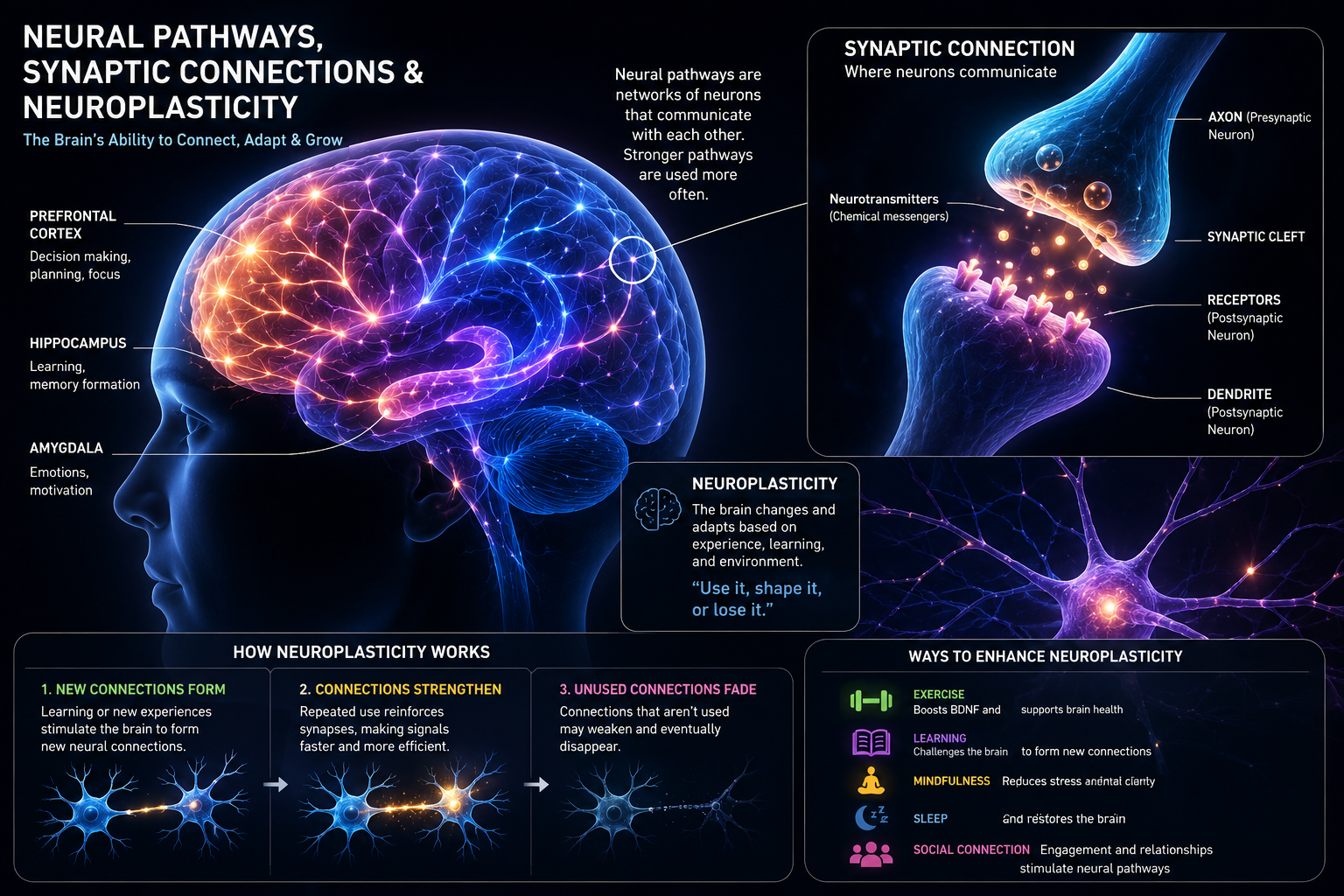
A core mechanism of Semax is its capability to significantly elevate concentrations of Brain-Derived Neurotrophic Factor (BDNF) and its associated receptor, TrkB. BDNF is an essential protein for neuroplasticity—the process by which brain cells repair, form new synaptic links, and process new information.
Modulates Dopaminergic and Serotonergic Systems
Research shows that Semax selectively regulates dopamine and serotonin turnover in the brain. By encouraging balanced neurotransmitter activity, it supports sustained mental focus, task motivation, and mood balance without causing overstimulation or typical crash effects.
Neuroprotective and Anti-Inflammatory Mechanisms
Semax exhibits significant neuroprotective qualities by downregulating pro-inflammatory cytokines and mitigating oxidative stress within brain tissue. In studies examining ischemic events, Semax helps preserve cellular tissue integrity and protects delicate neuronal structures against metabolic damage.
Key Benefits & Research Findings
Cognitive Enhancement
Underlying Mechanism: BDNF upregulation & synaptic growth
Primary Observed Outcome: Improved speed of processing, memory acquisition, and learning capacity.
Mental Stamina
Underlying Mechanism: Selective dopamine modulation
Primary Observed Outcome: Sustained focus, heightened mental endurance, and diminished brain fatigue.
Ischemic Protection
Underlying Mechanism: Inflammatory gene modulation & cellular defense
Primary Observed Outcome: Reduced neuronal tissue damage and improved functional recovery markers.
Stress Adaptation
Underlying Mechanism: Central melanocortin system interaction
Primary Observed Outcome: Anxiolytic-like response during acute environmental or mental stress.
Common Research Applications & Delivery Routes
Because peptide bonds are vulnerable to digestive breakdown, oral delivery typically results in low bioavailability. Consequently, research and clinical settings utilize alternative routes.
Intranasal Spray
The most common clinical delivery method, allowing direct absorption across nasal mucosal tissues toward the blood-brain barrier.
Subcutaneous Injection
Frequently used in systematic laboratory models to evaluate exact dosage absorption and metabolic half-life.
Related Research Peptides from Titan Research Peptides
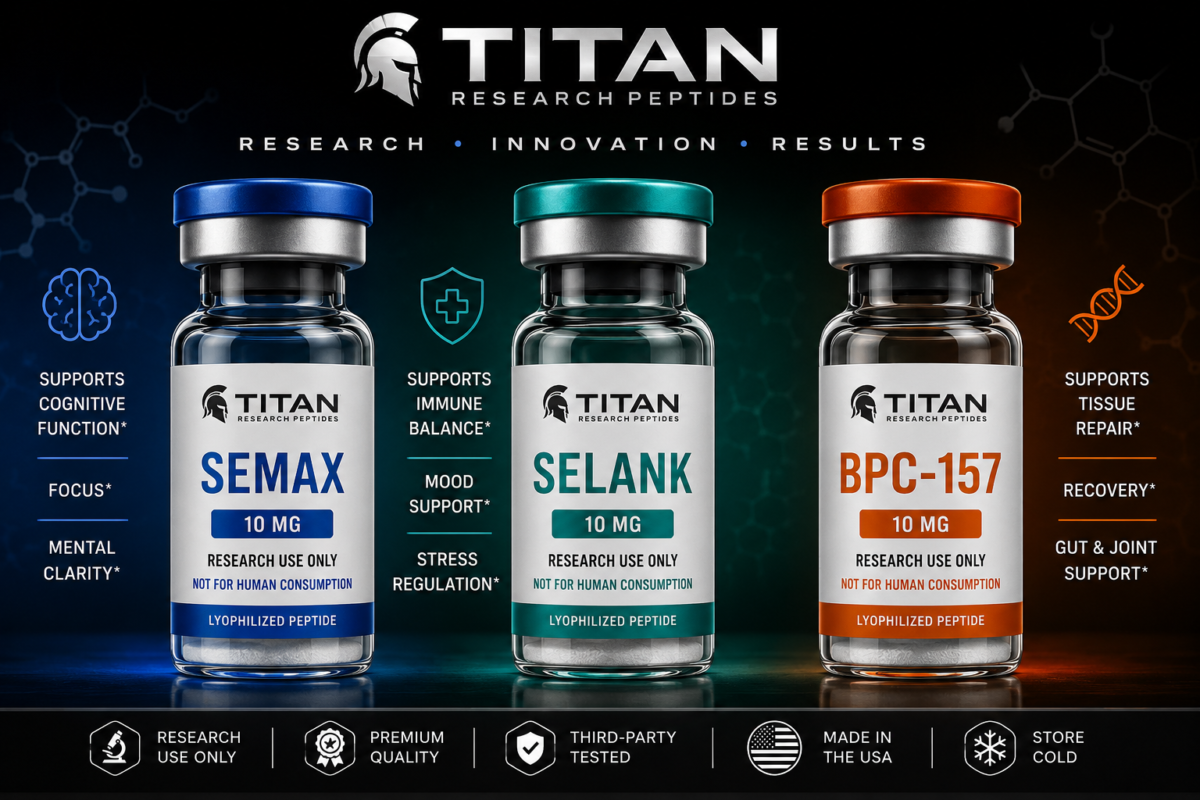
Selank
Often researched alongside Semax, Selank is a synthetic regulatory peptide derived from tuftsin. While Semax is primarily utilized for sharp focus and mental endurance, Selank is widely studied for its profound anxiolytic (anti-anxiety) properties, stress reduction, and immune-modulating capabilities without causing sedation.
BPC-157
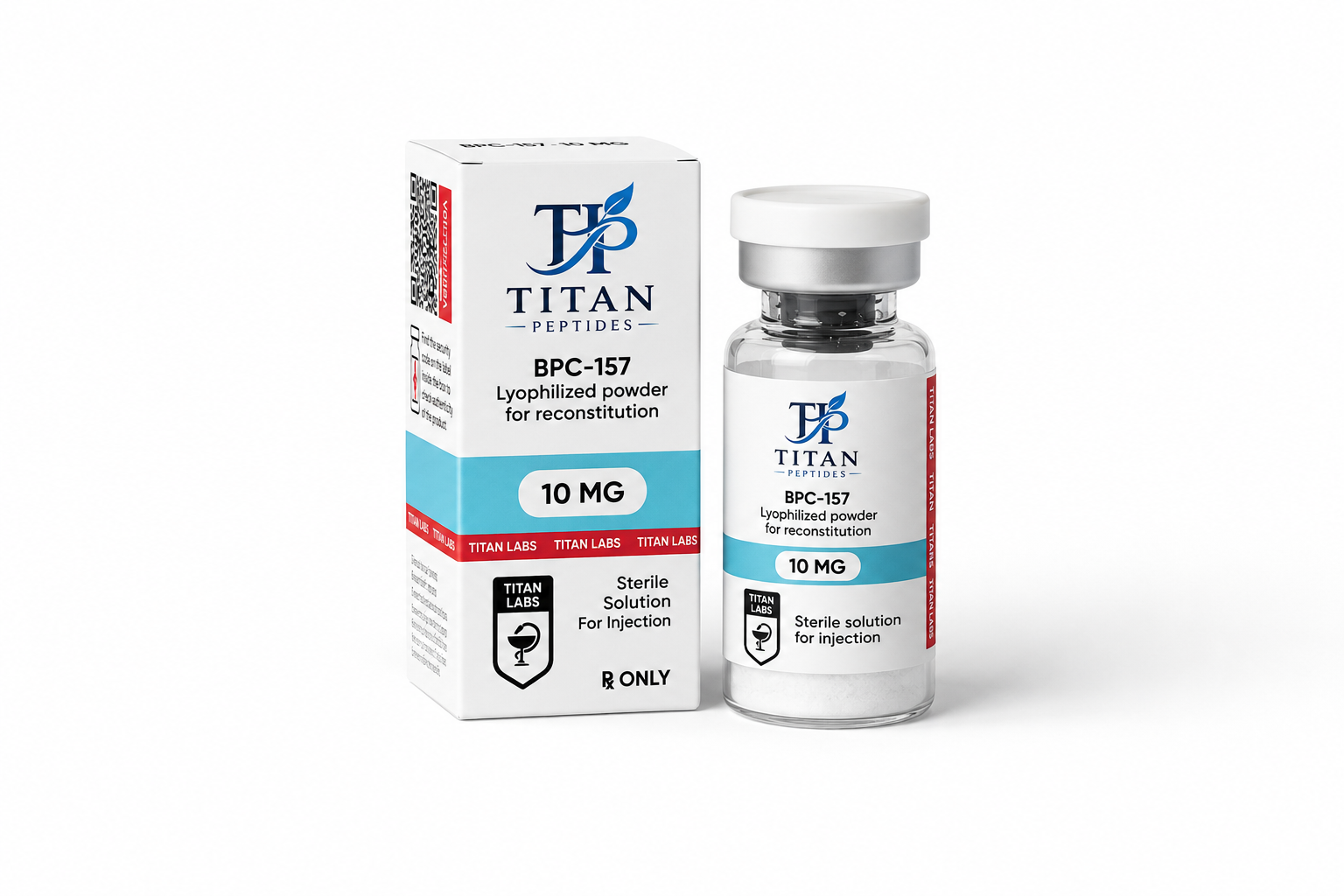
While Semax targets cognitive and brain health, BPC-157 (Body Protection Compound 157) is a cornerstone peptide in regenerative research. Derived from gastric juices, BPC-157 is heavily studied for systemic tissue repair, gut lining integrity, and accelerating the healing of tendons, ligaments, and muscle tissue.
TB-500 (Thymosin Beta-4)
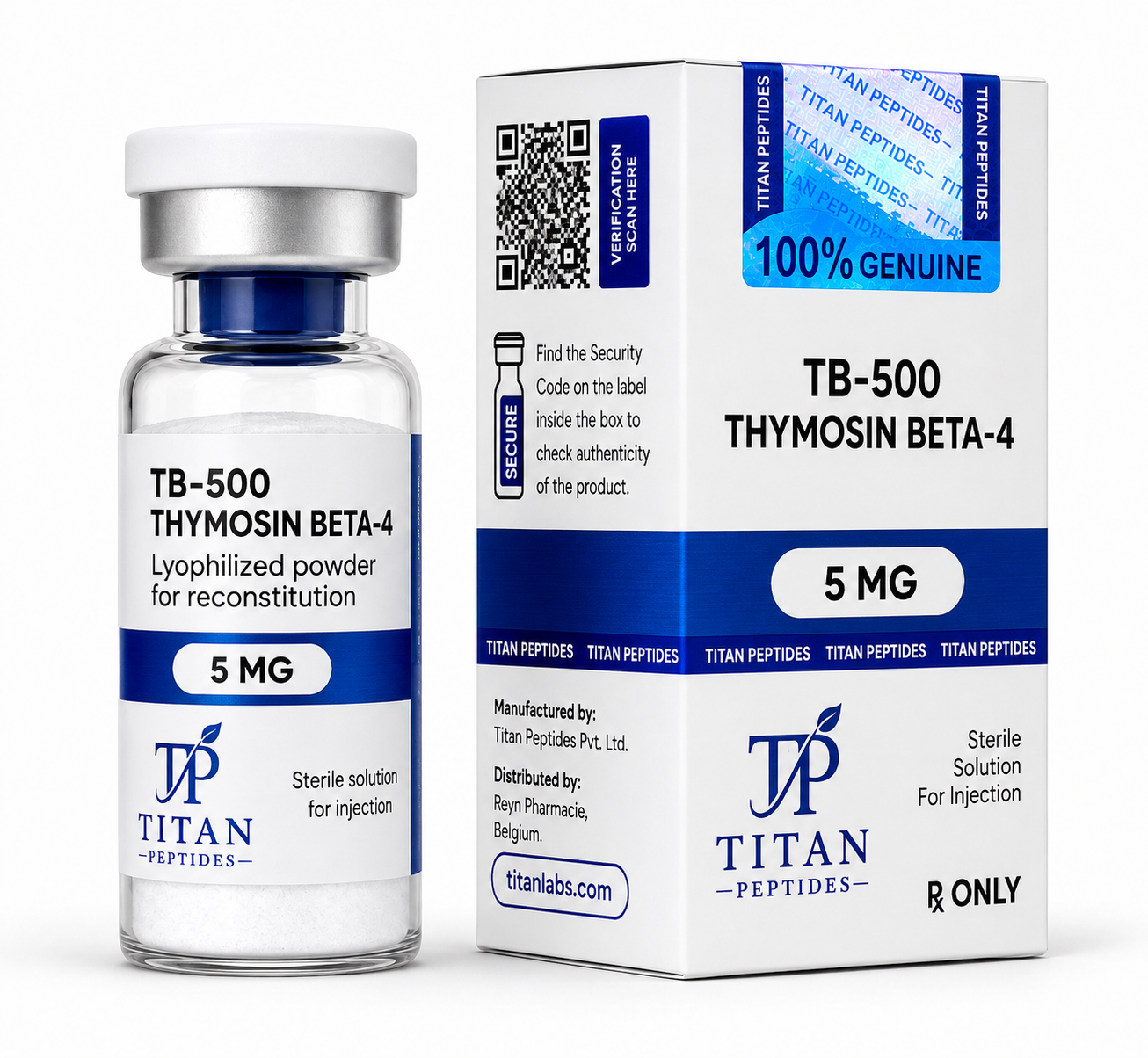
Frequently paired with tissue recovery compounds like BPC-157, TB-500 plays a major role in cellular migration, blood vessel formation (angiogenesis), and muscle recovery. It provides a comprehensive approach when evaluating full-body recovery alongside cognitive optimization.
.
Safety, Side Effects, and Considerations
Clinical trials indicate that Semax is well tolerated due to its non-stimulatory, peptide-based architecture. However, as with all research peptides, potential mild side effects can occur:
- Localized nasal irritation (when using spray formulations)
- Mild, temporary headaches corresponding to increased cellular metabolic activity
- Temporary sleep latency if tested late in the evening
Note: Semax remains designated primarily as an investigational research compound in many international jurisdictions and should be handled according to local laboratory guidelines.
Final Summary
Semax continues to stand out as a premier subject in neuroprotective and cognitive research. Its capacity to elevate critical brain growth factors like BDNF without disturbing cardiovascular stability makes it a vital tool for understanding long-term brain health, focus, and neurological resilience.
As research into peptide therapies advances throughout 2026, Semax maintains its position as a primary molecule in advanced cognitive and physiological studies.