

Peptide & Growth Hormone
How to Reconstitute Peptides: A Complete Laboratory Guide
Aug
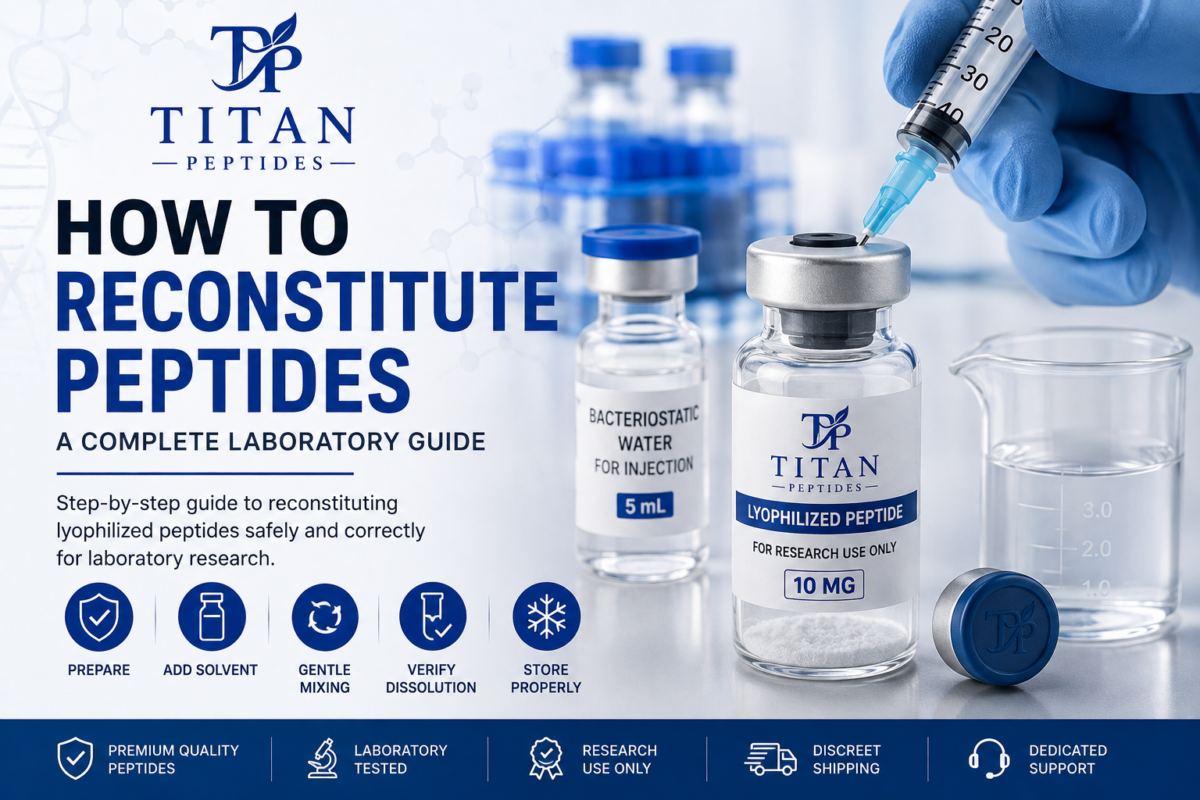
Reconstituting peptides is one of the most important procedures in laboratory research. Whether researchers are working with growth hormone peptides, copper peptides, metabolic research compounds, or other research materials, proper reconstitution plays a key role in maintaining sample quality throughout an experiment.
This guide explains how to reconstitute peptides using accepted laboratory practices, discusses important handling considerations, and outlines best practices for preserving peptide stability after preparation. Understanding proper laboratory techniques can help researchers maintain consistency, reduce contamination risks, and support reliable scientific investigations.
Many research compounds supplied by Titan Research Peptides are provided in lyophilized (freeze-dried) form to promote stability during shipping and storage. Before these compounds can be used in laboratory studies, they must first be reconstituted according to the requirements of the specific research protocol.
If you’re new to peptide handling, we also recommend reading our Storage of Peptides guide after finishing this article, as proper storage and proper reconstitution go hand in hand.
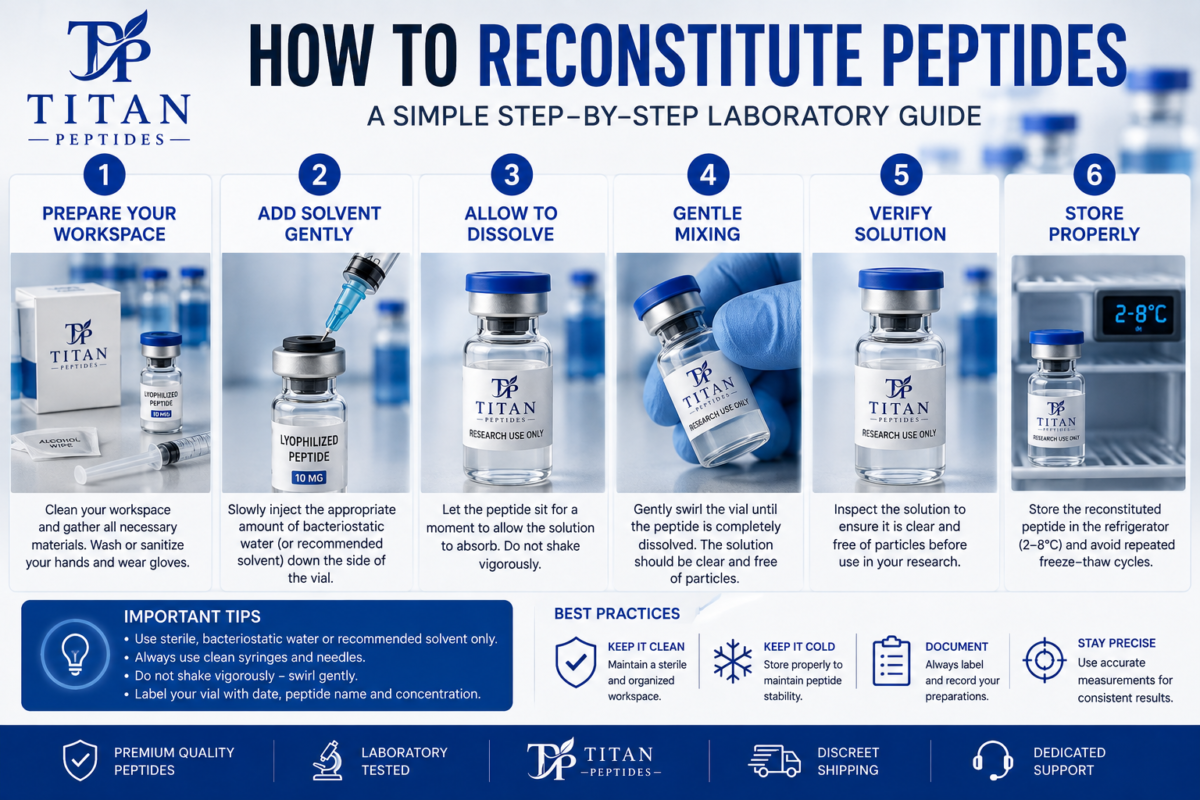
Table of Contents
- What Does Reconstituting Peptides Mean?
- Why Are Peptides Lyophilized?
- Materials Needed Before Reconstitution
- Preparing Your Laboratory Workspace
- How to Reconstitute Peptides
- Handling Peptides After Reconstitution
- Common Mistakes to Avoid
- Frequently Asked Questions
- Final Thoughts
What Does Reconstituting Peptides Mean?
Reconstitution is the process of adding an appropriate laboratory-grade solvent to a lyophilized peptide to create a solution suitable for laboratory research. During lyophilization, water is removed from the peptide to improve stability during storage and transportation. Before researchers can use these compounds in laboratory procedures, they are commonly reconstituted according to established research protocols.
Many popular research peptides—including IGF-1 DES, Hexarelin, Sermorelin, DSIP, Selank, Selank Nasal Spray, Epitalon, Kisspeptin-10, Thymosin Alpha-1, and Thymosin Beta-4—are frequently supplied in lyophilized form for laboratory use.
Why Are Peptides Lyophilized And How to Reconstitute Peptides ?
Lyophilization is a specialized freeze-drying process designed to remove moisture while helping preserve peptide stability during storage. By reducing water content, researchers can store peptides more effectively before they are prepared for laboratory use.
Freeze-dried peptides are generally easier to transport, less susceptible to degradation during storage, and better suited for long-term laboratory inventory management than already prepared solutions.
Products throughout the Titan Research Peptides catalog, including Gonadorelin, GHRP-2, GHRP-6,Hexarelin, and Sermorelin, are supplied in this stable lyophilized format.
Materials Needed Before Reconstitution
Before beginning any laboratory procedure, researchers should prepare all required materials in advance.
Typical laboratory equipment may include:
- Lyophilized peptide vial
- Appropriate laboratory-grade solvent
- Sterile laboratory syringes or pipettes
- Alcohol wipes
- Laboratory gloves
- Clean laboratory workspace
- Proper labeling materials
- Refrigerated storage area for prepared solutions
Having all materials ready before beginning helps reduce unnecessary handling and supports good laboratory practices.
For additional guidance on storing prepared research compounds, see our Storage of Peptides article.
Preparing Your Laboratory Workspace
A clean and organized laboratory environment is essential before reconstituting any peptide.
Researchers should:
- Clean the work surface thoroughly.
- Wear appropriate laboratory protective equipment.
- Prepare all equipment before opening peptide containers.
- Minimize unnecessary movement during preparation.
- Label storage containers before beginning the procedure.
Proper organization helps reduce contamination risks while improving workflow efficiency.
How to Reconstitute Peptides
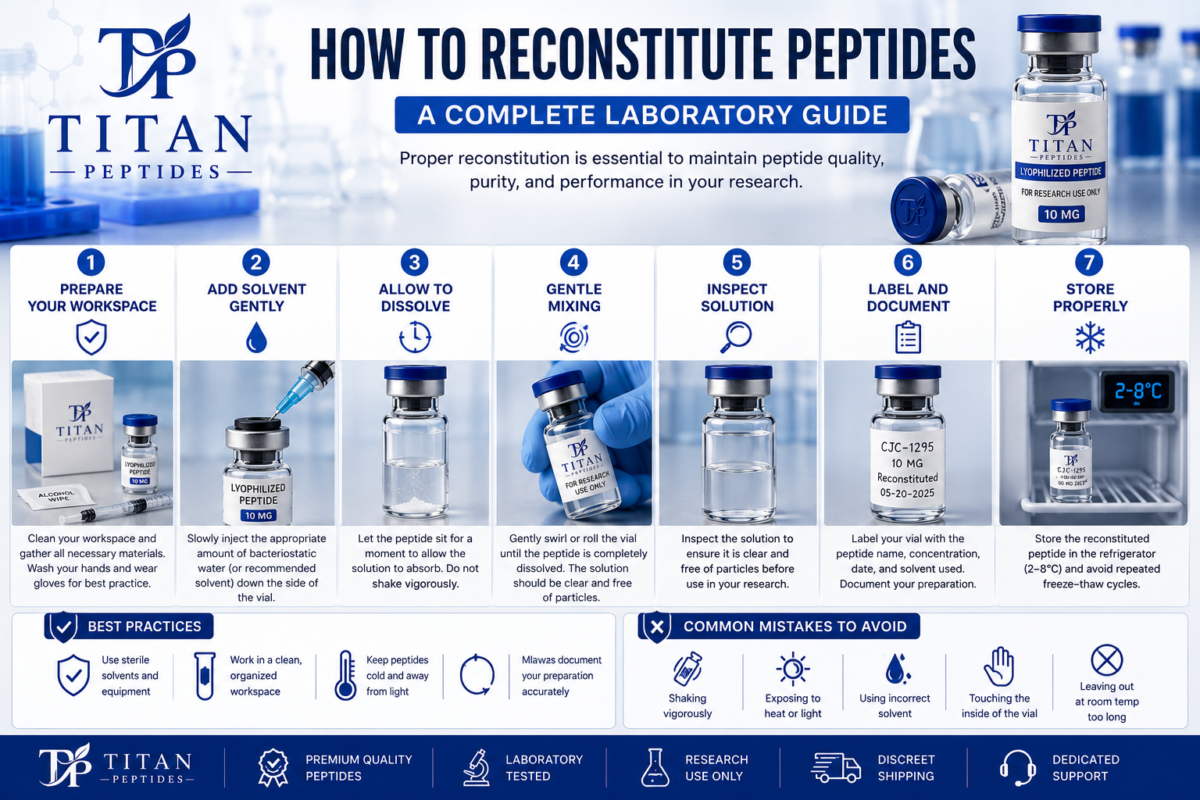
Although individual research protocols may vary, the overall reconstitution process generally follows several common laboratory principles.
First, inspect the peptide vial for any visible damage before beginning. The lyophilized powder should remain sealed until the researcher is ready to proceed.
Next, prepare the required laboratory-grade solvent according to the experimental protocol. Researchers should avoid rushing the preparation process and ensure that all equipment remains clean throughout the procedure.
The solvent is then introduced carefully into the peptide vial using accepted laboratory techniques. Rather than directing the liquid forcefully onto the peptide powder, laboratories often introduce the solution gently along the inside wall of the vial to minimize unnecessary agitation.
Once the solvent has been added, researchers typically allow the peptide sufficient time to dissolve naturally. Excessive shaking is generally avoided because unnecessary agitation may affect delicate research compounds. Instead, laboratories often mix solutions gently according to established laboratory procedures.
After the peptide has dissolved completely, the solution should be visually inspected for clarity before use. If anything appears unusual, researchers should follow their laboratory’s quality control procedures before continuing.
Proper documentation—including preparation date, batch identification, and storage information—helps laboratories maintain accurate records throughout the research process.
Whether preparing Ipamorelin CJC-1295 Blend, BPC-157 TB-500 Blend, klow Blend, Muscle Growth Blend, SLU-PP-332, or YK-11, careful preparation remains an important part of responsible laboratory research.
Handling Peptides After Reconstitution
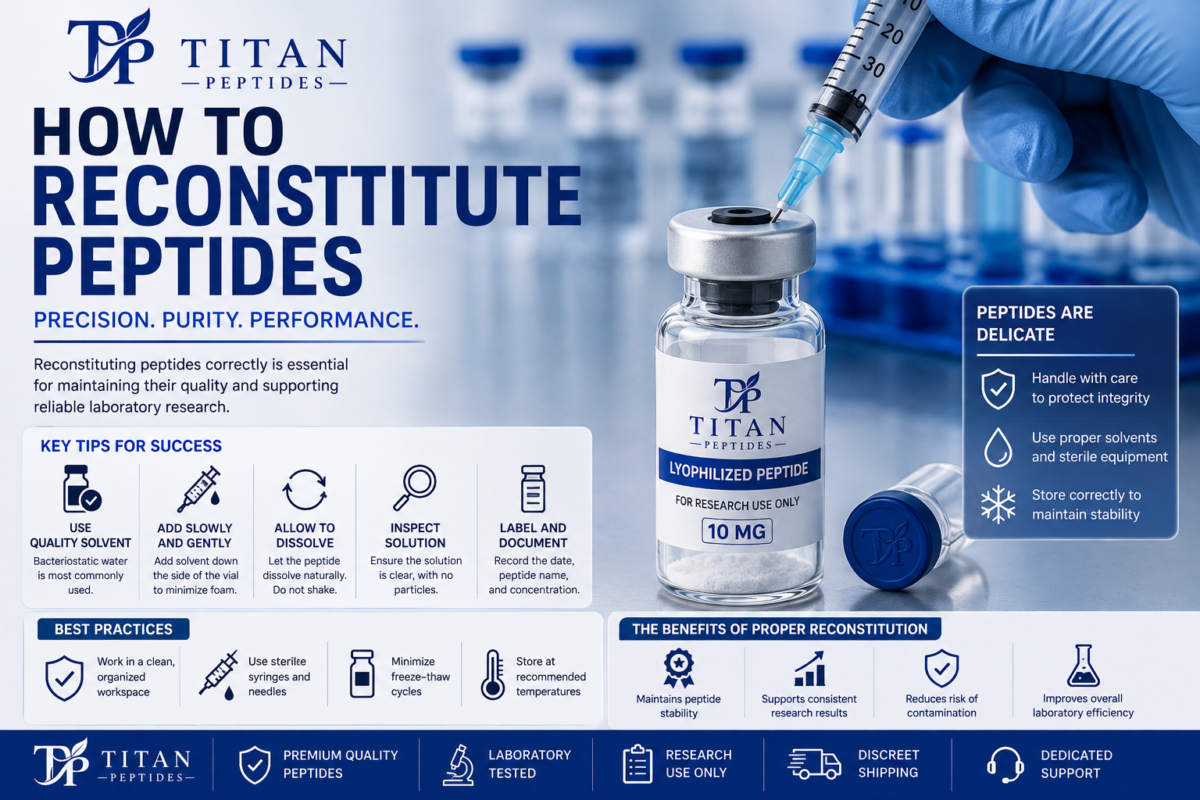
After reconstitution, peptides should be handled according to accepted laboratory procedures.
Good laboratory practices include:
- Returning samples to appropriate storage promptly.
- Avoiding repeated freeze-thaw cycles.
- Keeping containers tightly sealed.
- Clearly labeling prepared solutions.
- Limiting unnecessary exposure to room temperature.
- Following laboratory documentation procedures.
Researchers should also avoid repeated handling of the same vial whenever possible. Many laboratories prepare aliquots to minimize unnecessary exposure during future experiments.
Our Storage of Peptides guide provides additional information on maintaining peptide stability after preparation.
Common Mistakes to Avoid
Several common errors may reduce laboratory efficiency during peptide preparation.
These include:
- Using contaminated laboratory equipment.
- Working in an unclean environment.
- Failing to label prepared solutions.
- Leaving peptides exposed unnecessarily.
- Repeatedly opening storage containers.
- Ignoring laboratory documentation procedures.
- Improper storage after preparation.
Developing consistent laboratory procedures helps researchers reduce these risks while maintaining organized workflows.
Frequently Asked Questions
Can every peptide be reconstituted the same way?
No. Individual research protocols may vary depending on the peptide being studied. Researchers should always follow appropriate laboratory procedures for the specific compound.
Why are peptides sold in freeze-dried form?
Lyophilization helps improve storage stability and supports transportation of research compounds before laboratory preparation.
Should reconstituted peptides be stored properly?
Yes. Proper storage is an important part of maintaining peptide quality after preparation.
Can reconstituted peptides be exposed to repeated temperature changes?
Researchers generally seek to minimize unnecessary temperature fluctuations as part of accepted laboratory handling practices.
Where can I learn more about peptide storage?
Visit our Storage of Peptides guide for detailed information on laboratory storage practices.
Final Thoughts
Understanding how to reconstitute peptides is an important part of responsible laboratory research. Proper preparation, careful handling, organized documentation, and appropriate storage all contribute to maintaining the quality of research materials throughout scientific investigations.
Titan Research Peptides supplies a wide range of premium research compounds for laboratory research, including growth hormone peptides, research blends, metabolic research peptides, copper peptides, and many other specialized research products. By following accepted laboratory procedures and maintaining consistent handling practices, researchers can better support the integrity of their work.
Explore our complete collection of research peptides, browse our educational blog, and visit our Frequently Asked Questions, Storage of Peptides, and Contact Us pages to learn more about our products and laboratory resources.
