

Peptide & Growth Hormone
What Is Sermorelin? Complete Research Guide | 2026
Aug
If you’ve been researching peptides, you’ve probably come across the name What Is sermorelin. It has become one of the most talked-about peptides in endocrine and growth hormone research because of its unique role in the body’s natural hormone signaling process.
Unlike compounds that replace growth hormone directly, Sermorelin has been widely studied for its ability to interact with the body’s own Growth Hormone-Releasing Hormone (GHRH) pathway. This difference has made it an important research compound for laboratories investigating hormone regulation, metabolism, peptide signaling, and cellular communication.
As peptide science continues to grow, researchers are also comparing Sermorelin with compounds such as CJC-1295 Without DAC, Ipamorelin, and Tesamorelin to better understand how different peptides influence growth hormone pathways under laboratory conditions.
In this guide, you’ll learn what Sermorelin is, how it works, why researchers continue studying it, and why it remains one of the most respected peptides in scientific research.
Disclaimer: This article is provided for educational purposes only. Products supplied by Titan Research Peptides are intended strictly for laboratory research and are not approved for human consumption.
Table of Contents
- What Is Sermorelin?
- How Was Sermorelin Developed?
- How Does Sermorelin Work?
- Sermorelin vs Growth Hormone
- Why Researchers Continue Studying Sermorelin
- Current Research Applications
What Is Sermorelin?
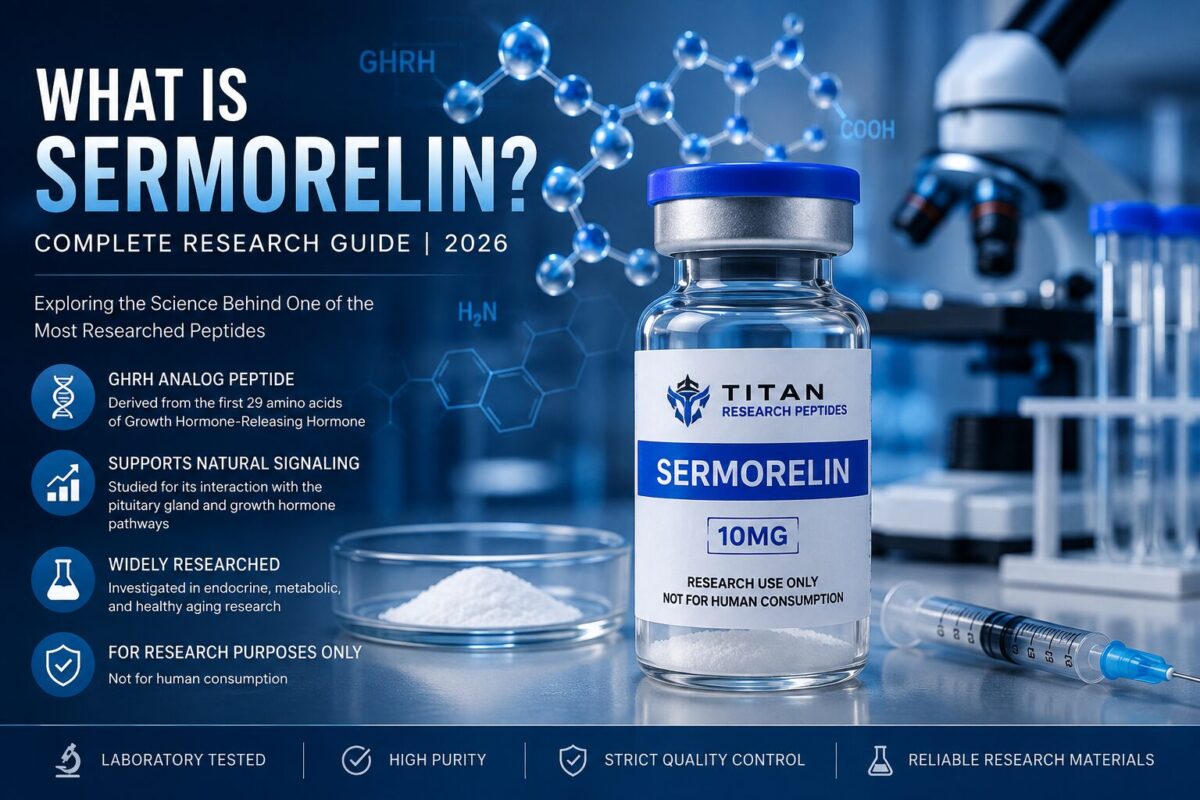
Sermorelin is a synthetic peptide developed from the first 29 amino acids of Growth Hormone-Releasing Hormone (GHRH). Scientists discovered that this portion of the naturally occurring hormone contains the biological activity responsible for stimulating communication with the pituitary gland.
Rather than acting as growth hormone itself, Sermorelin serves as a signaling peptide. Researchers study this process to understand how the body naturally regulates hormone production through endocrine communication.
One simple way to understand this is to imagine the body as a factory.
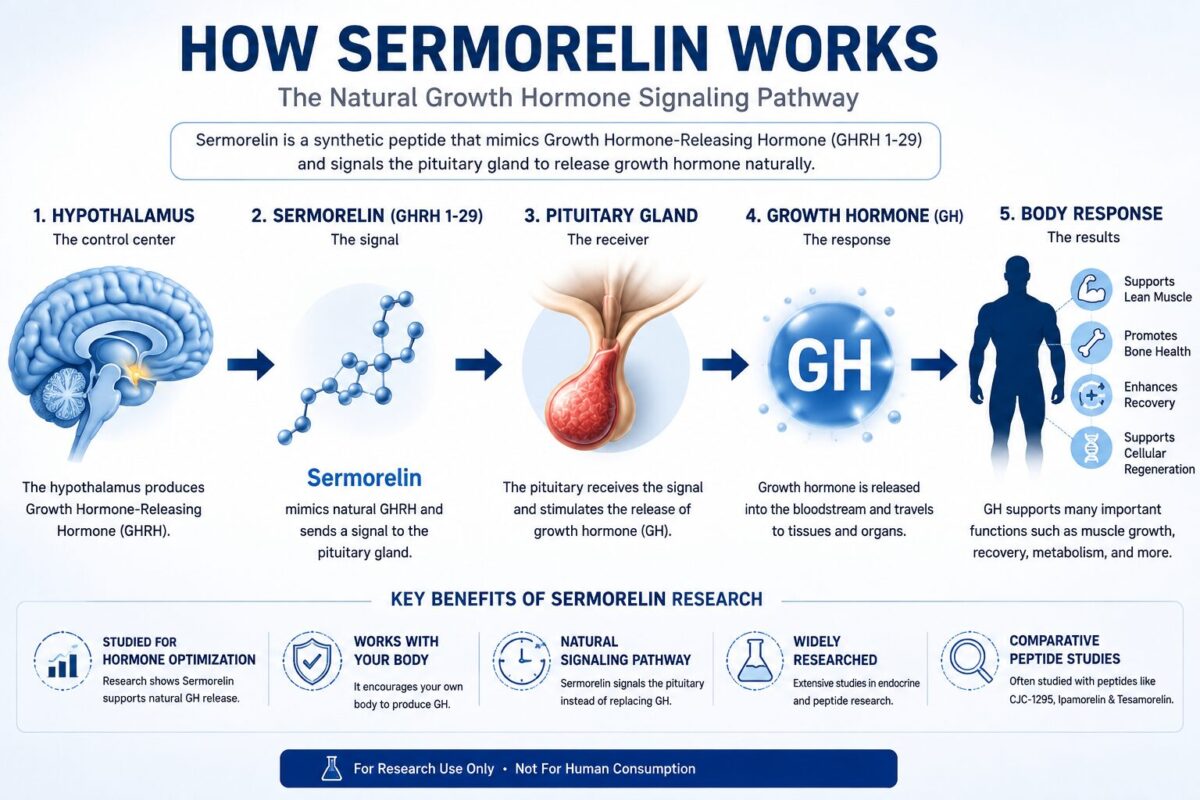
The hypothalamus sends instructions.
The pituitary gland receives those instructions.
Growth hormone is then produced as part of the body’s normal biological response.
Instead of replacing growth hormone, Sermorelin helps researchers study the communication process itself. That distinction is one of the reasons this peptide continues to receive significant attention in endocrine research.
Today, Sermorelin is frequently researched alongside peptides including CJC-1295, Ipamorelin, and Tesamorelin, allowing scientists to compare different approaches to studying growth hormone signaling pathways.
How Was Sermorelin Developed?
The development of Sermorelin began as researchers searched for a better understanding of Growth Hormone-Releasing Hormone and its biological function.
Scientists eventually discovered that only the first 29 amino acids of GHRH were necessary to retain biological activity. This discovery led to the development of Sermorelin, a shorter synthetic peptide that could be used in controlled laboratory studies.
Since its introduction, Sermorelin has appeared in numerous scientific publications involving endocrine biology, peptide signaling, metabolism, and hormone regulation.
Its extensive research history has made it one of the most recognized GHRH analogs available today.
As peptide research has advanced, investigators have expanded their work to include comparisons with newer compounds such as MGF Peptide 2mg, which is commonly investigated in muscle biology and regenerative research, and DSIP Peptide 10mg, a peptide studied for its relationship with neurobiology and sleep-related pathways.
Together, these compounds help researchers build a broader understanding of peptide biology across multiple physiological systems.
How Does Sermorelin Work?
One of the biggest reasons scientists continue researching Sermorelin is its unique mechanism of action.
Instead of introducing growth hormone directly, Sermorelin interacts with receptors located within the pituitary gland. Researchers investigate how this interaction influences natural hormone signaling and how those signals affect biological processes throughout the body.
This makes Sermorelin particularly useful for laboratory studies examining endocrine communication rather than hormone replacement.
Current areas of research include:
- Growth hormone signaling
- Endocrine regulation
- Cellular communication
- Protein metabolism
- Growth factor pathways
- Hormonal feedback systems
- Neuroendocrine research
- Healthy aging biology
Because growth hormone regulation is a complex biological process, researchers often study Sermorelin alongside other research peptides.
For example, CJC-1295 With DAC is frequently investigated because of its longer duration of activity, while CJC-1295 Without DAC is commonly included in studies requiring a shorter-acting GHRH analog. Ipamorelin is another popular peptide in laboratory research due to its selective interaction with growth hormone secretagogue receptors.
Studying these compounds together helps scientists better understand how different peptides influence hormone signaling through separate biological mechanisms.
What Is Sermorelin vs Growth Hormone
Many people mistakenly believe Sermorelin and growth hormone are the same thing.
In reality, they perform completely different roles.
Growth hormone is the hormone produced by the pituitary gland.
Sermorelin is a peptide that researchers study because it communicates with the pituitary gland through the body’s natural signaling pathway.
Think of it like sending an email.
Growth hormone is the finished document.
Sermorelin is simply the message requesting that the document be created.
This difference explains why Sermorelin continues to play such an important role in endocrine research.
Scientists are interested in understanding how biological systems regulate themselves naturally rather than simply replacing hormones from outside the body.
Why Researchers Continue Studying Sermorelin
Scientific interest in Sermorelin has remained strong because growth hormone influences many different biological systems.
Researchers continue exploring how this peptide contributes to a better understanding of:
Endocrine Function
The communication between the hypothalamus and pituitary gland remains one of the most important areas of hormone research. Sermorelin provides scientists with a valuable model for investigating these signaling pathways.
Growth Hormone Research
Growth hormone regulation continues to be one of the primary reasons researchers study Sermorelin. Understanding these pathways may help expand scientific knowledge of endocrine biology.
Cellular Communication
Hormones function by sending messages throughout the body. Researchers investigate Sermorelin to better understand how these communication networks coordinate biological activity.
Metabolic Research
Scientists continue examining how growth hormone signaling influences metabolism, protein synthesis, and other physiological processes under laboratory conditions.
Comparative Peptide Research
Modern laboratories rarely study a single peptide in isolation. Sermorelin is often evaluated alongside Tesamorelin, CJC-1295, Ipamorelin, MGF Peptide, and even regenerative compounds like GHK-Cu, allowing researchers to compare different signaling pathways and biological responses across peptide families.
Current Areas of Scientific Research
Research involving Sermorelin continues to expand into several important scientific fields.
Current investigations commonly include:
- Endocrine physiology
- Hormone signaling
- Growth factor biology
- Neuroendocrine research
- Cellular communication
- Protein metabolism
- Peptide receptor biology
- Healthy aging research
Researchers also recognize that successful peptide studies depend on proper preparation and storage. For that reason, laboratory protocols often include products such as Bac Water, which is commonly used during peptide reconstitution before experimental work begins.
As interest in peptide science continues to grow, Sermorelin remains one of the most widely studied compounds for understanding natural growth hormone signaling and endocrine communication.
Is Sermorelin Still Being Researched?
Absolutely. Sermorelin continues to be an important peptide in scientific research because there is still much to learn about growth hormone regulation and endocrine communication. Researchers are constantly exploring how peptides influence biological systems and how these signaling pathways work together.
One reason Sermorelin remains relevant is its well-understood mechanism of action. Because it has been studied for many years, it often serves as a reference point when scientists investigate newer peptides or compare different growth hormone-releasing compounds.
In many laboratory studies, researchers compare Sermorelin with CJC-1295 With DAC, CJC-1295 Without DAC, and Ipamorelin to better understand differences in receptor activity, signaling duration, and hormone regulation. These comparisons help expand scientific knowledge while providing valuable insight into peptide biology.
Research also continues alongside compounds such as DSIP Peptide 10mg, which is commonly investigated in neurobiology and sleep-related research, and MGF Peptide 2mg, a peptide studied for its role in muscle biology and regenerative science. Although these peptides work through different biological pathways, together they contribute to a broader understanding of peptide research.
What Makes Sermorelin Different?
Every research peptide has unique characteristics, but Sermorelin has remained one of the most respected compounds because it focuses on the body’s natural communication system.
Rather than replacing growth hormone directly, researchers study Sermorelin because it activates the biological signaling pathway responsible for growth hormone release. This allows scientists to investigate how normal endocrine function operates under controlled laboratory conditions.
Several characteristics make Sermorelin unique:
- Extensive scientific literature
- Well-established biological mechanism
- Widely recognized GHRH analog
- Frequently studied in endocrine research
- Valuable for comparative peptide studies
- Relevant in growth hormone signaling investigations
Its long research history also makes it easier for scientists to compare emerging peptides with a compound that has already been investigated extensively.
Why Peptide Quality Matters
Whether researchers are studying Sermorelin or any other peptide, product quality plays an important role in obtaining reliable experimental results.
Consistent manufacturing standards help researchers reduce unnecessary variables during laboratory investigations. Proper handling, storage, and preparation are equally important when working with peptide compounds.
For example, laboratories frequently use Bac Water during peptide reconstitution while following established scientific protocols. Maintaining sterile laboratory conditions and storing peptides correctly helps preserve product stability throughout the research process.
Choosing dependable research materials supports better consistency across scientific investigations and allows researchers to focus on generating meaningful data.
Frequently Asked Questions
What is Sermorelin?
Sermorelin is a synthetic peptide based on the biologically active portion of Growth Hormone-Releasing Hormone (GHRH). Researchers study it because of its interaction with natural growth hormone signaling pathways.
Is Sermorelin the same as growth hormone?
No. Growth hormone and Sermorelin are different compounds. Sermorelin is investigated because it interacts with the body’s natural signaling pathway responsible for growth hormone release rather than replacing the hormone itself.
Why is Sermorelin important in research?
Researchers continue studying Sermorelin because it helps improve scientific understanding of endocrine communication, hormone regulation, cellular signaling, and growth hormone biology.
What peptides are commonly studied with Sermorelin?
Sermorelin is frequently researched alongside:
- CJC-1295 With DAC
- CJC-1295 Without DAC
- Ipamorelin
- Tesamorelin
- MGF Peptide
- DSIP Peptide
These peptides are often included in comparative laboratory studies involving hormone signaling and peptide biology.
Is Sermorelin still being researched?
Yes. Scientific interest in Sermorelin remains strong, and researchers continue publishing studies exploring endocrine physiology, peptide signaling, and growth hormone regulation.
Final Thoughts
Understanding what is Sermorelin begins with understanding how the body naturally regulates hormone communication. Unlike compounds that replace hormones directly, Sermorelin has become one of the most researched peptides because it allows scientists to investigate the body’s own endocrine signaling pathways.
Its long history in peptide science, combined with continued interest from researchers around the world, has made it an important research compound in studies involving growth hormone regulation, metabolism, neuroendocrine biology, and cellular communication.
As peptide research continues to evolve, Sermorelin remains a valuable tool for expanding scientific knowledge and understanding the complex biological systems that regulate hormone activity.
If you’re interested in learning more about growth hormone-related research, exploring compounds such as CJC-1295 With DAC, CJC-1295 Without DAC, Ipamorelin, Tesamorelin, MGF Peptide 2mg, and DSIP Peptide 10mg can provide additional insight into the diverse world of peptide science.
Related Products
- Sermorelin Peptide 10mg
- CJC-1295 With DAC 2mg
- CJC-1295 Without DAC 2mg
- Ipamorelin 5mg
- Tesamorelin 10mg
- MGF Peptide 2mg
- DSIP Peptide 10mg
- GHK-Cu 50mg
- Bac Water 30ml
Related Blog Posts
- Does Sermorelin Work? What Current Research Shows
- What Is Sermorelin Used For? Research Applications Explained
- Sermorelin vs CJC-1295: Key Differences
- What Is CJC-1295? Complete Research Guide
- What Is Ipamorelin?
- What Is MGF Peptide?
- What Is DSIP Peptide?
- How to Reconstitute Research Peptides
- Peptide Storage Guide
Suggested Category
- Peptide Research
