IGF-1 LR3 0 out of 5
$39.00
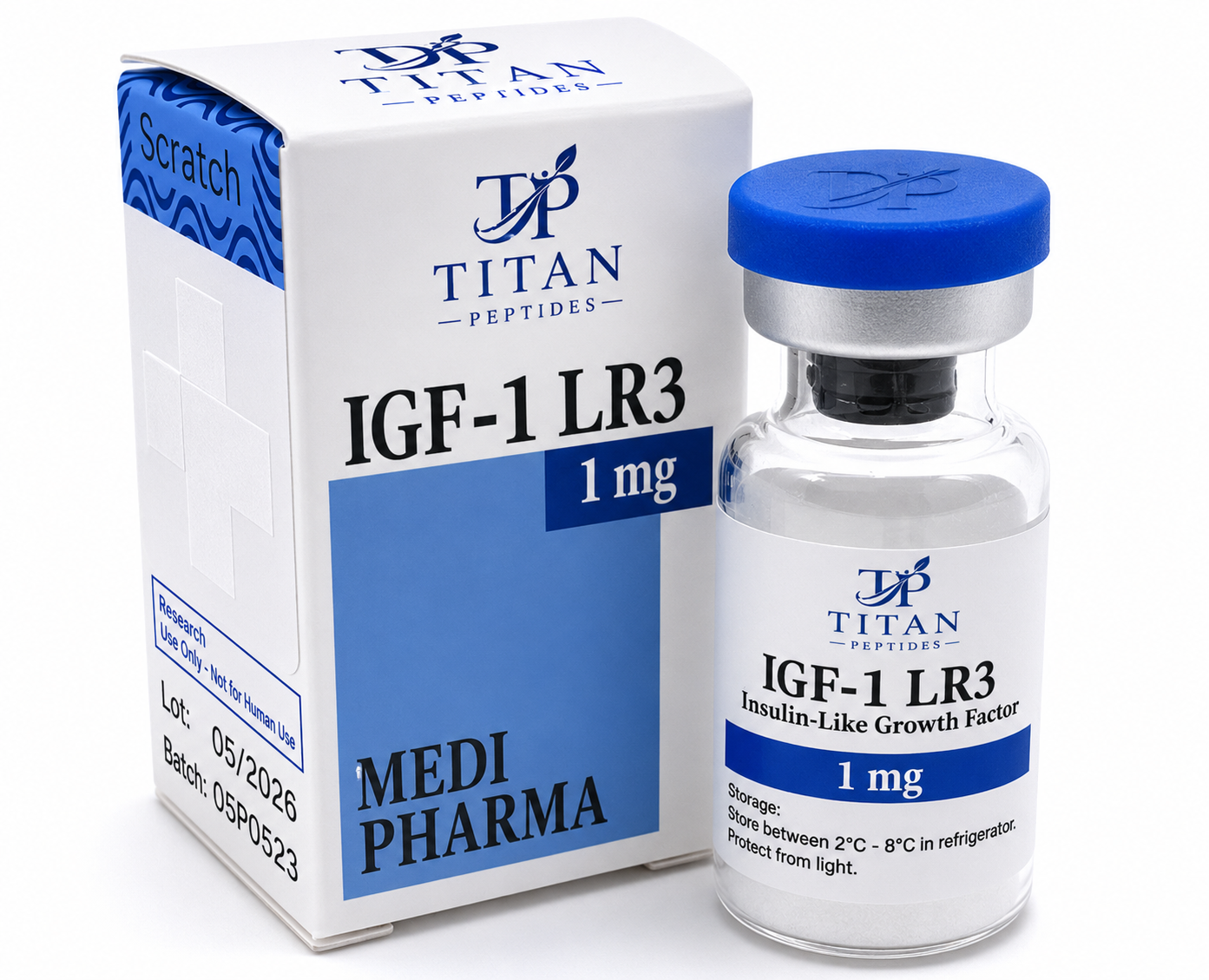
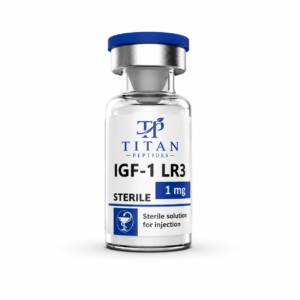
IGF-1 LR3 is a premium research-grade peptide manufactured to high purity standards for laboratory research applications. Featuring an 83-amino acid analog configuration with an arginine substitution at position 3 and a 13-amino acid N-terminus extension, this long-acting variant is engineered to facilitate advanced studies in cellular proliferation, protein synthesis, and tissue regeneration due to its significantly extended half-life and reduced affinity for binding proteins. Every vial undergoes strict quality control and is supplied in secure packaging to ensure consistency, reliability, and research integrity.
Product Overview
IGF-1 LR3 (chemically known as Long R3 Insulin-Like Growth Factor-1) is an ultra-potent synthetic analog of endogenous human IGF-1. In its natural form, IGF-1 is a highly unstable peptide with a biological half-life of less than 10 minutes, largely due to its rapid binding to IGF-binding proteins (IGFBPs) which deactivate its signal. IGF-1 LR3 is structurally modified to overcome this limitation, extending its active half-life to approximately 20 to 30 hours. This modification provides researchers with a highly stable molecular standard for studying muscle cell division, cellular repair pathways, and tissue growth in vivo.
At Titan Labs, we supply this premium hormone analog in its absolute purest state: a vacuum-sealed, lyophilized (freeze-dried) powder verified at over 99% purity via HPLC. By eliminating structural impurities, cross-reactivity, and transport protein interference, this compound allows researchers to isolate and observe true IGF-1 receptor activation, muscle tissue remodeling, and lipid metabolism pathways with absolute clinical precision.
What is IGF-1 LR3?
IGF-1 LR3 is a recombinant single-chain polypeptide composed of 83 amino acids (compared to the 70 amino acids found in natural IGF-1). It features two specific molecular modifications that alter its biological signaling:
-
R3 Substitution: The glutamic acid residue at the third position of the peptide chain is replaced with an arginine.
-
N-Terminal Extension: A 13-amino-acid extension is attached to the N-terminus of the peptide sequence.
This engineered configuration has a profound biochemical impact: it reduces the peptide’s binding affinity for inhibitory IGFBPs by over 120-fold. Because it cannot be easily bound and neutralized by these transport proteins, the free, active concentration of the peptide remains significantly higher in the testing matrix. This allows it to bind to the IGF-1 receptor (IGF1R) with uninterrupted potency, initiating deep cell-signaling pathways over a prolonged period.
Mechanisms of Hyperplasia and Cellular Recovery
In muscular and physiological research, IGF-1 LR3 is highly regarded for its unique ability to stimulate muscle hyperplasia—the actual splitting and creation of new muscle cells (fibers)—rather than just hypertrophy (the enlargement of existing fibers). This cellular regeneration is studied via specific cellular cascades:
-
Satellite Cell Activation: The peptide acts as a primary signaling molecule that wakes up dormant satellite cells located in muscle tissue, causing them to proliferate, differentiate, and fuse into new mature muscle fibers.
-
Nutrient Partitioning: By blocking the transport of glucose across cell membranes in adipose (fat) tissue, IGF-1 LR3 forces biological models to burn stored lipids for energy while shuttling amino acids and glycogen directly into regenerating muscle tissue.
-
Mitogen-Activated Protein Kinase (MAPK) Pathway: Receptors activated by IGF-1 LR3 trigger the MAPK cellular pathway, directly accelerating DNA synthesis, transcription, and systemic cellular division.
These combined mechanisms make it a crucial analytical reference standard for researching muscular atrophy, physical trauma recovery, and advanced cellular regeneration protocols.
IGF-1 LR3 Benefits
In scientific literature and laboratory endocrine models, the documented benefits of premium IGF-1 LR3 highlight its exceptional research potential:
-
Promotes Muscle Hyperplasia: Triggers the proliferation and fusion of satellite cells to create brand new muscle fibers in animal subjects.
-
Drastically Extended Half-Life: Features a 20+ hour active window compared to the 10-minute half-life of standard IGF-1, ensuring steady cellular exposure.
-
Advanced Nitrogen Retention: Heavily boosts cellular nitrogen accumulation, maintaining a highly anabolic state in skeletal muscle tissues.
-
Enhanced Nutrient Delivery: Repartitions glucose and essential amino acids away from fat tissue and directly into repairing muscle cells.
-
Accelerated Connective Tissue Repair: Stimulates collagen synthesis pathways, aiding research into joint, tendon, and ligament recovery.
Side Effects
Despite its precise signaling profile, administering IGF-1 LR3 to biological systems requires careful monitoring for specific off-target side effects:
-
Transient Hypoglycemia: Its structural similarity to insulin can occasionally cause rapid drops in blood glucose levels in animal models, requiring constant glycemic monitoring.
-
Organomegaly Risk: Prolonged exposure or excessive dosages can stimulate systemic growth pathways in internal organs, such as the liver or kidneys.
-
Localized Inflammatory Response: Reconstituted liquid formulations can cause temporary redness, swelling, or irritation at the injection site.
-
Water Retention (Edema): May cause minor extracellular fluid retention due to shifts in systemic sodium and water balance.
Key Features
-
Premium, ultra-pure Long R3 IGF-1 (99%+ HPLC verified)
-
Unique 83-amino-acid design resists binding to inhibitory transport proteins (IGFBPs)
-
Lyophilized crystalline powder formulation engineered for maximum structural stability
-
Perfect reference standard for studying satellite cell activation, hyperplasia, and glucose partitioning
-
Strictly manufactured under sterile, analytical-grade pharmaceutical protocols
Primary Uses in Research
This compound is heavily utilized for:
-
Investigating receptor binding kinetics and downstream signaling cascades of the IGF1R pathway
-
Studying the differences in muscle fiber hyperplasia (cell creation) vs. standard hypertrophy
-
Analyzing changes in blood glucose levels and insulin receptor cross-reactivity
-
Modeling tissue regeneration, wound healing, and collagen synthesis in damaged ligaments
-
Researching therapeutic solutions for muscular dystrophy and chronic muscle-wasting diseases
How to Use
To prepare this chemical for laboratory research, calculate the exact micro-dosage required for your specific in vitro assay or animal model weight. Because IGF-1 LR3 is a highly delicate peptide, it must be reconstituted with extreme care to prevent the protein chain from denaturing.
Slowly introduce an appropriate sterile diluent—such as 0.6% Acetic Acid (for long-term stock stability) or Sterile Bacteriostatic Water (for immediate usage)—down the inside glass wall of the vial. Do not shake, swirl aggressively, or expose the vial to physical shock; instead, let the vial sit quietly for several minutes until the lyophilized powder completely dissolves into a clear, colorless liquid.
Ensure all mixing vessels, syringes, and transfer tools are thoroughly sterilized using aseptic techniques before compounding. Store reconstituted stock solutions strictly in cold storage at 2 to 8 degrees Celsius.
Product Specifications
-
Device Type: Lyophilized Raw Powder / Analytical Reference Standard
-
Active Compound: IGF-1 LR3 (Long R3 Insulin-Like Growth Factor-1)
-
CAS Number: 946870-92-4
-
Chemical Formula: C400-H625-N111-O115-S9
-
Molecular Weight: 9117.6 g/mol
-
Intended Use: Scientific Laboratory Research and Development
-
Brand: Titan Labs
-
Purity Standard: Exceeds 99% via High-Performance Liquid Chromatography (HPLC)
Storage Guidelines
Store un-reconstituted lyophilized peptide vials in a dark, dry freezer at -20 degrees Celsius for long-term storage (up to 24 months). If intended for immediate use, vials may be kept in cold refrigeration at 2 to 8 degrees Celsius for up to 3 months. Protect the compound from direct exposure to UV light, moisture, and temperature spikes. Once reconstituted, always store the liquid solution in a refrigerator at 2 to 8 degrees Celsius and utilize within 30 days to ensure complete bio-activity.
Related Category
Essential premium peptide for investigating muscle fiber development, satellite cell activation, and insulin-like metabolic pathways. Browse our Peptides category.
Related Products
-
BPC-157 5mg – Premium Tissue Healing Peptide
-
TB-500 5mg – High-Purity Thymosin Beta-4 Peptide
-
Ipamorelin 5mg – Selective GHRP Lyophilized Vial
-
HGH Frag 5mg – Targeted Lipolytic Peptide Standard
Frequently Asked Questions
What is the difference between standard IGF-1 and IGF-1 LR3? Standard IGF-1 has a half-life of under 10 minutes and is quickly bound and neutralized by transport proteins. IGF-1 LR3 features a 13-amino-acid extension and an arginine substitution that prevents this binding. This extends its half-life to over 20 hours, allowing for far more stable and effective research.
Why is acetic acid recommended for reconstituting IGF-1 LR3? IGF-1 LR3 is highly stable in an acidic environment. While bacteriostatic water can be used for immediate testing, reconstituting the peptide with a mild 0.6% acetic acid solution prevents the protein from sticking to the glass vial walls and extends its active lifespan in liquid storage.
Does IGF-1 LR3 cause insulin-like blood sugar drops? Yes, because of its structural similarity to insulin, IGF-1 LR3 can bind weakly to insulin receptors. In animal models, this can lead to temporary hypoglycemia (low blood sugar). Researchers should ensure test models are well-nourished to prevent glucose crashes during assays.
Can I shake the vial to dissolve the powder faster? Absolutely not. Shaking or vibrating the vial will shear the delicate, long-chain polypeptide structure of the IGF-1 LR3 molecule, rendering the compound completely inactive. Always allow the powder to dissolve on its own after adding the diluent.
Conclusion
IGF-1 LR3 from Titan Labs delivers the high-level chemical purity, long-lasting biological stability, and targeted receptor performance required for advanced muscular hyperplasia and tissue recovery studies. By choosing our premium, HPLC-tested lyophilized formulation, your laboratory secures consistent, high-yield molecular pathways and highly reproducible clinical data. Combine this elite growth-promoting peptide with our tissue repair standards to establish comprehensive recovery assays. Explore our full Peptides category or select from the related product listings above to finalize your research inventory today!
Be the first to review “IGF-1 LR3 0 out of 5”
Related products
Reviews
There are no reviews yet.