

Peptide & Growth Hormone
What Is AHK-Cu? A Beginner’s Guide to the Copper Peptide
Jul
If you’ve recently started learning about research peptides, you’ve probably come across the name AHK-Cu. As interest in peptide science continues to grow, more researchers and laboratory professionals are exploring copper peptides for their unique biochemical properties.
But what is AHK-Cu, and why has it become an important compound in scientific research?
This beginner-friendly guide explains the fundamentals of AHK-Cu, including its structure, laboratory applications, storage recommendations, and how it compares with other research peptides.
What You’ll Learn in This Guide
- What Is AHK-Cu?
- Understanding Copper Peptides
- How Does AHK-Cu Work?
- Why Researchers Study AHK-Cu
- Laboratory Research Applications
- How AHK-Cu Is Supplied
- Storage and Handling
- AHK-Cu vs Other Copper Peptides
- Frequently Asked Questions
- Related Research Peptides
- Final Thoughts
What Is AHK-Cu?
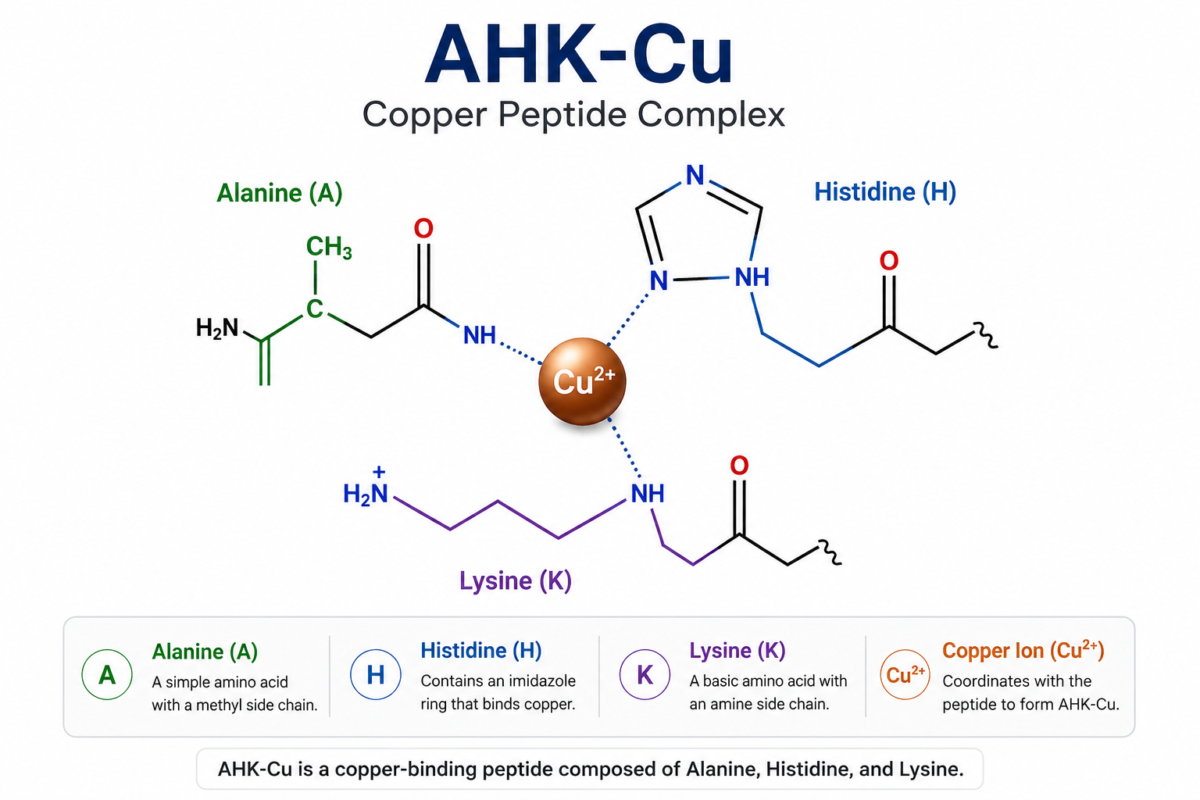
AHK-Cu is a synthetic copper peptide consisting of the amino acids Alanine, Histidine, and Lysine, combined with a copper ion. Within laboratory settings, researchers investigate AHK-Cu because of its ability to interact with biological systems at the cellular level.
Copper peptides have become an increasingly important area of scientific research due to their involvement in numerous biological processes. Scientists continue exploring how these compounds behave under controlled laboratory conditions to better understand cellular communication and molecular signalling.
Unlike medications intended for clinical use, AHK-Cu sold by Titan Research Peptides is supplied exclusively for laboratory research purposes.
Understanding Copper Peptides
Copper peptides are small chains of amino acids that bind to copper ions. This unique combination has attracted attention across several scientific disciplines, including molecular biology, peptide chemistry, and cell biology.
Researchers continue investigating copper peptides because they provide useful models for studying:
- Cellular signalling
- Protein interactions
- Molecular communication
- Laboratory tissue models
- Peptide chemistry
- Cellular metabolism
AHK-Cu represents one member of this growing family of research peptides.
How Does AHK-Cu Work?
Although research remains ongoing, scientists believe AHK-Cu interacts with various biochemical pathways involved in cellular function.
Within laboratory environments, researchers examine:
- Peptide-receptor interactions
- Cellular communication pathways
- Protein expression
- Biochemical signalling
- Molecular regulation
- Experimental cell culture models
Many studies focus on understanding how copper-bound peptides behave under carefully controlled laboratory conditions rather than drawing conclusions about clinical outcomes.
As peptide science advances, researchers continue discovering new areas where AHK-Cu may provide valuable insights into biological processes.
Why Researchers Study AHK-Cu
The popularity of AHK-Cu has steadily increased because peptide researchers are continually looking for compounds that offer interesting biochemical characteristics.
Some reasons laboratories investigate AHK-Cu include:
Stable peptide structure
Its relatively simple peptide sequence allows researchers to study copper-peptide interactions in controlled laboratory settings.
Expanding peptide research
Copper peptides continue receiving attention across academic institutions and biotechnology laboratories.
Cellular investigations
Scientists frequently include AHK-Cu when studying cellular behaviour, protein interactions, and molecular communication.
Comparative research
Researchers often compare AHK-Cu with other copper peptides to identify structural similarities and differences.
Laboratory Research Applications
AHK-Cu continues to be investigated across numerous laboratory disciplines.
Current areas of scientific interest include:
- Molecular biology
- Cell biology
- Peptide chemistry
- Biochemistry
- Protein interaction research
- Tissue culture experiments
- Laboratory-based regenerative biology research
Because peptide science continues evolving, researchers regularly publish new findings that improve scientific understanding of copper peptides.
It is important to recognise that laboratory investigations are designed to improve scientific knowledge and should not be interpreted as evidence of clinical effectiveness.
How AHK-Cu Is Supplied
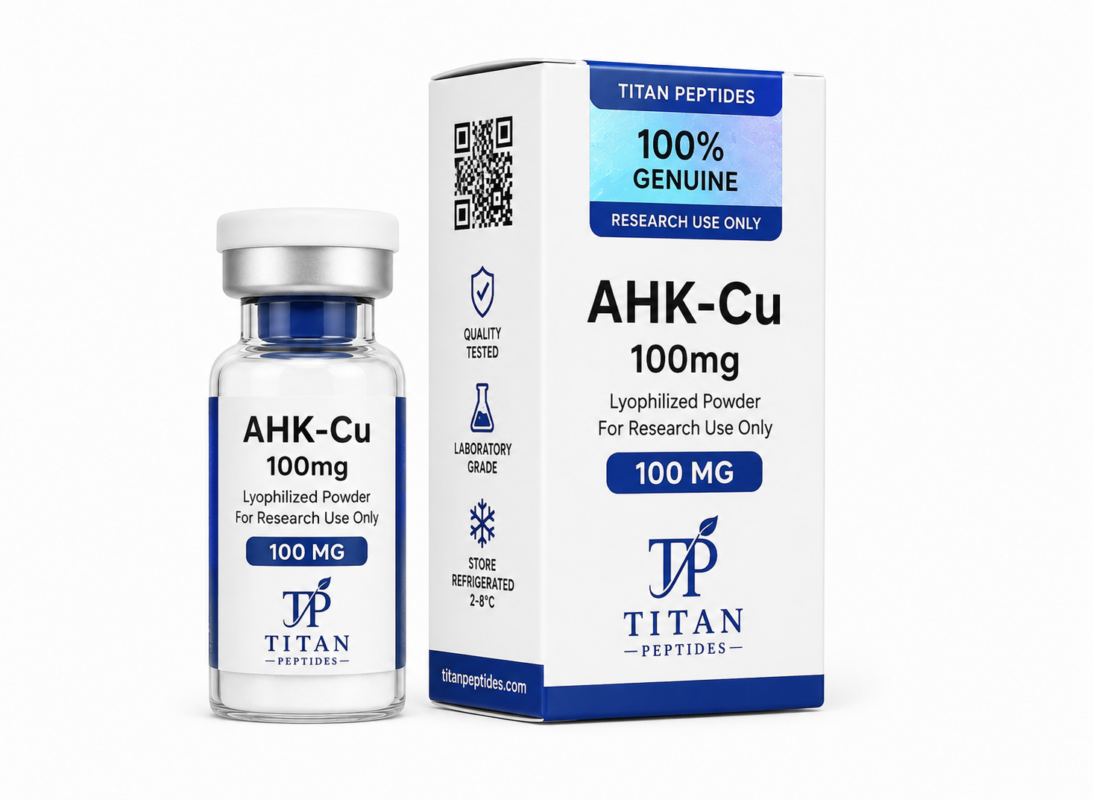
High-quality AHK-Cu is generally supplied as a lyophilised (freeze-dried) powder.
Lyophilisation helps preserve peptide stability during shipping and storage while allowing laboratories to prepare solutions according to validated research protocols.
Typical product specifications include:
| Specification | Details |
|---|---|
| Product Name | AHK-Cu |
| Form | Lyophilised Powder |
| Quantity | 100mg |
| Intended Use | Laboratory Research Only |
| Packaging | Sterile Sealed Vial |
Titan Research Peptides manufactures products under strict quality control procedures to provide consistent research materials.
Storage and Handling
Proper storage is essential for maintaining peptide quality.
General recommendations include:
- Store refrigerated between 2–8°C.
- Protect from direct sunlight.
- Keep the vial sealed until needed.
- Avoid repeated freeze-thaw cycles after reconstitution.
- Follow your laboratory’s handling protocols.
- Use sterile laboratory equipment during preparation.
Correct storage practices help preserve the integrity of research materials over time.
AHK-Cu vs Other Copper Peptides
Although AHK-Cu is one of the better-known copper peptides, researchers frequently compare it with other peptide compounds to better understand differences in structure and laboratory behaviour.
Each peptide has its own unique amino acid sequence, making comparative research an important part of peptide science.
When selecting peptides for laboratory studies, researchers often consider factors such as:
- Molecular structure
- Stability
- Purity
- Research objectives
- Experimental design
These comparisons contribute to a broader understanding of peptide chemistry and cellular biology.
Frequently Asked Questions
What is AHK-Cu?
AHK-Cu is a synthetic copper peptide composed of Alanine, Histidine, Lysine, and a copper ion. It is widely studied in laboratory research.
Is AHK-Cu a medicine?
No. Titan Research Peptides supplies AHK-Cu strictly for laboratory research purposes only.
What form is AHK-Cu supplied in?
It is supplied as a lyophilised powder inside a sealed research vial.
How should AHK-Cu be stored?
Store refrigerated between 2–8°C in a dry environment away from direct sunlight.
Who should purchase AHK-Cu?
Qualified laboratories and research professionals conducting scientific investigations.
Related Research Peptides
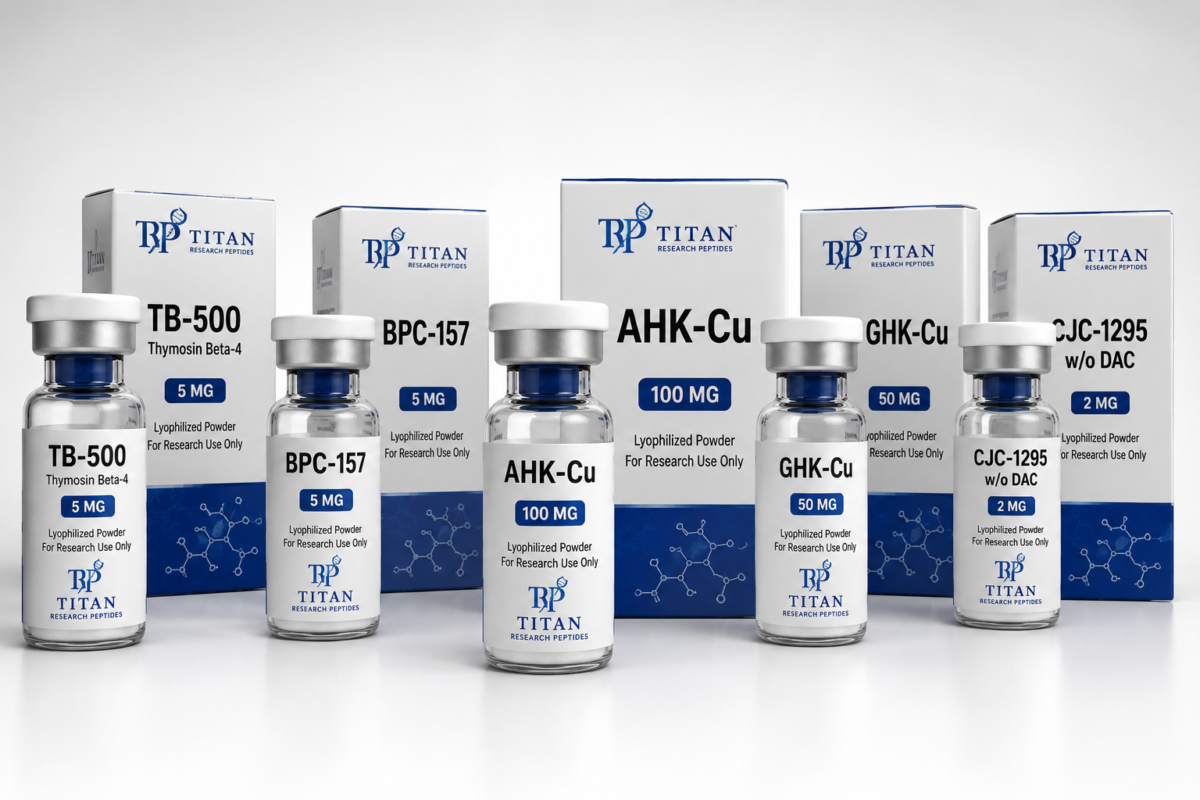
If you’re learning what AHK-Cu is, you may also be interested in exploring other research peptides available from Titan Research Peptides.
- GHK-Cu – Another copper peptide commonly studied for its biochemical properties and frequently compared with AHK-Cu in laboratory research.
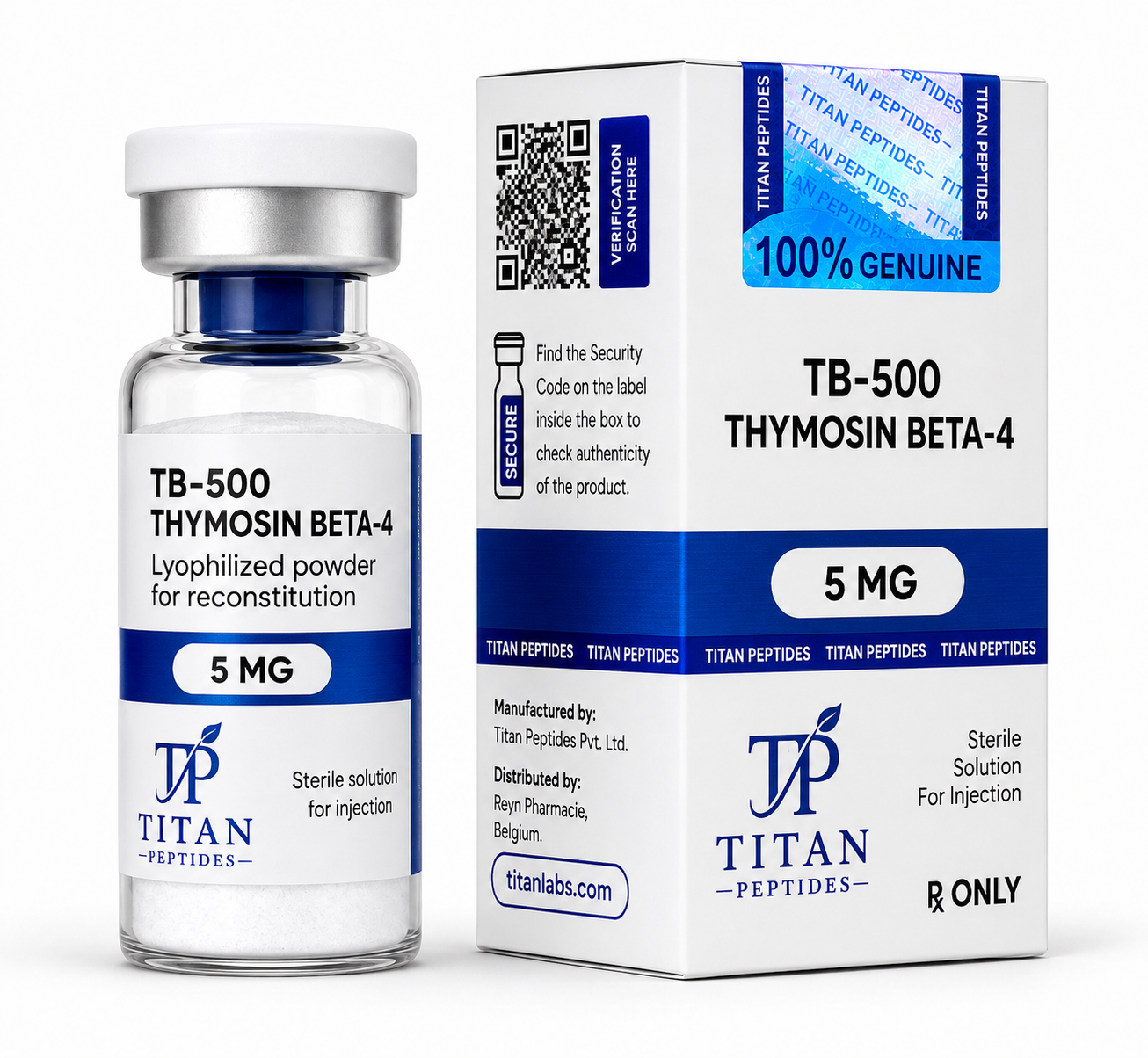
- TB- 500– A research peptide often included in peptide science studies involving cellular and tissue-related laboratory models.
- BPC-157 – One of the most widely recognised research peptides, frequently explored alongside other laboratory compounds in peptide research.
Final Thoughts
Understanding what AHK-Cu is provides an excellent starting point for anyone interested in peptide science. As a synthetic copper peptide, AHK-Cu continues to be investigated for its unique biochemical characteristics and its role in laboratory research involving cellular communication, molecular biology, and peptide chemistry.
As scientific knowledge evolves, researchers are expected to continue exploring AHK-Cu in new experimental settings, contributing to a deeper understanding of peptide-based research.
Whether you’re new to peptide science or expanding your knowledge of laboratory compounds, AHK-Cu remains an important subject of ongoing scientific investigation.
