
Retatrutide Dosing
In the rapidly advancing landscape of metabolic research and obesity therapeutics, retatrutide dosing has emerged as a focal point for understanding the next generation of weight management vectors. Developed as a synthetic unimolecular peptide, retatrutide represents a groundbreaking shift from traditional single and dual-agonist compounds. It functions as a triple hormone receptor agonist, simultaneously targeting the glucose-dependent insulinotropic polypeptide, the glucagon-like peptide-1, and the glucagon receptors. In professional laboratory setups, establishing an accurate schedule for this compound is necessary to safely chart its intense impact on metabolic rate, energy expenditure, and glycemic control variations. Because of its multi-receptor affinity, baseline evaluations require highly structured adjustments to avoid saturating cell cultures or experimental animal models too rapidly.
How retatrutide Dosing works for weight loss
To understand how this molecule facilitates significant weight reduction in experimental settings, researchers look closely at its triple-targeting design. While older generation compounds focused strictly on regulating appetite through a single pathway, this peptide activates three distinct signaling networks at the same time. The first pathway handles insulin secretion and reduces appetite, the second delays gastric emptying to prolong a feeling of satiety, and the third directly activates glucagon receptors in the liver.
Activating the glucagon receptor is the key mechanism that drives its superior weight loss outcomes. By signaling the liver directly, the compound increases energy expenditure and accelerates lipolysis, which is the breakdown of stored fat cells. This dual action of suppressing incoming energy intake while actively increasing the body’s natural caloric burn rate addresses metabolic stagnation more effectively than any previous peptide model. In tissue assays, this triple-agonist approach triggers a rapid shift in lipid metabolism, making it a primary asset for studying advanced cellular energy balance.
Clinical trials and results
The academic interest surrounding this peptide is driven by the unprecedented data coming out of recent phase 2 clinical trials. Over extended evaluation timelines, research models exposed to this triple agonist demonstrated a level of weight reduction that surpassed existing dual-agonist benchmarks. Data published in prominent medical journals showed that subjects achieved an average weight loss of up to 24 percent of their total body mass over a 48-week observation period.
Furthermore, the data showed that nearly everyone receiving the optimized higher concentrations experienced a structural reduction in body fat composition. Beyond simple weight loss, the trials documented significant improvements in secondary metabolic markers. Researchers noted a sharp reduction in liver fat accumulation, optimized fasting blood glucose levels, and favorable changes in total blood lipid panels. These multi-system upgrades highlight why the compound is widely considered a massive leap forward for future metabolic disease modeling.
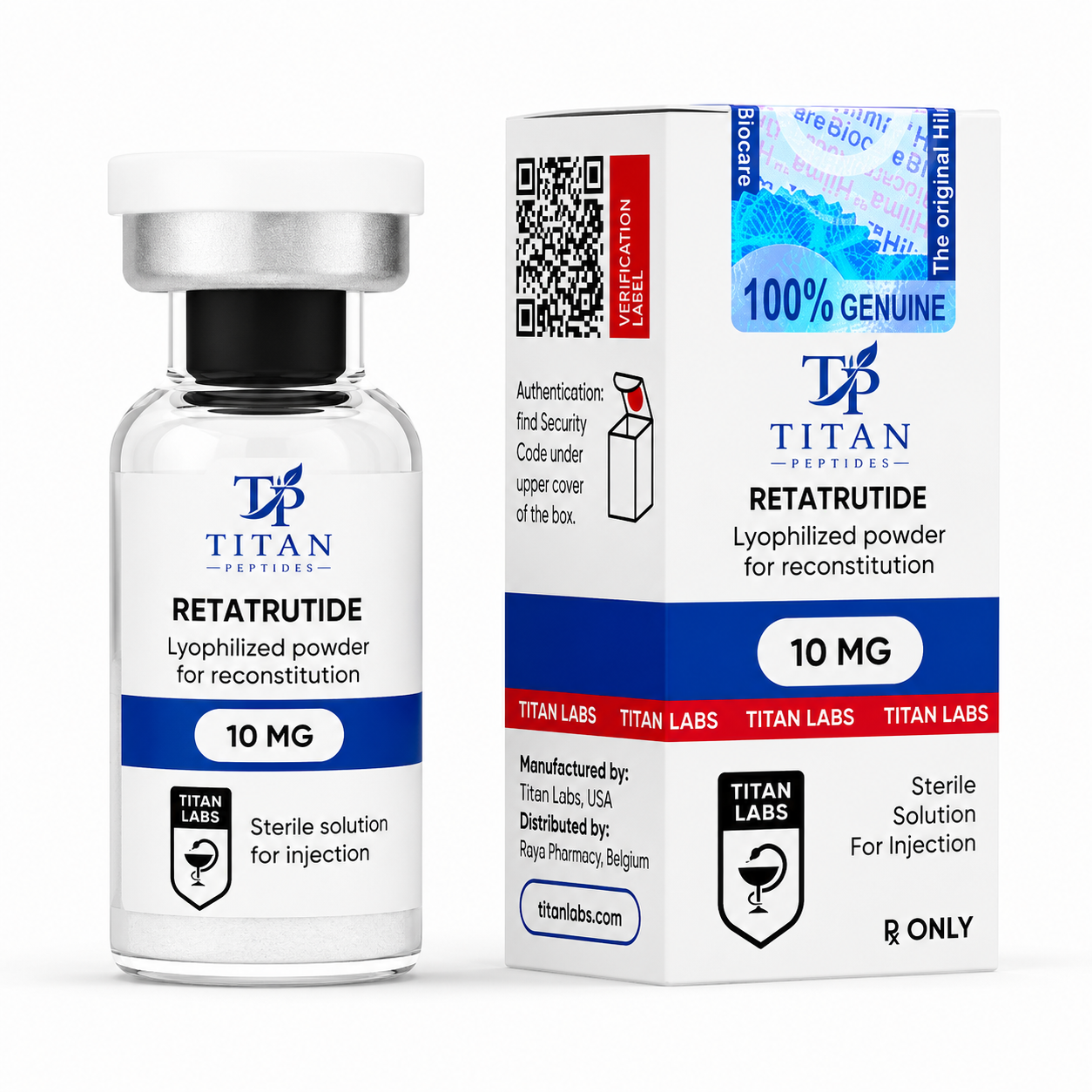
How much bac water for 10mg retatrutide
Transitioning a freeze-dried peptide cake into a highly precise, uniform liquid matrix requires exact laboratory math. Deciding how much bac water for 10mg retatrutide to add to your vial depends on the exact milligram-to-milliliter concentration target required for your sequential test groups. Because accurate volumetric tracking prevents dangerous fluid handling errors, setting up a standardized dilution baseline is standard practice.
The standard reference layout for a 10mg lyophilized vial utilizes either 1.0 mL or 2.0 mL of sterile bacteriostatic water:
1.0 mL Reconstitution: Adding exactly 1.0 mL of bacteriostatic water creates a highly concentrated fluid matrix yielding 10 mg of active peptide per milliliter of solution (10 mg/mL). Under this math, a 10-unit pull on a standard syringe translates to exactly 1.0 mg of the active compound.
2.0 mL Reconstitution: Adding exactly 2.0 mL of solvent creates a more manageable liquid volume yielding 5 mg of active peptide per milliliter of solution (5 mg/mL). With this volume, every 10 units on a standard syringe translates to exactly 500 mcg of the compound.
Utilizing the 2.0 mL baseline is highly recommended for independent laboratories because the increased liquid volume ensures a lower margin of error during micro-pipetting steps and prevents human miscalculations during multi-well culture exposures.
Retatrutide side effects
Evaluating the safety profile and tracking potential retatrutide side effects is essential for maintaining a controlled testing environment and ensuring dataset accuracy. Because this molecule aggressively engages three separate receptor groups simultaneously, it elicits a more pronounced physiological response than simpler single-target compounds.
The most frequently documented issues are gastrointestinal in nature. Research tracking profiles show consistent occurrences of mild-to-moderate nausea, occasional diarrhea, vomiting, and temporary constipation, particularly during the initial exposure phases when concentrations are stepping upward. Additionally, due to the activation of glucagon and GIP pathways, investigators frequently note a transient increase in baseline heart rate during the middle weeks of an assay timeline. Monitoring these reactions closely ensures that any observed data variations stem directly from the peptide’s metabolic function rather than underlying cellular stress or systemic dehydration.
Difference between retatrutide and tirzepatide
When comparing this new triple agonist to established reference standards like tirzepatide, the structural differences center entirely on receptor affinity. Tirzepatide operates as a dual agonist, engaging only two pathways to regulate insulin secretion and suppress appetite. While highly effective at managing blood sugar levels, it completely lacks the ability to communicate with the glucagon pathway.
The inclusion of glucagon receptor activation is what separates the triple agonist from its dual-agonist predecessor. By adding this third pathway, the compound does not just limit energy intake; it actively forces the liver to burn through stored lipids at an accelerated rate. This foundational difference allows the triple agonist to deliver significantly higher fat reduction percentages and faster clearance of liver fat stores, making it a much more aggressive option for studying extreme metabolic resistance models.
where to buy retatrutide
Because this compound is at the absolute forefront of contemporary endocrinology research, sourcing authenticated material is an ongoing logistical challenge for independent institutions. When evaluating where to buy retatrutide for your laboratory, avoiding unverified third-party brokers is vital for protecting your experimental integrity. Grey-market sources often distribute sub-standard batches containing heavy moisture contamination, chemical impurities, or incorrect structural weights that fail under analytical testing.
Titan Research Peptides sets an uncompromised quality benchmark by subjecting every production lot to strict validation. Independent researchers can secure certified reference vials directly through our secure portal, with each batch verified by High-Performance Liquid Chromatography and Mass Spectrometry to guarantee a purity profile exceeding 99 percent. Our chemical reagents are vacuum-sealed inside sterile borosilicate glass immediately following lyophilization, ensuring long-term structural stability and perfect dataset reproducibility for your laboratory trials.
Be the first to review “Retatrutide”
Related products
Reviews
There are no reviews yet.