
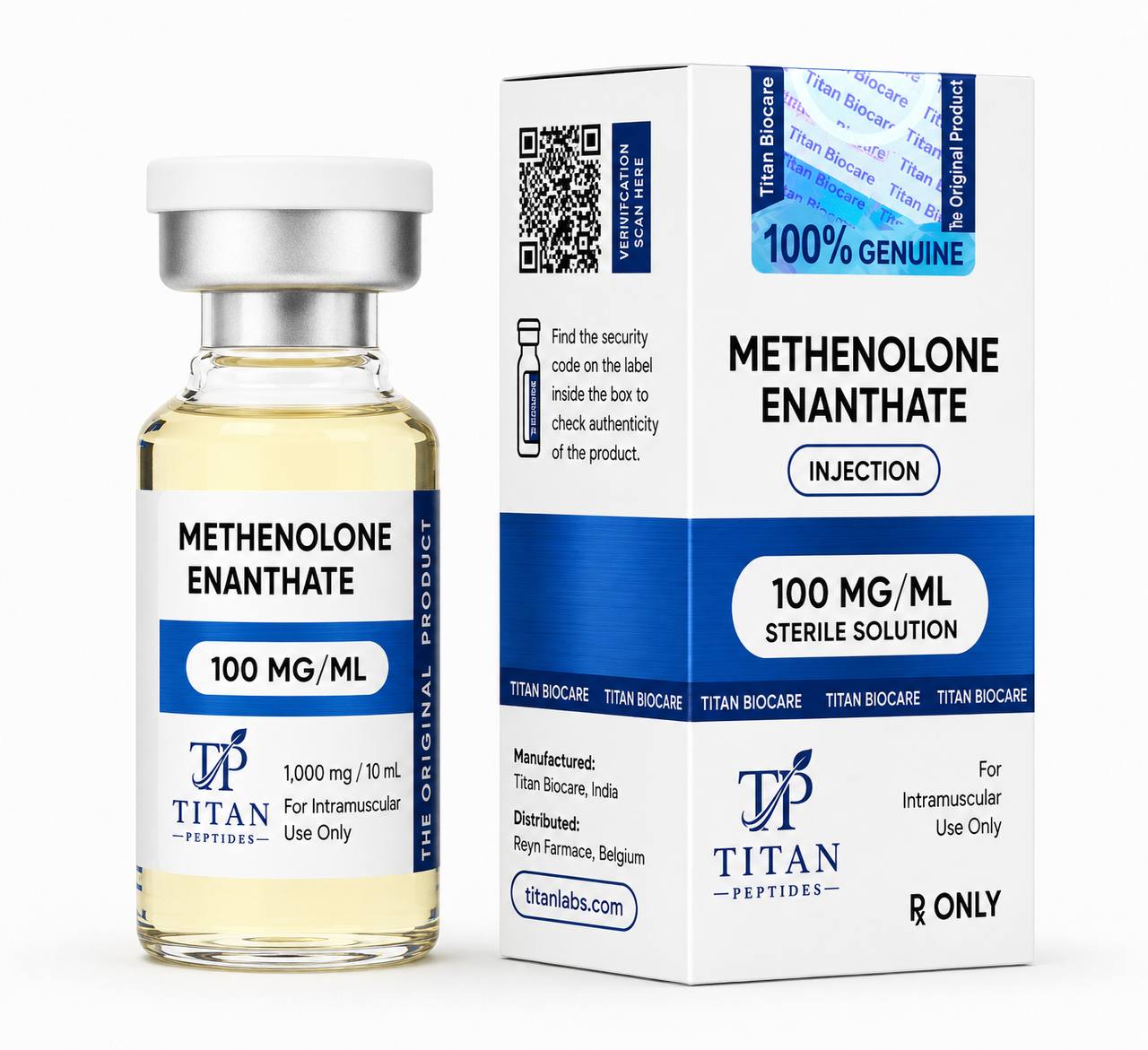
Methenolone Enanthate (Primobolan) (100 mg/mL – 10 mL)
$41.00
A premium synthetic dihydrotestosterone (DHT) derivative precisely pressed into an analytical 50-tablet matrix. Engineered with a prolonged 17-beta-enanthate ester framework, this compound provides sustained release profiles to observe non-aromatizing androgenic signaling. It serves as a vital solid-dose reference standard for researching cellular nitrogen retention, protein synthesis pathways, and muscle-wasting mitigation models.
Product Overview
Methenolone Enanthate (chemically classified as a dihydrotestosterone-derived anabolic steroid) provides a premium, highly stable solid-form standard for tracking androgen receptor interactions. In metabolic and endocrinology research, examining how solid oral dosage forms release active agents over extended timelines is key to evaluating systemic cellular preservation. By introducing an alkylated core structure modified with a long-acting enanthate ester, this compound offers a reliable model for analyzing sustained hormone release without the confounding factor of estrogen conversion.
At Titan Labs, we supply this advanced structural agent in a stable, solid-pressed formulation containing exactly 50 tablets per bottle, with each tablet verified at an over 99% pure active pharmaceutical ingredient (API) standard via High-Performance Liquid Chromatography (HPLC). This uniform 50-tablet configuration ensures that research laboratories maintain an ample, single-batch volume to complete comprehensive benchtop assays, dissolution rate measurements, and deep nitrogen-retention signaling profiles without structural breakdown or impurities.
What is Methenolone Enanthate?
Methenolone Enanthate is a modified non-aromatizing small molecule that displays a distinct pharmacological profile characterized by moderate anabolic activity and low androgenic expression. Structurally, it features a 1-methyl mutation that increases its biological stability, paired with a C17-beta heptanoate ester chain that significantly elongates its release kinetics from the carrier matrix.
Unlike standard testosterone derivatives, Methenolone Enanthate does not bind to the aromatase enzyme, preventing any downstream conversion into estradiol or related estrogenic metabolites. Consequently, it is heavily utilized in laboratory models to observe the pure, uninhibited effects of androgenic tissue protection on skeletal muscle and bone marrow cells. Delivered in a rigorous 50-tablet supply, this solid matrix provides researchers with the precise weight tolerances needed to run high-throughput screening applications.
Mechanisms of Anabolic Signaling and Nitrogen Retention
In cellular biology, genetic transcription, and hematology models, Methenolone Enanthate acts as a primary standard for evaluating non-estrogenic growth pathways. Its core molecular interactions operate through several specific phases:
Cytoplasmic Androgen Receptor Binding
Methenolone Enanthate targets and binds directly to the intracellular androgen receptor (AR) within muscle and bone tissue matrices, triggering the dissociation of heat shock chaperone proteins.
Nuclear Translocation and Transcriptional Modulation
The newly formed hormone-receptor complex migrates directly into the cell nucleus, where it binds tightly to specific Androgen Response Elements (AREs) located along the DNA strand.
Upregulation of Protein Synthesis
Binding to DNA initiates the transcription of structural target genes, resulting in elevated intracellular messenger RNA (mRNA) levels that dramatically increase cellular protein synthesis rates.
Enhancement of Intracellular Nitrogen Retention
The compound alters cellular transport dynamics to block the release of nitrogen from skeletal tissue, preserving a highly favorable anabolic equilibrium that protects cells from catabolic stress.
Erythropoietic Path Stimulation
In bone marrow laboratory models, the agent interacts with hematopoietic stem cells, reinforcing downstream pathways that regulate red blood cell formation and tissue oxygenation indexes.
Methenolone Enanthate Benefits
In scientific literature and laboratory endocrine models, the documented research benefits of high-purity Methenolone Enanthate include:
-
Zero Estrogenic Conversion: Eliminates the risk of aromatization, allowing for the isolated study of pure androgenic receptor pathways.
-
Sustained Kinetic Modeling: The enanthate ester provides a controlled, long-acting release curve to facilitate extended observation periods.
-
Enhanced Nitrogen Preservation: Serves as an exceptional control agent for studying cellular survival during simulated starvation or wasting conditions.
-
Precise 50-Tablet Matrix: Pressed into highly uniform solid oral doses to eliminate measurement errors during comparative dissolution testing.
-
Low Hepatic Stress Profile: Offers a reliable structural alternative for analyzing prolonged tissue exposure with minimized baseline liver markers.
Methenolone Enanthate Side Effects
When introduced into biological test systems, Methenolone Enanthate should be monitored closely for downstream systemic alterations:
-
Endogenous Androgen Suppression: Prolonged exposure can signal feedback loops that suppress baseline gonadotropin synthesis in animal models.
-
Mild Lipoprotein Shifts: May induce minor alterations in lipid transport profiles, specifically reducing high-density lipoprotein (HDL) markers.
-
Androgenic Periphery Mimicry: Despite a lower androgenic rating, high concentrations can trigger cellular traits linked to virilization in sensitive biological matrices.
-
Mild Hepatic Fluctuation: While significantly less toxic than 17-alpha-alkylated oral options, massive exposure can still shift baseline transaminase readouts.
Key Features
-
Premium, analytical-grade Methenolone Enanthate (99%+ HPLC verified API)
-
Solid-pressed tablet format tailored for dissolution and release-profile studies
-
Configured in a generous 50-tablet bottle to support extended research timelines
-
Zero aromatization profile, ideal for mapping isolated androgen receptor activities
-
Manufactured under sterile, ultra-purified laboratory quality protocols
Primary Uses in Research
This compound is extensively utilized for:
-
Studying the structural mechanics and transcription rates of Androgen Response Elements (AREs)
-
Evaluating the dissolution rates and gastrointestinal breakdown patterns of esterified solid oral compounds
-
Modeling therapeutic interventions for chronic muscle wasting syndromes and bone marrow failures
-
Investigating non-estrogenic pathways for stimulating erythropoietin (EPO) expression in cell cultures
-
Analyzing cross-talk between structural androgen pathways and cellular growth factors
How to Use Methenolone Enanthate
To prepare this reference standard for experimental assays, calculate the exact concentrations required for your specific dissolution media or animal weight parameters. Methenolone Enanthate tablets can be crushed into a fine powder using a laboratory mortar and pestle for uniform suspension, or placed directly into dissolution vessels to monitor disintegration rates.
When creating a liquid solution from the solid state, dissolve the crushed tablet matrix in a polar organic solvent such as Dimethyl Sulfoxide (DMSO) or Ethanol, followed by filtration to remove inert binder materials. Sequentially dilute the active supernatant into aqueous laboratory buffers as required by your testing protocol. Maintain absolute sterile conditions throughout the preparation process.
Product Specifications
-
Device Type: Solid Pressed Tablet / Analytical Reference Standard
-
Active Compound: Methenolone Enanthate
-
Quantity: 50 Tablets per Bottle
-
CAS Number: 303-42-4
-
Chemical Formula: C27H42O3
-
Molecular Weight: 414.62 g/mol
-
Intended Use: Scientific Laboratory Research and Development
-
Brand: Titan Labs
-
Purity Standard: Exceeds 99% via High-Performance Liquid Chromatography (HPLC)
Storage Guidelines
Store Methenolone Enanthate tablet bottles in a dark, moisture-free cabinet at room temperature or in a cool environment below 15 degrees Celsius for long-term preservation (up to 24 months). Keep the protective container tightly sealed until the exact moment of testing to shield the tablets from ambient humidity, direct ultraviolet radiation, and atmospheric contamination. Once a tablet is crushed or dissolved into liquid form, store that stock solution at 2 to 8 degrees Celsius and exhaust the volume within 30 days.
Related Category
Premium synthetic anabolic-androgenic steroid (AAS) standard for non-aromatizing hormone path mapping, nitrogen retention analysis, cell cycle translation, and solid-dose dissolution research. Browse our Peptides and Small Molecules category.
Related Products
-
Stanozolol 10mg Tablets – Selective Cellular Growth Standard (50 Tablets)
-
BPC-157 5mg – Elite Tissue Regeneration Peptide Standard
-
Follistatin 344 1mg – Advanced Myostatin Inhibition Standard
Frequently Asked Questions
Why is Methenolone Enanthate supplied in a 50-tablet format rather than an injection vial?
While historically synthesized as an oil-based injection, supplying this compound in a highly precise, solid-pressed 50-tablet matrix allows researchers to perform analytical solid oral dose studies. This format is crucial for analyzing gastrointestinal dissolution kinetics, metabolic breakdown curves, and comparing the oral bio-efficiency of esterified compounds against raw powders.
What makes Methenolone Enanthate non-aromatizing compared to other standards?
Structurally derived from dihydrotestosterone (DHT), the compound features a double bond between carbon positions 1 and 2, along with a protective 1-methyl group. This specific spatial orientation prevents the aromatase enzyme from binding to its rings, completely cutting off the chemical conversion pathway into estrogenic molecules.
How should I separate the active hormone from the tablet binders?
To extract the active pharmaceutical ingredient cleanly, crush the tablets into a fine powder and dissolve the mixture in a polar solvent like DMSO or high-purity Ethanol. The active Methenolone Enanthate will completely dissolve into the liquid layer, while the insoluble binding elements sink to the bottom. Pass the fluid through a fine laboratory filter to isolate the pure liquid stock.
Does this compound cause rapid fluid accumulation in tissue models?
No. Because it entirely avoids conversion into estrogenic pathways, it does not induce the extracellular sodium and water retention commonly seen with aromatizing reference steroids. This makes it an ideal choice for mapping pure lean cellular accumulation and absolute structural tissue density shifts.
Conclusion
Methenolone Enanthate tablets from Titan Labs deliver the exceptional chemical clarity, solid-form uniformity, and target-specific non-aromatizing receptor modulation required for meticulous endocrine and cellular signaling research. Incorporating our premium, HPLC-validated 50-tablet formulation into your protocol ensures the collection of highly reproducible data and sharp analytical baselines. Combine this elite AAS standard with our tissue repair peptides or selective growth agents to explore comprehensive cellular recovery and non-estrogenic mass modeling. Browse our full Peptides and Small Molecules catalog, or select from the related listings above to complete your research setup today!
Be the first to review “Methenolone Enanthate (Primobolan) (100 mg/mL – 10 mL)”
Related products
Reviews
There are no reviews yet.