


Uncategorized
What Is Gonadorelin? Understanding GnRH, TRT, and Gonadorelin Research
Aug
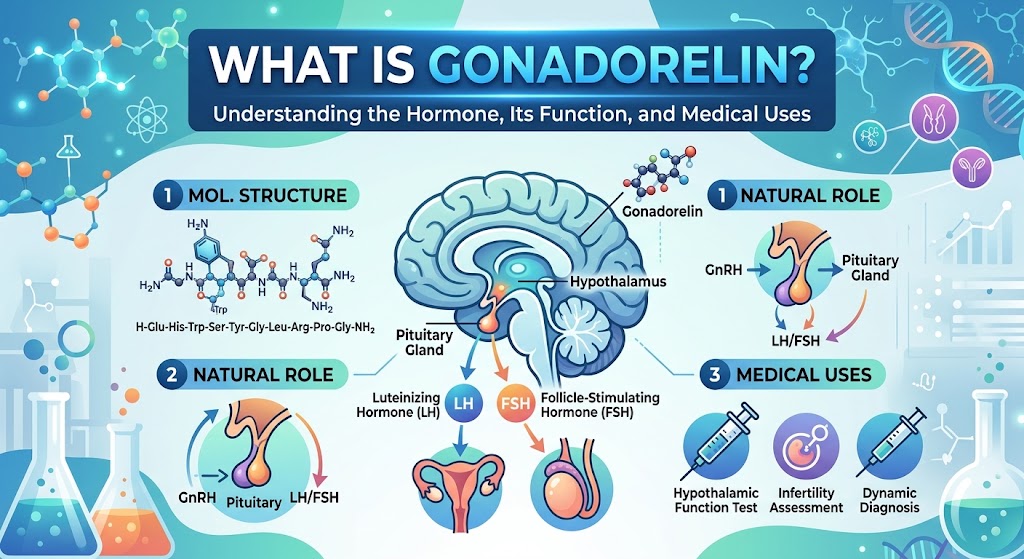
Gonadorelin is a synthetic form of gonadotropin-releasing hormone (GnRH), a decapeptide involved in regulating the hypothalamic-pituitary-gonadal (HPG) axis. Researchers study gonadorelin because of its role in signaling the pituitary gland to release luteinizing hormone (LH) and follicle-stimulating hormone (FSH), two hormones closely connected to reproductive and endocrine function.
Interest in gonadorelin has also increased among people researching testosterone replacement therapy (TRT), fertility, hormone signaling, and the biological mechanisms behind testosterone production. However, research applications and clinical treatment are not the same thing. Gonadorelin products intended for laboratory research should not be presented as medicines or as instructions for self-treatment.
What Is Gonadorelin?
Gonadorelin is the synthetic form of GnRH, the naturally occurring hypothalamic hormone responsible for initiating a key hormonal signaling pathway. When GnRH interacts with GnRH receptors in pituitary gonadotroph cells, it stimulates the secretion of LH and FSH.https://google.com
This makes gonadorelin particularly interesting for laboratory investigations involving endocrine signaling, reproductive biology, and the HPG axis.
The molecule is a decapeptide, meaning it contains ten amino acids. Research models can therefore use gonadorelin to investigate how GnRH signaling affects downstream hormonal pathways and how changes in this signaling system may influence reproductive physiology.
How Does Gonadorelin Work?
The primary biological action of gonadorelin begins at the GnRH receptor. Following receptor activation, intracellular signaling pathways stimulate the production and release of LH and FSH from pituitary gonadotroph cells.
LH and FSH subsequently participate in the regulation of gonadal function. In males, LH is involved in stimulating testosterone production by Leydig cells, while FSH has an important role in supporting spermatogenesis.
This pathway is one reason gonadorelin is frequently examined in research involving testosterone regulation and reproductive endocrinology.
Importantly, the pattern of GnRH exposure matters biologically. Pulsatile GnRH signaling and continuous exposure can produce different effects on the reproductive hormone axis, which makes gonadorelin an interesting compound for controlled laboratory studies.
What Is Gonadorelin and Testosterone Research
Gonadorelin is relevant to testosterone research because it sits relatively high within the HPG axis.
The basic pathway can be simplified as:
Hypothalamus → GnRH → Pituitary → LH/FSH → Gonads → Sex hormones
Researchers can therefore use GnRH-related compounds to investigate how hormonal signals move through this pathway.
This is particularly relevant when studying conditions involving altered hypothalamic or pituitary signaling. Research into hypogonadism, for example, often examines whether reduced testosterone production is associated with problems originating at the hypothalamic, pituitary, or testicular level.
Gonadorelin Dosage TRT: What Is Gonadorelin And What Researchers Should Know?
The search term gonadorelin dosage TRT is commonly associated with discussions about testosterone replacement therapy and hormonal support. However, there is no appropriate universal gonadorelin dosage that can be recommended for everyone.
Clinical administration depends on factors such as the underlying condition, treatment objective, hormone levels, route of administration, and medical supervision. Gonadorelin has also been studied and used in specific medical contexts, but those applications should not be confused with research-grade products.
For laboratory work, researchers should instead follow their approved experimental protocol, institutional requirements, and validated analytical procedures.
This distinction is especially important because changing the amount, frequency, or administration pattern of a GnRH-related compound can alter the hormonal response being studied.
What Is Gonadorelin vs hCG: What Is the Difference?
The question of gonadorelin vs hCG is important because the two compounds interact with different parts of the reproductive hormone pathway.
Gonadorelin is a GnRH compound. Its primary role is to stimulate the pituitary through GnRH receptors, promoting LH and FSH secretion.
hCG, on the other hand, is a gonadotropin that has LH-like activity. Rather than acting primarily at the hypothalamus or pituitary level, hCG directly interacts with LH receptors in the gonads.
In simplified terms:
| Compound | Primary biological target | Research significance |
|---|---|---|
| Gonadorelin | GnRH receptor | Investigating pituitary GnRH signaling |
| hCG | LH receptor | Investigating gonadal LH-like signaling |
Research literature also demonstrates that gonadotropin-based approaches can produce different reproductive outcomes depending on the treatment strategy and underlying condition.
Therefore, gonadorelin vs hCG should not be viewed simply as two interchangeable compounds. They represent different points within the endocrine signaling pathway.
What Is a Gonadorelin Injection?
A gonadorelin injection refers to administration of gonadorelin through an injectable route. Injectable gonadorelin formulations have existed in pharmaceutical contexts, although approved uses and formulations vary by jurisdiction and indication. FDA records, for example, list gonadorelin products in injectable formulations.
For research purposes, the important consideration is maintaining controlled experimental conditions and following the protocol established for the study.
Research-grade gonadorelin should not be represented as a substitute for an approved prescription medication or used for personal treatment.
TRT Testicle Shrinkage and the HPG Axis
TRT testicle shrinkage is another reason the HPG axis receives considerable attention in testosterone research.
When exogenous testosterone is introduced into the body, feedback mechanisms can reduce hypothalamic and pituitary signaling. Reduced LH and FSH signaling can subsequently affect testicular activity.
This is why researchers investigating TRT and reproductive endocrinology often examine the relationship between testosterone administration, gonadotropins, testicular function, and fertility.
The subject is complex, however, and testicular changes cannot be explained by a single mechanism in every individual. Research into fertility-preserving approaches continues to examine different hormonal pathways and treatment strategies.
Why Is Gonadorelin Studied in Laboratory Research?
Gonadorelin provides researchers with a useful tool for examining GnRH-dependent signaling.
Potential research areas include:
- GnRH receptor signaling
- LH and FSH secretion
- HPG-axis regulation
- Reproductive endocrinology
- Hypogonadotropic hypogonadism models
- Testosterone-related research
- Fertility and spermatogenesis studies
- Hormonal feedback mechanisms
Because GnRH signaling is fundamental to reproductive physiology, studying gonadorelin can help researchers better understand how alterations in this pathway affect downstream endocrine processes.
What Is Gonadorelin, Research Applications
Research involving gonadorelin can range from cellular and biochemical experiments to broader investigations of reproductive hormone regulation.
Its value comes from its position within the HPG axis. Rather than acting as a general-purpose compound, gonadorelin provides researchers with an opportunity to investigate a specific signaling pathway.
When combined with appropriate controls and validated analytical techniques, gonadorelin can help researchers examine relationships between GnRH signaling and downstream hormones such as LH and FSH.
Frequently Asked Questions About Gonadorelin
Is gonadorelin the same as GnRH?
Gonadorelin is the synthetic form of GnRH used to reproduce the activity of the naturally occurring hormone in research and certain clinical contexts.
Is gonadorelin the same as hCG?
No. Gonadorelin acts through the GnRH receptor and influences pituitary LH and FSH release, whereas hCG has LH-like activity and acts directly through LH receptors.
What Is gonadorelin used in TRT?
Gonadorelin is discussed in connection with TRT and reproductive hormone research, but research-grade gonadorelin should not be treated as a self-administered TRT medication. Clinical decisions should be made by a qualified healthcare professional.
Does gonadorelin affect LH and FSH?
Yes. GnRH receptor activation in pituitary gonadotroph cells stimulates LH and FSH secretion.
What is gonadorelin used for in research?
Researchers study gonadorelin to investigate GnRH receptor activity, pituitary signaling, LH and FSH regulation, reproductive endocrinology, and HPG-axis function.
Is research-grade gonadorelin intended for human consumption?
No. Research-grade gonadorelin should be used exclusively according to appropriate laboratory research protocols and is not intended for human consumption or self-treatment.
Research-Grade Gonadorelin for Laboratory Studies
Gonadorelin remains an important compound for studying GnRH signaling and the broader HPG axis. From investigations into LH and FSH secretion to research surrounding testosterone regulation and reproductive endocrinology, its position within the hormonal signaling pathway makes it valuable for controlled laboratory studies.
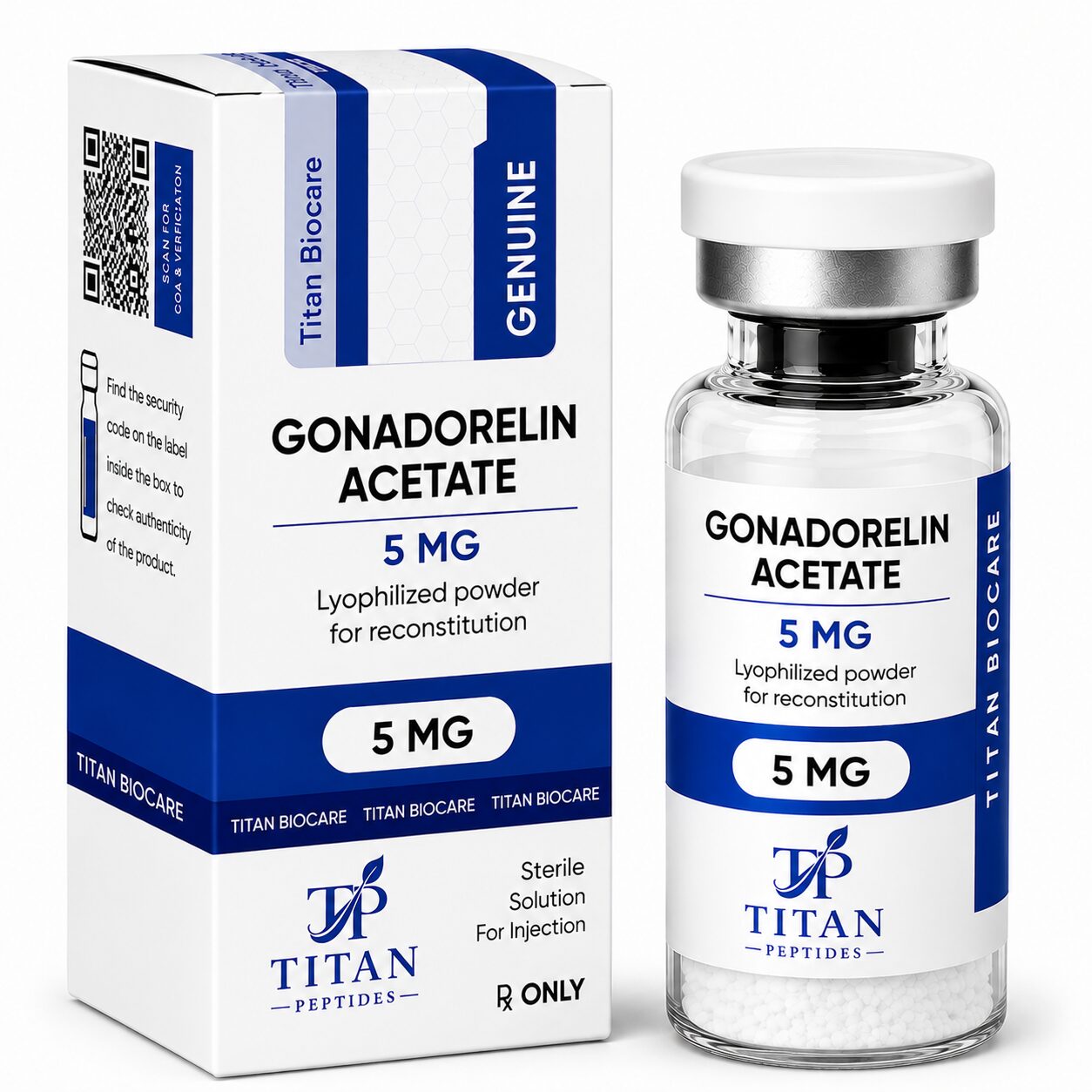
For researchers evaluating gonadorelin, quality, identity, purity, documentation, and appropriate storage are essential considerations. Titan Research Peptides states that its research compounds are supplied for laboratory applications and that batches are accompanied by third-party analytical documentation.
For laboratory and in vitro research use only. Not for human consumption. Not a medicine.
Related Product
- Ipamorelin — relevant to peptide and endocrine research.
Bacteriostatic Water — relevant as a laboratory supply associated with certain experimental workflows.
GHK-Cu — another peptide research compound in the catalogue.
