

Peptide & Growth Hormone
Does Sermorelin Work? Complete Research Guide | 2026
Aug
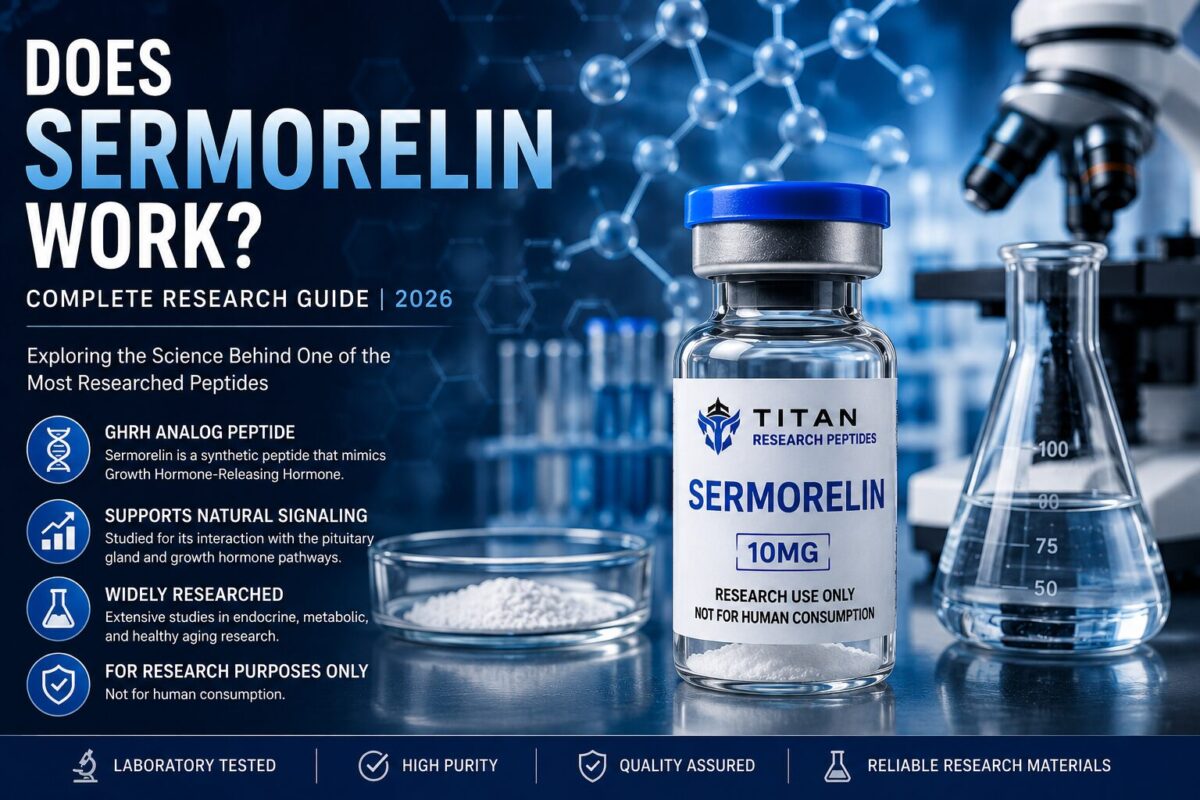
If you’ve spent any time researching peptides, you’ve probably asked the question: Does Sermorelin work? It’s one of the most searched topics online, and for good reason. Sermorelin has been studied for decades and remains one of the most recognized peptides in endocrine and growth hormone research.
The answer depends on what you mean by “work.” In scientific research, the goal isn’t to determine whether a peptide is “good” or “bad.” Instead, researchers investigate how it interacts with biological systems, what pathways it influences, and what can be learned from those interactions.
Sermorelin continues to receive attention because it mimics a naturally occurring Growth Hormone-Releasing Hormone (GHRH), making it valuable for studying hormone signaling and endocrine communication. Researchers often compare it with peptides such as CJC-1295 With DAC, CJC-1295 Without DAC, Ipamorelin, and Tesamorelin to better understand different approaches to growth hormone research.
This guide explores what current research shows, why scientists continue investigating Sermorelin, and what makes it one of the most important peptides in laboratory research.
Disclaimer: This article is intended for educational and laboratory research purposes only. Products supplied by Titan Research Peptides are for research use only and are not intended for human consumption.
Table of Contents
- What Does “Does Sermorelin Work” Mean?
- How Sermorelin Works in Research
- Why Researchers Continue Studying Sermorelin
- Scientific Research Applications
- What Makes Sermorelin Different?
- Frequently Asked Questions
- Conclusion
What Does “Does Sermorelin Work” Mean?
When people search “does sermorelin work,” they’re often looking for a simple yes-or-no answer. In scientific research, however, the better question is “How does Sermorelin function within biological systems?”
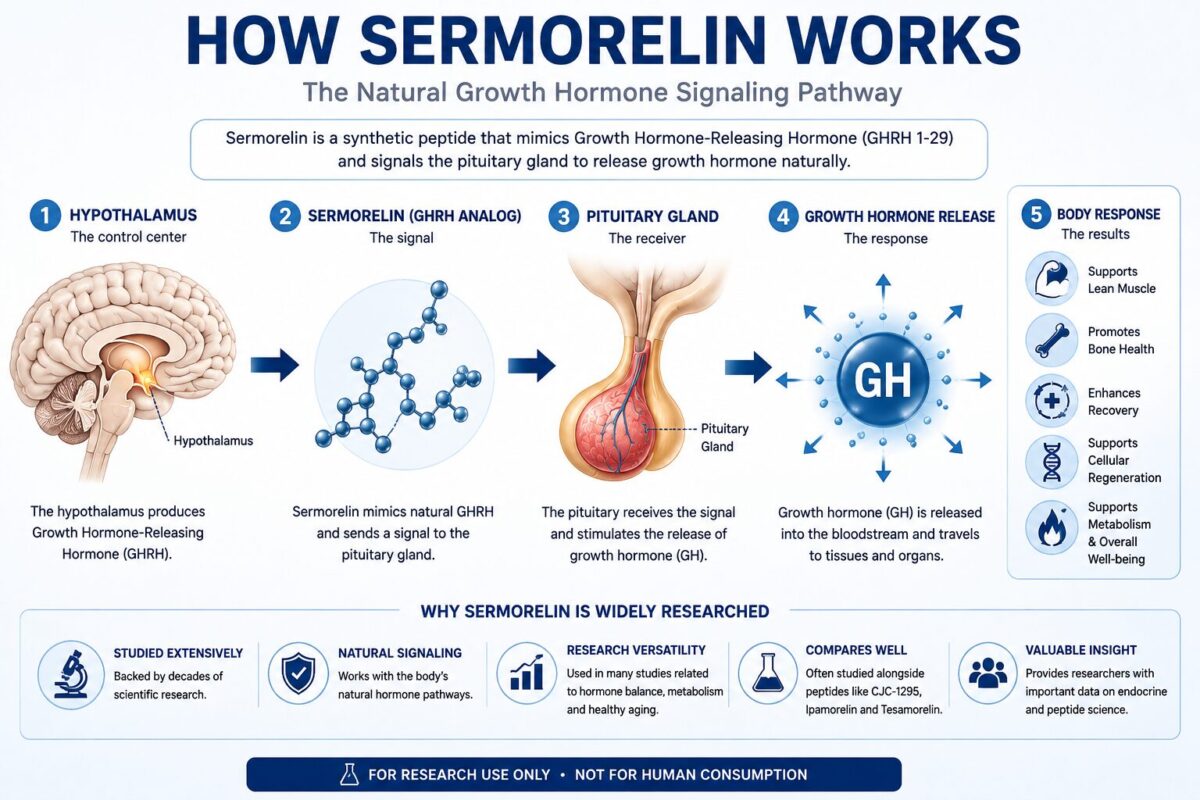
Sermorelin is designed to mimic a portion of the body’s natural Growth Hormone-Releasing Hormone. Rather than replacing growth hormone, it is investigated because it interacts with receptors involved in the body’s own hormone signaling process.
Researchers study this interaction to better understand how the endocrine system regulates growth hormone through natural biological pathways.
How Does Sermorelin Work in Research
Current scientific literature shows that Sermorelin functions as a GHRH analog, meaning it closely resembles the naturally occurring hormone responsible for signaling the pituitary gland.
This makes Sermorelin valuable for laboratory studies examining:
- Growth hormone signaling
- Endocrine communication
- Hormone regulation
- Cellular signaling
- Protein metabolism
- Growth factor biology
- Neuroendocrine function
Because of this mechanism, Sermorelin is frequently investigated alongside CJC-1295 With DAC and CJC-1295 Without DAC, allowing researchers to compare different GHRH analogs and their biological characteristics.
Scientists may also include Ipamorelin in comparative studies because it influences growth hormone release through a different receptor pathway, providing additional insight into peptide biology.
Why Researchers Continue Studying Sermorelin
Scientific interest in Sermorelin has remained strong for many years.
One reason is its well-documented research history. Thousands of laboratory investigations have explored its interaction with growth hormone signaling pathways, making it one of the most recognized peptides in endocrine research.
Researchers also appreciate that Sermorelin provides a model for studying natural hormone communication rather than direct hormone replacement.
As peptide science advances, investigators continue comparing Sermorelin with compounds like Tesamorelin, which is another peptide commonly researched for its relationship with growth hormone regulation.
Modern laboratories rarely study one peptide in isolation. Comparing multiple compounds helps researchers better understand how different biological pathways function and interact.
Scientific Research Applications
Sermorelin continues to appear in research across several scientific fields.
Endocrine Research
Scientists investigate how hormone signaling influences communication between the hypothalamus and pituitary gland.
Growth Hormone Biology
Research focuses on understanding how natural signaling pathways regulate growth hormone production.
Cellular Communication
Laboratories examine how peptides coordinate signaling between cells throughout the body.
Metabolic Research
Researchers investigate how hormone signaling contributes to broader metabolic processes.
Comparative Peptide Research
Sermorelin is often studied alongside MGF Peptide 2mg, which is investigated in muscle biology, and DSIP Peptide 10mg, a peptide commonly included in neurobiology and sleep-related research. Although these compounds target different biological systems, together they help expand scientific understanding of peptide function.
What Makes Sermorelin Different?
One of the main reasons Sermorelin continues to receive attention in peptide research is because of how it interacts with the body’s natural hormone signaling process.
Unlike compounds that directly replace growth hormone, Sermorelin is studied because it mimics Growth Hormone-Releasing Hormone (GHRH), allowing researchers to investigate how the pituitary gland responds through normal biological pathways.
This has made Sermorelin a valuable research tool for scientists studying endocrine communication and hormone regulation.
Several characteristics make Sermorelin stand out in laboratory research:
Extensive scientific literature spanning several decades
Well-understood mechanism of action
Frequently used in endocrine research
Commonly included in comparative peptide studies
Valuable for understanding natural hormone signaling
Researchers often compare Sermorelin with CJC-1295 With DAC and CJC-1295 Without DAC, since both belong to the GHRH family but have different pharmacological characteristics. These comparisons allow scientists to explore how structural differences between peptides may influence biological activity.
Studies may also include Ipamorelin, which acts through a different receptor pathway. Examining these peptides together provides researchers with a broader understanding of growth hormone regulation.
Why Quality Matters in Peptide Research
No matter how promising a research compound may be, reliable scientific studies begin with high-quality materials.
Consistency between peptide batches helps reduce unnecessary variables during laboratory investigations, allowing researchers to focus on collecting meaningful data.
Equally important are proper laboratory handling and storage procedures. Research peptides should always be stored under recommended conditions and prepared using accepted laboratory protocols.
Many laboratories use Bac Water during peptide reconstitution before beginning experimental work. Proper preparation helps preserve peptide stability throughout the research process and supports consistent experimental conditions.
Researchers studying growth hormone signaling frequently investigate additional compounds such as Tesamorelin, MGF Peptide 2mg, and DSIP Peptide 10mg, expanding their understanding of how different peptides interact with separate biological systems.
Frequently Asked Questions
Does Sermorelin work?
Current scientific research shows that Sermorelin interacts with Growth Hormone-Releasing Hormone receptors, making it an important peptide for studying endocrine signaling and hormone regulation. Researchers continue investigating its biological activity in laboratory settings.
Is Sermorelin the same as growth hormone?
No. Sermorelin is not growth hormone. It is a synthetic peptide that mimics part of Growth Hormone-Releasing Hormone (GHRH), allowing researchers to study natural hormone signaling rather than replacing growth hormone directly.
Why is Sermorelin still being researched?
Researchers continue studying Sermorelin because it provides valuable insight into growth hormone regulation, endocrine communication, peptide signaling, and cellular biology.
What peptides are commonly researched with Sermorelin?
Sermorelin is frequently investigated alongside:
CJC-1295 With DAC
CJC-1295 Without DAC
Ipamorelin
Tesamorelin
MGF Peptide 2mg
DSIP Peptide 10mg
Each of these compounds contributes to different areas of peptide and hormone research.
Is Sermorelin intended for human use?
The products supplied by Titan Research Peptides are manufactured strictly for laboratory research and are not intended for human consumption or therapeutic use.
Conclusion
So, does Sermorelin work? From a research perspective, decades of scientific investigation demonstrate that Sermorelin remains one of the most valuable peptides for studying natural growth hormone signaling and endocrine communication.
Its ability to interact with Growth Hormone-Releasing Hormone receptors has made it a cornerstone of laboratory research involving hormone regulation, metabolism, cellular signaling, and neuroendocrine biology. Rather than replacing growth hormone directly, Sermorelin provides researchers with an opportunity to better understand how the body’s own signaling systems function.
As peptide science continues to advance, Sermorelin remains a trusted research compound that is frequently studied alongside CJC-1295, Ipamorelin, Tesamorelin, MGF Peptide, and DSIP Peptide, helping scientists expand their understanding of complex biological pathways.
Related Products
Sermorelin Peptide 10mg
CJC-1295 With DAC 2mg
CJC-1295 Without DAC 2mg
Ipamorelin 5mg
Tesamorelin 10mg
MGF Peptide 2mg
DSIP Peptide 10mg
GHK-Cu 50mg
Bac Water 30ml
Related Blog Posts
What Is Sermorelin? Essential Research Guide | 2026
What Is Sermorelin Used For? Research Applications Explained | 2026
Sermorelin vs CJC-1295: Complete Comparison Guide | 2026
What Is CJC-1295? Complete Research Guide
What Is Ipamorelin? Complete Research Guide
What Is DSIP Peptide?
What Is MGF Peptide?
How to Reconstitute Research Peptides
Research Peptide Storage Guide
Suggested Category
Peptide Research
