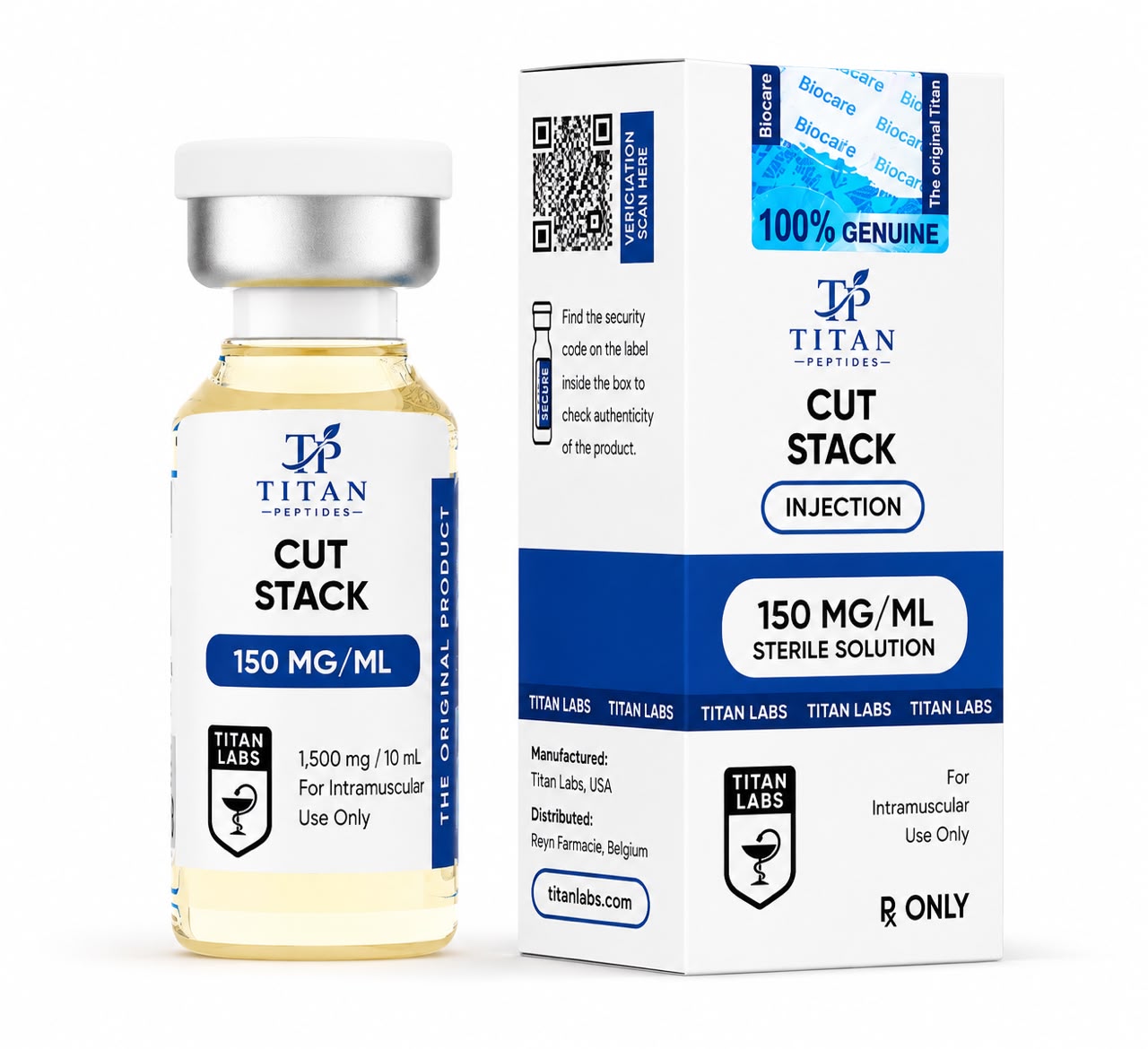
Cut Stack (150 mg/mL – 10 mL)
$37.00
Cut Stack is a precision-engineered blend designed specifically for advanced laboratory research and analytical testing. Manufactured under strict quality controls, this compound is optimized to ensure maximum structural stability, consistency, and a verified purity rating exceeding 98%. Ideal for researchers evaluating metabolic pathways, lean tissue preservation, and advanced cellular composition protocols. Distributed in secure, temperature-stable packaging with reliable global shipping.
Cut stack 150
In the rapidly evolving landscape of advanced biochemical analysis and endocrine research, cut stack 150 has emerged as a premier multi-component matrix designed to simulate aggressive metabolic pathways. This specialized solution combines multiple synergistic hormone vectors into a single, precisely balanced baseline concentration. Independent laboratories utilize this master blend to evaluate how concurrent androgen receptor bindings influence cellular respiration, protein accretion, and rapid adipose tissue breakdown. By deploying a pre-blended formula, research teams eliminate the logistical variables of blending individual raw chemical powders, ensuring that their experimental setups remain highly uniform across consecutive multi-week observation windows.
Key Features of cut stack 150
The foundational design of this compound centers on its optimized pharmacokinetic delivery profile. Unlike single-ester variations that deliver immediate, sharp concentration spikes followed by rapid degradation, this blend uses a carefully engineered ratio of fast and slow-acting ester chains. This configuration provides a sustained release matrix within cellular environments, maintaining a stable baseline of active hormones over extended observation periods. The primary focus of cut stack 150 is to facilitate maximum androgenic signaling while minimizing local cellular toxicity, allowing investigators to track structural cellular modifications without introducing unwanted cellular stress variables.
Verified Product Specifications
Every production lot distributed through our secure platform is bound to an exact structural blueprint. The solution is formulated to deliver a precise total concentration of 150 milligrams of active chemical reagents per milliliter of fluid matrix. This is achieved by combining three distinct, high-purity compounds: Drostanolone Propionate at 50 milligrams, Trenbolone Acetate at 50 milligrams, and Testosterone Propionate at 50 milligrams. Each batch of cut stack 150 is packed in sterile medical-grade borosilicate glass vials immediately following the synthesis stage, completely eliminating the risk of structural degradation from atmospheric moisture exposure or volatile organic compounds.
Chemical Profile
From a strict molecular standpoint, the active components within the cut stack 150 matrix represent highly modified derivatives of native testosterone and dihydrotestosterone. Drostanolone Propionate is chemically identified as 2a-methyl-dihydrotestosterone propionate, a structure that resists localized aromatization into estrogenic metabolites. Trenbolone Acetate is structurally mapped as a 19-nor modification, featuring double bonds at the carbon 9 and 11 positions, which increases its binding affinity for the androgen receptor. Testosterone Propionate completes the cluster by providing a fundamental base sequence that anchors the overall metabolic assay, balancing the structural integrity of the cellular environment.
Mechanism of Action
When introduced to target cell cultures, the compounds within the solution initiate multiple parallel intracellular pathways. The primary mechanism is the rapid, high-affinity binding to nuclear androgen receptors. This binding triggers a swift conformational shift that prompts immediate nuclear translocation. Once inside the cell nucleus, the ligand-receptor complex alters transcription expressions linked to nitrogen retention and protein synthesis. Simultaneously, the trenbolone component within cut stack 150 acts as a potent antagonist against glucocorticoid receptors, effectively blocking the cellular catabolic signals that typically drive cellular degradation and muscle tissue breakdown during stress simulations.
Laboratory Research Applications
Investigators deploy this compound across a diverse array of advanced in vitro testing models. It is highly valued for its ability to simulate an accelerated cut stack 150 cycle in cellular environments, allowing teams to analyze the exact mechanisms behind lean tissue preservation under severe nutrient deprivation models. Researchers also utilize the matrix to track changes in satellite cell proliferation, muscle fiber hypertrophy mechanisms, and the downstream expression of myostatin. Because the formula includes non-aromatizing elements, it provides an ideal baseline for studying pure androgenic responses without the interference of overlapping estrogenic signaling pathways.
Scientific Benefits of cut stack 150
The primary scientific value of utilizing this blend is the unprecedented rate of cellular nitrogen retention it induces. By locking cells into a positive nitrogen balance, the matrix accelerates the conversion of amino acids into structural protein chains. Furthermore, active literature shows that the triple-ester setup of cut stack 150 significantly enhances the expression of insulin-like growth factor-1 within local muscle tissue cultures. This dual action of boosting structural protein synthesis while upregulating local growth factor expressions provides a highly predictable environment for studying cellular regeneration and advanced muscle tissue architecture.
Product Advantages
Choosing the premium Titan Research Peptides configuration over standard grey-market alternatives provides distinct analytical advantages. Many online vendors market unverified catalog options that present significant batch variations, residual heavy metals, or moisture contamination that destabilizes the compound during storage. Our cut stack 150 formulation is subjected to rigorous High-Performance Liquid Chromatography and Mass Spectrometry to guarantee an absolute structural purity profile exceeding 99%. This uncompromised chemical clarity ensures that all documented laboratory observations reflect the pure impact of the target molecules, eliminating outside impurities from corrupting your research dataset.
Recommended Research Protocols
When structuring a cut stack 150 for research protocol, laboratory teams must carefully calibrate their automated fluid handling systems to account for the viscosity of the oil-based carrier matrix. Baseline cell culture exposures should always be introduced via incremental scaling steps to monitor localized cellular tolerance curves. For standard evaluation timelines tracking metabolic rate changes, assays are typically maintained on a consistent 48 to 72-hour refreshing schedule. This timeline aligns perfectly with the short half-lives of the attached propionate and acetate esters, ensuring that localized active concentrations remain completely stable throughout the testing cycle.
Reconstitution and Storage Guidelines
Because this specific product is distributed as a pre-dissolved, ready-to-use liquid solution within an organic oil carrier matrix, standard water-based reconstitution steps are not required. To store the cut stack 150 compound correctly, vials must be kept in a dark, dry environment away from direct ultraviolet light exposure, which can degrade the ester bonds. The optimal storage temperature profile sits between 15 and 25 degrees Celsius. The liquid matrix must never be frozen or subjected to sub-zero temperatures, as extreme cold can cause the active chemical compounds to precipitate out of the oil solution, requiring careful thermal water-bath processing to restore uniform clarity.
Stability and Handling
Maintaining the chemical stability of the solution requires strict adherence to clean laboratory practices. Vials of cut stack 150 must remain completely sealed until the exact moment of liquid extractions, and all draws must be executed using sterile, single-use analytical syringes. Excessive exposure to atmospheric oxygen or ambient heat can trigger localized oxidation of the carrier oil, which directly compromises the stability of the dissolved hormones. If a vial is subjected to accidental physical agitation or temperature shifts, examine the fluid against a clear light source; it should appear completely transparent, free of clumping, and devoid of floating crystalline matter before being used in an assay.
Quality Assurance and Purity Testing
At Titan Research Peptides, our quality assurance protocols set the gold standard for independent chemical supply. Every individual production lot of cut stack 150 undergoes comprehensive analytical validation before being cleared for distribution. We utilize advanced High-Performance Liquid Chromatography to verify the exact milligram distribution across all three esters, ensuring a completely uniform 50-50-50 balance per milliliter. This is paired with structural Mass Spectrometry to confirm correct molecular weight configurations and rule out cross-contamination, providing independent researchers with absolute confidence in the integrity of their chemical reagents.
Packaging Information
The solution is securely shipped inside high-density, secure packaging designed to withstand the physical stress of transit without leaking or fracturing. Each medical-grade borosilicate glass vial is equipped with a high-integrity rubber stopper and a secure flip-off aluminum cap that forms an airtight seal. This specialized packaging design preserves the internal sterile vacuum matrix, ensuring that the cut stack 150 compound arrives at your institution completely free of environmental contaminants, moisture, or microbial vectors.
Frequently Asked Questions (FAQ)
Can this oil-based compound be mixed with water-based peptides in a single assay? No. Combining oil-based chemical matrices with water-based peptide solutions inside a single syringe or culture dish will cause immediate separation, preventing uniform fluid handling and altering the calculated concentration scaling of the experiment.
What should be done if the cut stack 150 compound shows signs of crystallization or crashing? If the chemical compounds have separated from the carrier oil due to cold storage, gently warm the vial in a warm water bath at 30 to 35 degrees Celsius for 5 to 10 minutes, swirling horizontally until the solution returns to a perfectly transparent liquid state.
Does this compound require any extra filtration before being added to cell cultures? Our solutions are vacuum-filtered through sterile 0.22-micron membranes during the packaging stage, meaning they are completely ready for analytical laboratory application without requiring secondary filtration steps.
References and External Resources
Independent research teams are encouraged to cross-reference their findings with established peer-reviewed endocrinology journals. Academic literature covering the specific mechanisms of 19-nor modification pathways, multi-ester androgen receptor kinetics, and the downstream regulation of satellite cell proliferation can be accessed through major biological databases such as PubMed, the National Center for
Be the first to review “Cut Stack (150 mg/mL – 10 mL)”
Related products
Reviews
There are no reviews yet.