
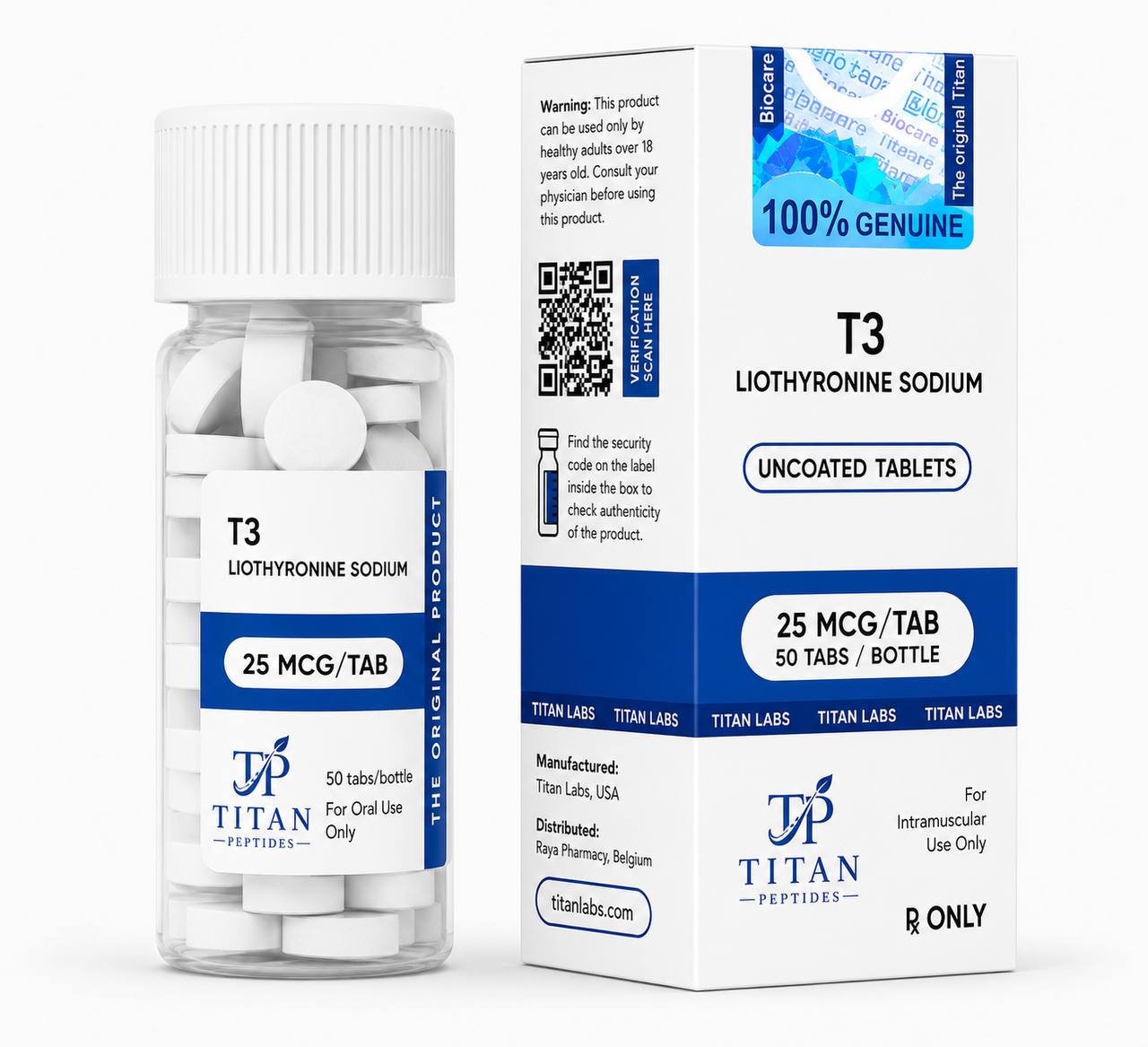
Liothyronine Sodium T3 25mcg – 50 Tablets
$20.00
Liothyronine Sodium is a synthetic thyroid hormone presented for laboratory and research applications. It is commonly studied for its role in thyroid hormone receptor activity, metabolic regulation, and cellular energy processes, making it a valuable compound for scientific research.
Product Overview
Liothyronine Sodium is a highly purified, synthetic form of the endogenous thyroid hormone triiodothyronine (T3). Sourced to meet the strict requirements of modern testing environments, this premium research compound provides scientists with a highly reliable oral formulation for evaluating direct cellular metabolic regulation, energy expenditure, and endocrine feedback loops. When conducting comparative studies on thyroid hormone activity and hypothalamic-pituitary-thyroid (HPT) axis dynamics, utilizing a standardized, ultra-pure compound is critical to ensuring baseline clinical data integrity.
Many standard laboratory compounds lack the precise chemical stability needed to prevent batch-to-batch variations during long-term experimental assays. This professional-grade formulation addresses those chemical vulnerabilities, offering an essential cornerstone for modern endocrinology and metabolic recovery research. When researchers choose to secure their materials from Titan Labs, they eliminate the purity fluctuations common with low-grade chemical suppliers, ensuring that their work yields clean, verifiable, and highly reproducible results.
What is Liothyronine Sodium?
Liothyronine Sodium, chemically identified as sodium (2S)-2-amino-3-[4-(4-hydroxy-3-iodophenoxy)-3,5-diiodophenyl]propanoate, is the synthetic levorotatory isomer of triiodothyronine (T3). Unlike levothyroxine (T4), which must undergo enzymatic deiodination to become active, Liothyronine Sodium is already the fully active, end-stage hormone. Upon administration, it immediately binds with exceptionally high affinity to nuclear thyroid hormone receptors (TRα and TRβ) across various target tissues, bypassing the need for metabolic conversion.
By skipping this conversion step, Liothyronine Sodium tablets exert rapid and potent effects on systemic gene transcription, driving cellular metabolism, oxygen consumption, and mitochondrial heat production almost immediately. Because maintaining precise endocrine metrics is critical for clinical data, having a pure, highly calibrated compound allows researchers to monitor endocrine response limits without the interference of un-tracked structural variables.
Dosing Versatility in Thyroid Research
In animal and in vitro assays, researchers require different concentrations to establish precise baseline controls and therapeutic dose-response curves. To accommodate diverse experimental protocols, investigators utilize both Liothyronine Sodium 5 mcg and Liothyronine Sodium 25 mcg configurations.
The micro-dosed Liothyronine Sodium 5 mcg strength is ideal for studying subtle pituitary feedback mechanisms, TSH suppression kinetics, and delicate tissue-specific receptor responses without inducing acute metabolic stress. For protocols requiring rapid induction of a hypermetabolic state or intensive cell-signaling studies, the Liothyronine Sodium 25 mcg tablet serves as the primary standard, allowing researchers to measure maximum biological response limits, lipid clearance rates, and mitochondrial respiratory shifts.
Liothyronine Sodium Benefits
In clinical cellular models and animal research settings, the observed effects of Liothyronine Sodium highlight its powerful physiological capabilities:
-
Immediate Metabolic Stimulation: It bypasses the T4 conversion pathway, directly accelerating the basal metabolic rate and cellular oxygen usage.
-
Potent Thermogenesis Modeling: It actively stimulates mitochondrial uncoupling protein-1 (UCP1), making it a prime tool for studying heat production and energy spending.
-
Rapid Endocrine Feedback: It provides instant suppression of thyroid-stimulating hormone (TSH) from the anterior pituitary via negative feedback loops.
-
Enhanced Lipid Clearance: It regulates LDL receptor upregulation in the liver, accelerating cholesterol clearance and fatty acid oxidation.
Liothyronine Sodium Side Effects
While Liothyronine Sodium is highly selective, evaluating its biological responses in test subjects requires careful monitoring of potential side effects:
-
Acute Cardiovascular Strain: Its rapid action can quickly induce severe tachycardia, cardiac hypertrophy, and elevated blood pressure if over-concentrated.
-
Excessive Heat Production: Over-stimulation can cause hyperthermia, extreme sweating, and rapid dehydration in testing models.
-
Catabolic Tissue Degradation: High-dose exposure can lead to muscle wasting and negative nitrogen balance as protein degradation rates surpass protein synthesis.
-
Accelerated Bone Turnover: Sustained high levels of active T3 accelerate osteoclast activity, reducing bone mineral density.
Key Features
-
Premium synthetic L-triiodothyronine (T3) for direct nuclear receptor binding
-
Rapid-acting oral formulation bypassing peripheral deiodination pathways
-
Available in high-stability tablet forms for precise micro-dosing protocols
-
Vital research compound for studying metabolic acceleration and HPT axis suppression
-
Rigorous quality control matching premium pharmaceutical-grade standards
Primary Uses in Research
The compound is essential for:
-
Investigating direct nuclear thyroid hormone receptor (TR) transcription pathways
-
Modeling the biological mechanics of thyrotoxicosis and hyperthyroidism
-
Evaluating acute thyroid-stimulating hormone (TSH) feedback mechanisms in pituitary cultures
-
Analyzing the direct impact of rapid-onset thyroid hormones on cardiac tissue and lipid metabolism
-
Researching mitochondrial respiration, ATP production, and cellular oxygen consumption dynamics
How to Use Liothyronine Sodium
To administer this compound in a laboratory setting, calculate the precise dosage required relative to your animal model’s body weight or assay parameters. Since this compound is provided in a solid oral tablet format, it can be administered directly to animal subjects or crushed under sterile conditions and suspended in a suitable liquid vehicle for precise oral gavage procedures.
Always handle the tablets using proper personal protective equipment (PPE) in a dry, low-humidity environment to prevent moisture absorption. Ensure the container is tightly resealed immediately after extracting the required dose. For liquid suspensions, prepare the mixture immediately prior to administration to prevent active compound settling or hydrolytic degradation.
Product Specifications
-
Device Type: Solid Oral Tablets
-
Active Compound: Liothyronine Sodium (T3)
-
Chemical Formula: C15H11I3NNaO4
-
Molecular Weight: 672.96 g/mol
-
Intended Use: Scientific Laboratory Research and Development
-
Brand: Titan Labs
-
Purity Standard: Exceeds 99% via High-Performance Liquid Chromatography (HPLC)
Storage Guidelines
Store the tablet bottle in its original container in a dark, dry cabinet strictly at a controlled room temperature between 20 and 25 degrees Celsius. Protect the tablets from direct sunlight, moisture, and high humidity, as ambient moisture can degrade the active compound and break down the tablet binder. Do not freeze the tablets or expose them to extreme heat. Ensure the child-resistant cap is tightly sealed after every use to preserve the active compound’s shelf life.
Related Category
Essential premium compound for rapid metabolic rate investigations, direct nuclear receptor activation, and acute HPT axis research. Browse our Endocrine Auxiliaries and PCT category.
Related Products
Frequently Asked Questions
Why is Liothyronine Sodium (T3) considered more potent than Levothyroxine Sodium (T4)? Liothyronine Sodium (T3) is the physiologically active thyroid hormone, whereas Levothyroxine (T4) is a prohormone. Because T3 binds directly to nuclear receptors with roughly four times the affinity of T4, it works immediately and with significantly greater metabolic potency, bypassing the rate-limiting step of enzymatic conversion.
Can these tablets be dissolved in water for laboratory cell cultures? No. Liothyronine Sodium is practically insoluble in water. For in vitro cellular research, the tablets must be crushed and dissolved in an organic solvent such as dimethyl sulfoxide (DMSO) or a highly diluted alkaline solution before introducing the compound to liquid culture media.
How long does this compound remain active in animal test models? Due to the lack of an extensive protein-binding profile compared to T4, Liothyronine has a much shorter biological half-life. In typical animal models, its clearance rate is rapid, requiring more frequent observation and consistent dosing schedules to maintain stable plasma levels.
How long do these tablets remain potent in storage? When kept in their original, tightly sealed bottle in a cool, dry environment away from direct light and moisture, Liothyronine Sodium tablets maintain full chemical potency and structural integrity for up to 36 months from the date of manufacture.
Conclusion
Liothyronine Sodium from Titan Labs provides the chemical purity, structural stability, and rapid metabolic activation required for advanced endocrine, cardiovascular, and thyroid receptor research. By choosing our premium formulation, your laboratory minimizes compound waste and secures highly reproducible scientific data. Combine this elite metabolic regulator with our premium endocrine auxiliaries to optimize your testing setup. Browse our full Endocrine Auxiliaries and PCT category or check the related product listings above to complete your laboratory inventory.
Be the first to review “Liothyronine Sodium T3 25mcg – 50 Tablets”
Related products
Reviews
There are no reviews yet.